
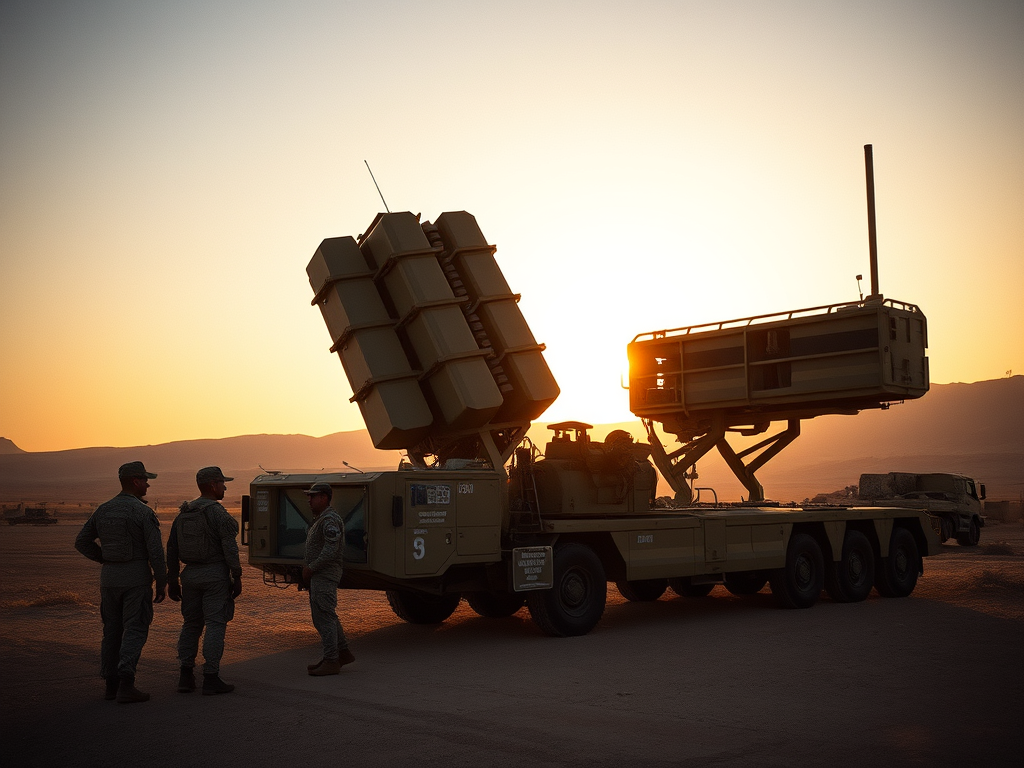

The United States is deploying an advanced missile defense system to Israel, along with around 100 U.S. troops to operate it, as announced by the Pentagon on Sunday. This marks the first time U.S. forces have been sent to Israel following the Hamas-led attacks on October 7, 2023.
President Biden has directed Defense Secretary Lloyd J. Austin III to send the Terminal High Altitude Area Defense (THAAD) system and its personnel, according to a statement from Pentagon spokesperson Maj. Gen. Patrick Ryder on Sunday.
The deployment will bring American forces, who will be operating the ground-based interceptor system, closer to the escalating conflict in the Middle East. This follows Iran’s launch of about 200 missiles at Israel on October 1 and comes as Israel prepares a retaliatory strike.
The THAAD battery, a mobile defense system, will provide an additional layer of protection for the Israel Defense Forces, defending cities, military personnel, and installations from short- to intermediate-range ballistic missiles, such as those used by Iran in its recent attack.
When asked about the deployment, President Biden stated that he had ordered the system to be sent “to defend Israel.” General Ryder added that the THAAD system would enhance Israel’s air defense capabilities.
“This action reaffirms the United States’ unwavering commitment to Israel’s defense and to protecting Americans in Israel from further ballistic missile attacks by Iran,” the statement said. “It is part of broader adjustments the U.S. military has made recently to support Israel’s defense and shield Americans from Iranian or Iran-aligned militia attacks.”
A senior U.S. military official mentioned on Sunday that it will take at least a week for the THAAD system and accompanying troops to arrive in Israel.
Although this is the first deployment of U.S. troops to Israel since the conflict in Gaza began, the U.S. military did establish a temporary pier off the Gaza coast in May to expedite humanitarian aid, which was dismantled in July after damage from harsh sea conditions.
Additionally, last month, the Pentagon announced plans to send “a few thousand” American troops to the Middle East as Israel increased its attacks on Hezbollah in Lebanon, with estimates ranging between 2,000 and 3,000 troops. The U.S. also deployed a THAAD battery and other air defense systems to the region in response to the October 7 attacks.
The decision on Sunday follows ongoing discussions among senior Pentagon officials about whether the heightened U.S. military presence in the region is successfully containing the conflict or exacerbating it.
Several Pentagon officials have voiced concerns in recent weeks about Israel’s increasingly aggressive campaign against Hezbollah, Iran’s strongest proxy, knowing that American warships and combat aircraft are on standby to counter any Iranian retaliation.
General Charles Q. Brown Jr., chairman of the Joint Chiefs of Staff, has raised this issue during meetings at both the Pentagon and the White House. He has also questioned how the expanded U.S. presence in the region affects the military’s overall readiness, particularly in responding to potential conflicts with China and Russia.
General Brown, Secretary Austin, and other officials have been working to find a balance between containing the conflict and supporting Israel, according to one senior U.S. military official.
On Saturday, Secretary Austin spoke with Israeli Defense Minister Yoav Gallant, expressing concerns about reports of Israeli forces firing on U.N. peacekeeping positions in Lebanon and the reported deaths of two Lebanese soldiers, according to a Pentagon statement.
On Sunday, the Israeli military announced that its jets had struck around 200 Hezbollah targets in Lebanon over the past day.day.




Leave a Reply