
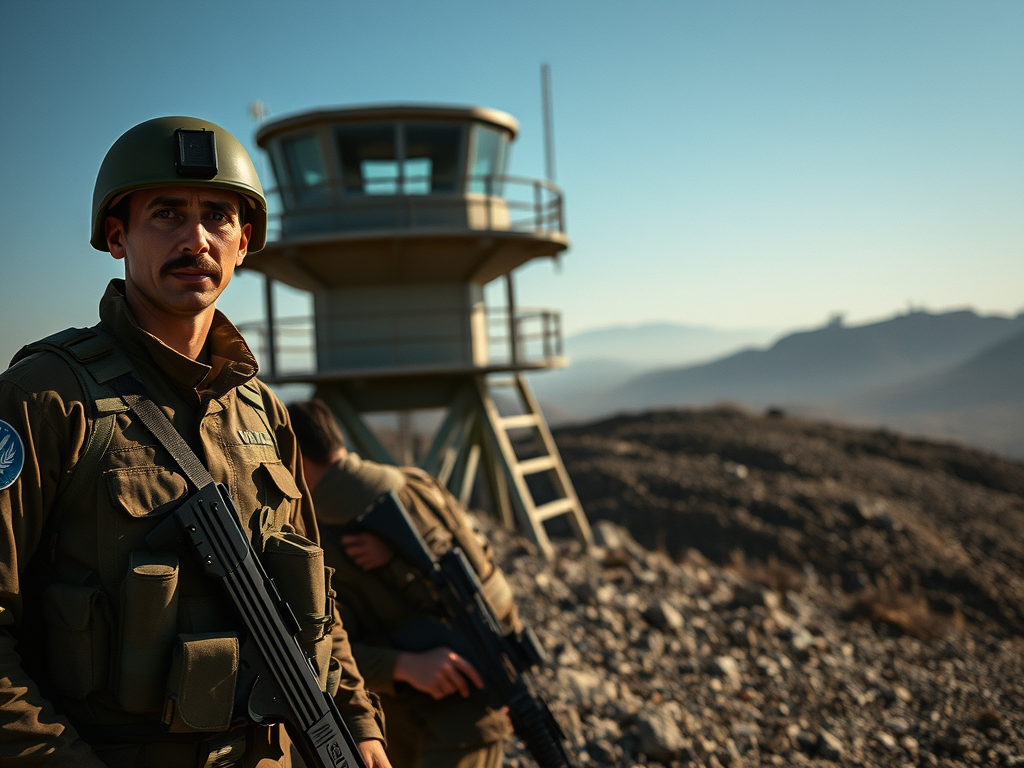

Two United Nations peacekeepers stationed near the Lebanon-Israel border were injured on Thursday when an Israeli tank fired on one of their observation towers, according to U.N. officials.
This marks the most serious incident for the peacekeeping force since Israel urged them to withdraw from positions in Lebanon. The request came after Israel accused Hezbollah of launching rockets into its northern territory. A U.N. spokesperson confirmed that the peacekeepers refused to move.
UNIFIL, the U.N. peacekeeping force in southern Lebanon, has been active since 1978, primarily to monitor and report on border violations. Its mandate was expanded in 2006 after the last war between Israel and Hezbollah, an armed group supported by Iran.
In the past year, UNIFIL has increasingly been caught in the crossfire of strikes between Israel and Lebanon. Following the October 7 Hamas attacks on Israel, Hezbollah began launching rockets into Israel, prompting return fire. Last week, Israeli ground forces entered Lebanon to target militants.
Here’s a closer look at UNIFIL’s challenges as the situation on the border grows more dangerous.
What is UNIFIL’s mission?
The United Nations Interim Force in Lebanon, consisting of over 10,000 personnel from 50 countries, is tasked with preventing violations along the 75-mile border between Lebanon and Israel, known as the Blue Line.
Under a 2006 U.N. resolution, UNIFIL is authorized to ensure its operational area is free from hostile activities. Their role includes preventing the presence of weapons and fighters in the area. However, over the past decade, both the U.S. and Israel have criticized the peacekeepers for being ineffective at stopping Hezbollah’s rocket stockpiling and launches from southern Lebanon.
Although armed, UNIFIL personnel are only permitted to use force when their safety or that of civilians is under immediate threat. They are also required to report violations to the U.N. Security Council.
Current situation
Last week, as Israeli forces entered southern Lebanon, they set up new positions near a UNIFIL base, U.N. officials said. These new positions were confirmed through satellite images obtained by The New York Times.
A U.N. spokesman noted that Israeli forces had been firing at Hezbollah targets from these positions, further endangering UNIFIL personnel. Despite a request from Israel for the peacekeepers to relocate, they refused.
Attacks on U.N. personnel are illegal under international law, but Hezbollah has continued to fire rockets from areas near U.N. positions in southern Lebanon, complicating the rules of engagement.
On Thursday, UNIFIL reported that Israeli tank fire struck an observation tower at their Naqoura headquarters in Lebanon and hit the entrance of a nearby bunker where peacekeepers were taking shelter.
“Any intentional attack on peacekeepers is a serious violation of international humanitarian law,” UNIFIL said in a statement, adding that they were investigating the incident with the Israeli military.
The Israeli military acknowledged its forces were operating near UNIFIL positions and said they had instructed the peacekeepers to stay in protected areas before opening fire in the vicinity.




Leave a Reply