
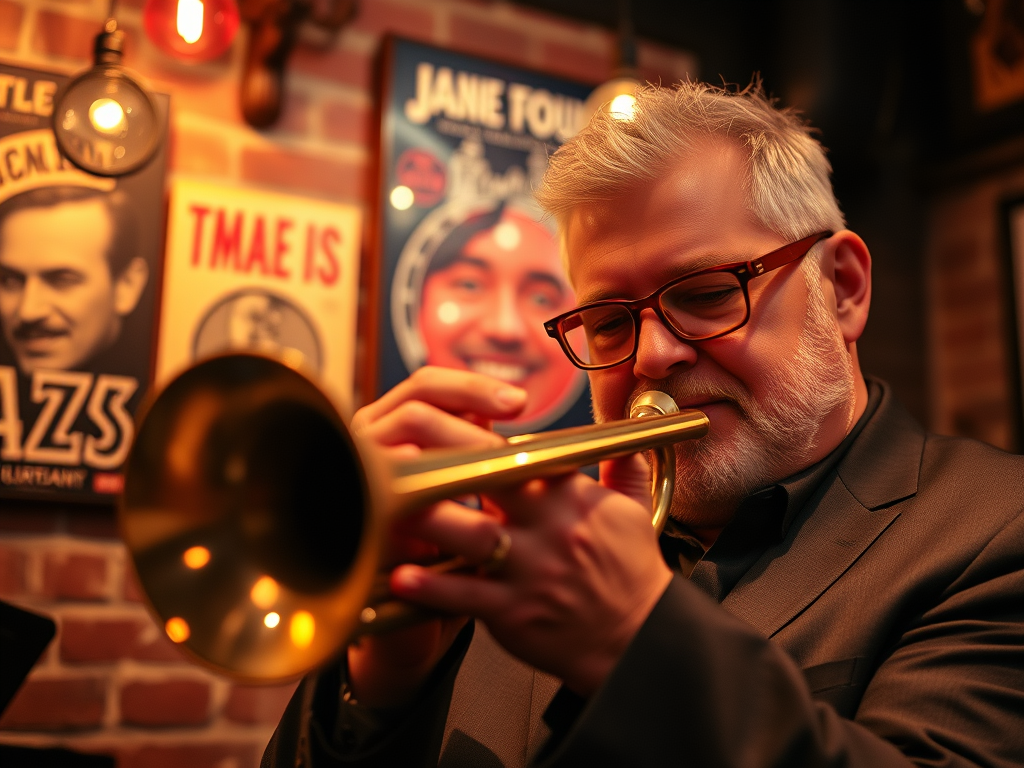

While grunge rock may often come to mind when thinking of the Pacific Northwest, Seattle’s music scene has long been rooted in jazz. Even during the height of grunge in the 1990s, trumpeter Thomas Marriott remembers an ideal setting for emerging jazz musicians downtown. It was a kind of affordable, low-pressure paradise where musicians could “pay their dues,” earn rent from weekend gigs, and simply stroll the streets with their instruments, running into fellow musicians along the way.
Now 48, Marriott is a well-established figure in Seattle’s jazz community, with a deep understanding of what makes a music scene thrive: “Bandstands, mentors, and younger musicians,” as he describes it. Soft-spoken yet opinionated, and often seen in his trademark orange-tinted glasses, Marriott won the prestigious Carmine Caruso Trumpet Competition in 1999. Using the prize money, he moved to New York but eventually returned to Washington State to build a sustainable career.


Fast forward two decades, and the Seattle arts scene is struggling. Small to mid-sized jazz venues are failing, and Marriott says the pay scale for musicians is “abysmal.” “The heart of the problem,” he explains, “is that economically, local jazz isn’t much of a commercial enterprise anymore.” High rents, slow table turnovers, and changing tastes have all contributed to this decline.


Determined to reverse this trend, Marriott founded the Seattle Jazz Fellowship in 2021. The nonprofit aims to foster community, encourage mentorship, and lower barriers for both musicians and listeners. This year, the Fellowship entered a new chapter by moving into Pioneer Square, a historic waterfront district known for its ups and downs since the Gold Rush era. Landscape architect Ilse Jones, a local advocate with a stake in the 1891 Globe Building, sought tenants who could “enliven” the area and thought jazz might be the answer.


Marriott’s pitch was simple: “We’re an ideal tenant for a less-than-ideal space. We just need four walls and a bathroom.” In return, they got the charming brick-walled Globe Building, whose exterior bears scars from the 1889 Great Seattle Fire. The Fellowship signed a rent-free, one-year lease with Jones, paying only utilities and insurance, allowing them to secure licenses for liquor and occupancy. However, a “For Lease” sign remains in the window, as the building seeks a more permanent tenant.
In a city increasingly dominated by corporate interests and high costs, the Fellowship stands as a rare, unprofitable venture. The modest venue, seating just 48 people with a small wine and beer bar, centers around a Kawai grand piano. There are no tables or greenrooms, and tickets are suggested donations of $20, regardless of the performer.
The concept is inspired by listening rooms across the country, like New York’s Smalls under its old model. The Fellowship follows a financial plan similar to classical music organizations, relying on grants, donations, memberships, and ticket sales. Hosting three to four shows a week and a Monday jam session, the organization has paid $160,000 to artists so far this year, up from $100,000 in 2023 and $80,000 in 2022.
Marriott believes the Fellowship’s model could work in other cities. “I think we could run it entirely on membership if we were more conservative,” he says. But for him, it’s about more than economics—it’s about revitalizing an art form he holds in high regard, which he believes has grown stale due to a focus on formal training.
Reflecting on his own musical education, Marriott values the influence of experienced musicians over formal teachers. He recalls his early days in Pioneer Square, where young musicians learned by playing gigs with seasoned pros. “That’s something you can only learn on the bandstand,” he emphasizes. “It’s not something that can be taught in a classroom.”
In launching the Fellowship, Marriott and the board sought to connect the intellectual depth of jazz with its emotional resonance. They quickly agreed to bring in 89-year-old trombonist Julian Priester as an artist-in-residence. Priester, a former bandmate of legends like Max Roach, Sun Ra, and Herbie Hancock, moved to Seattle in 1979 to teach at Cornish College of the Arts and has since played with acts like Dave Holland and Charlie Haden. His presence at the Fellowship is significant: “He’s Julian Priester, man!” Marriott exclaims.
For Priester, the Fellowship aligns perfectly with his own goal of mentoring young musicians. Since 2021, he’s been delivering “Julian Speaks” lectures, sharing life lessons and encouraging a positive attitude. His most important advice for young musicians? “Listen. Really learn how to listen.” He stresses this point: “It’s hard for people to get past their own ego.”
Marina Albero, a pianist who frequently performs at the Fellowship, both as a bandleader and sideman, praises the space for fostering community. “It’s not just a venue,” she says. “It’s a place where musicians can gather, hang out, and hear each other.”
Still, the Fellowship’s future in the Globe Building is uncertain. The property changed hands in March, but Marriott’s lease runs until at least November. He remains optimistic but continues to look for backup venues. “The question we always ask is: Does this serve the music? Does this serve local musicians?” For Marriott, as long as the answer is yes, “The Fellowship is about the people, not the location.”




Leave a Reply