
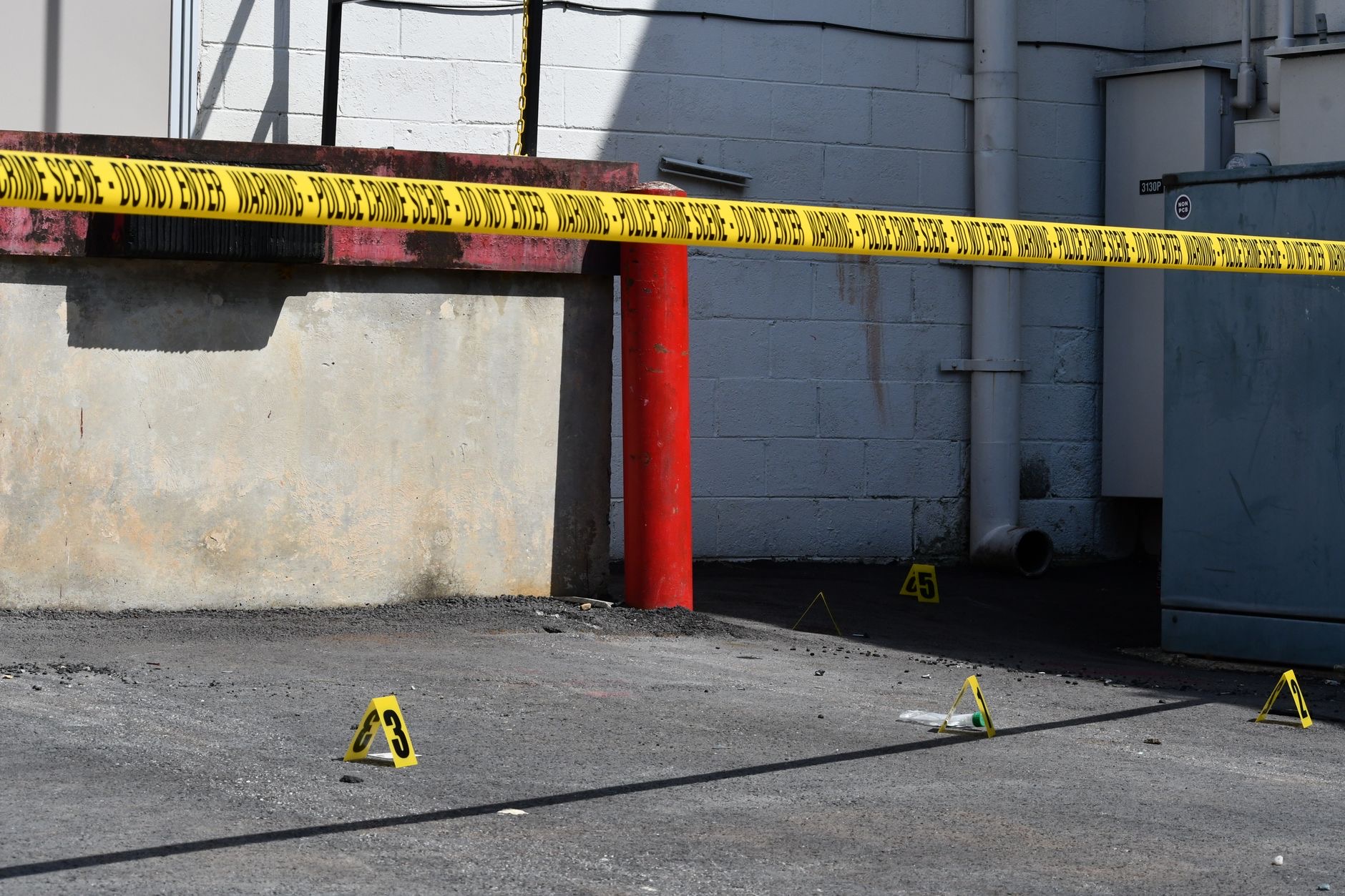
NEW YORK — The New York Attorney General’s Office confirmed on November 27, 2026, that it was assessing a fatal shooting by Buffalo police officers on Hertel Avenue, adding a new development to November’s police and criminal justice coverage. The announcement came two days after officers responding to reports of a man carrying knives used Tasers and then fired their service weapons, fatally wounding him. The Buffalo Police Department continued its own investigation as the state considered whether the incident required a full independent investigation.
According to reporting published by Spectrum News on Friday, the attorney general’s Office of Special Investigation was assessing the circumstances surrounding the man’s death. The office has statutory responsibilities involving deaths that may have been caused by law enforcement officers. The confirmation established that the state was examining the matter, but it did not constitute a public finding that the officers had acted unlawfully or that criminal charges were warranted.
The confrontation occurred shortly after 5 p.m. Wednesday, November 25, in the 1700 block of Hertel Avenue, a commercial corridor in North Buffalo. Police said officers responded to a report of a person carrying knives. The man was reportedly walking between Wallace Avenue and Vorhees Avenue when officers encountered him. Police Commissioner Erika Shields subsequently described a confrontation during which the man allegedly refused repeated commands to surrender his weapons.
Police said multiple officers deployed Tasers before two officers discharged their firearms. According to the department’s account, the man continued holding the knives despite the attempted less-lethal intervention and subsequently lunged toward officers. The officers’ gunfire struck him, and he was transported to a nearby hospital, where he died. These details represent the police account of the incident rather than independently established conclusions about the necessity of deadly force.
The incident occurred on the evening before Thanksgiving, when restaurants and other businesses along Hertel Avenue were serving residents and visitors. The location and timing placed the confrontation in a populated area, although the information publicly confirmed in the reviewed reports did not establish how many bystanders witnessed the shooting. No independent reconstruction of the officers’ positions, the man’s movements or the sequence of individual weapon deployments had been established in the available reporting.
Buffalo Toronto Public Media reported on November 26 that the Buffalo Police Benevolent Association said the involved officers had been placed on administrative leave and were participating in the internal investigation. The association defended the officers’ response, arguing that repeated Taser deployments had not stopped the perceived threat. Its statement reflected the police union’s position and did not constitute an independent determination that the shooting complied with department policies or state law.
The state’s involvement introduces a separate level of scrutiny. Under New York Executive Law Section 70-b, the Office of Special Investigation assesses reported incidents in which a police officer or peace officer may have caused someone’s death through an act or omission. The statute applies whether the person was armed or unarmed and whether the officer was on duty or off duty. If the preliminary assessment indicates that an officer may have caused the death, the office proceeds with a full investigation.

That distinction matters in the Buffalo case. An assessment is not synonymous with a completed investigation, an indictment or a finding of misconduct. The information available on November 27 did not establish that the attorney general had reached a final decision on the officers’ actions. It also did not establish whether prosecutors would ultimately seek charges. The office’s normal procedures provide for further examination of evidence before any prosecutorial decision is made.
New York’s system can involve review of body-worn camera recordings, witness accounts, forensic findings and other investigative materials. The public importance of such evidence is particularly clear when officers report that a person was armed and approached them during a rapidly developing confrontation. Whether an officer reasonably perceived an imminent threat and whether the resulting use of force was legally justified are distinct questions requiring evidence and applicable legal standards. Neither can be resolved solely from the initial police description.
The Buffalo shooting was not the only law enforcement death-related matter receiving attention during November. On November 17, the attorney general’s office announced an investigation into the death of Omatoyo Neverson, who died after an encounter with New York City police officers in Brooklyn on November 14. According to the office’s preliminary account, officers attempted to stop a van near Exit 8 of the Belt Parkway following reports involving an alleged abduction.
The attorney general’s statement said Neverson allegedly drove the van into nearby vehicles and failed to comply with police commands. Two officers initially deployed Tasers without stopping him, and four officers subsequently fired their guns. Neverson was transported to a hospital and pronounced dead. The state identified the matter as an investigation rather than a completed determination of criminal responsibility. Although that encounter and the Buffalo shooting involved reported unsuccessful Taser deployments, the circumstances and evidence in each case must be assessed separately.
Another November investigation concerned Zachary J. Strough, who died following an encounter with New York State Police in the Village of Carthage, Jefferson County, on November 11. The attorney general’s office announced the investigation on November 16. According to its statement, state police investigators were attempting to arrest Strough on a Lewis County bench warrant when an investigator approached a pickup truck in which he was a passenger. The office said Strough allegedly pointed a handgun at the investigator, who fired his weapon. Strough later died at a hospital.
Those cases illustrate the range of circumstances that can produce state investigations, from police responses to reports of armed individuals to encounters during attempts to execute warrants. They do not establish a shared cause, pattern of wrongdoing or comparable legal outcome. Each investigation requires an assessment of the individual facts, including what officers knew, what they observed and what occurred immediately before deadly force was used.

November also brought a transparency development in an earlier case. On November 24, Attorney General Letitia James released body-worn camera footage obtained during the ongoing investigation into the death of Sean Daniel in Yonkers. Daniel died on April 7 after an encounter with Yonkers police officers responding to a 911 call. According to the attorney general’s office, officers used Tasers and attempted to restrain him before he became unconscious and was transported to a hospital, where he died.
The attorney general’s office explained that the footage was released under its policy of making camera recordings obtained during investigations available to increase transparency and public trust. The release did not represent a determination of guilt or innocence. The distinction is relevant to the Buffalo case because publicly available recordings, if subsequently released, may contribute to understanding an encounter without necessarily resolving every disputed question about its legal justification.
The relationship between police investigations and the courts is another important part of November’s criminal justice coverage. The Office of Special Investigation may present evidence to a grand jury when it concludes that potential criminal conduct warrants that step. If an indictment is returned, prosecution can follow. In cases where officers caused a death but the evidence does not support criminal charges, the office can issue a public report explaining its findings and reasoning.
Criminal liability is only one possible dimension of accountability. Internal department reviews can examine compliance with policies and training requirements, while state investigations consider questions within their statutory jurisdiction. These processes serve different purposes and may reach different conclusions because they address different standards. Administrative leave, for example, does not itself establish disciplinary wrongdoing, just as the opening of a state investigation does not establish that a crime occurred.
For residents and the broader public, the immediate questions in Buffalo concern the complete sequence of events on Hertel Avenue and the evidence available to investigators. The information reviewed for this report did not establish whether body-camera footage from the encounter would be publicly released, whether the man’s identity had subsequently been disclosed or when the state’s assessment would conclude. Those details remain important to understanding how the case develops.
The November 27 development therefore marks a procedural turning point rather than a final legal outcome. Buffalo police have described why their officers used force, while the attorney general’s office has confirmed that it is assessing the death under New York’s oversight framework. As November’s police and court coverage continues, the central distinction remains between an initial account of a fatal encounter, an independent examination of the available evidence and any eventual decision about criminal responsibility.


Leave a Reply