
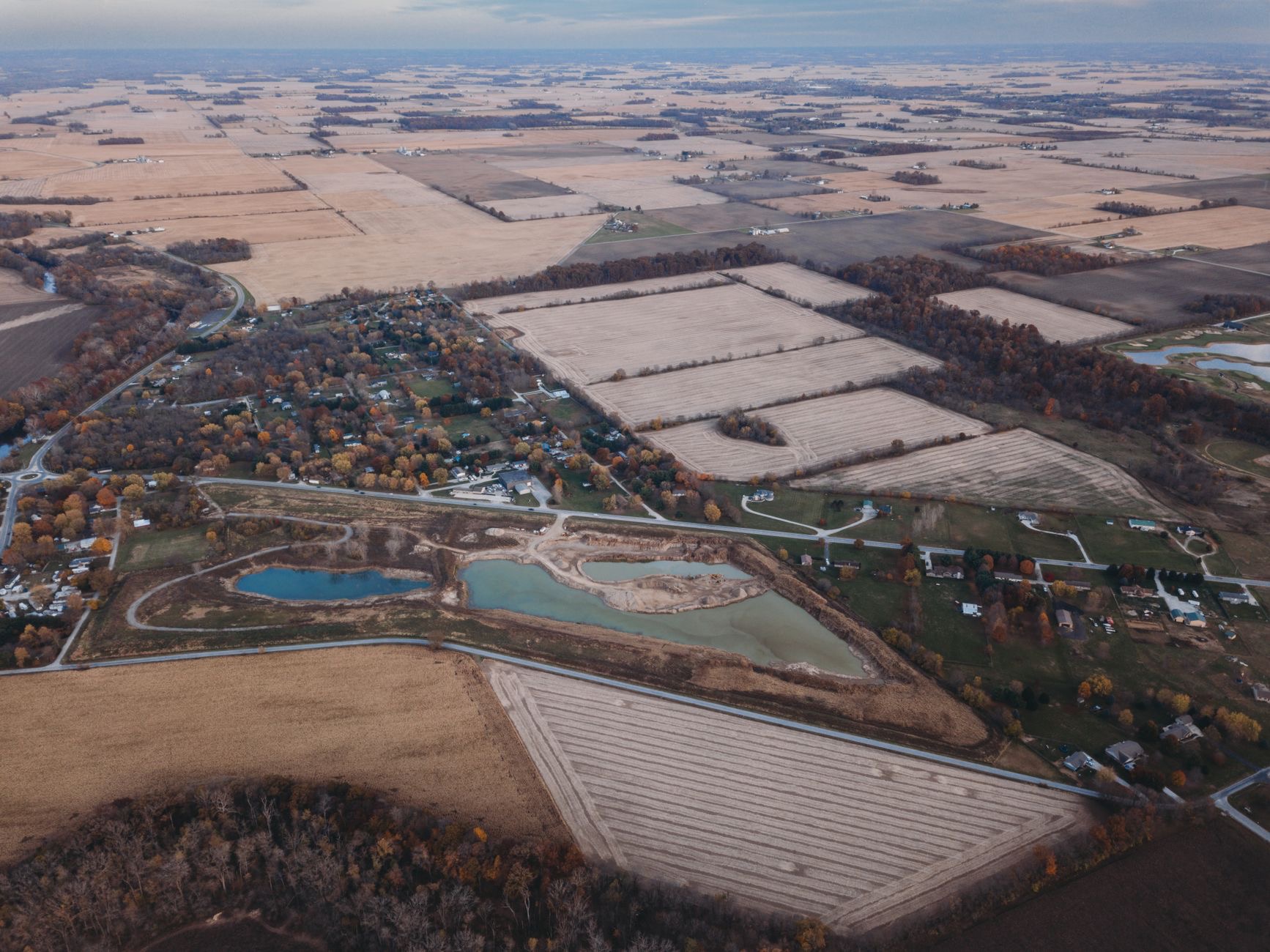
The U.S. Army is preparing to detonate approximately 68 barrels of highly unstable lead azide at the Iowa Army Ammunition Plant near Middletown on Wednesday, November 25, placing a major military explosives-disposal operation at the center of public-safety concerns across southeastern Iowa on the eve of Thanksgiving.
The controlled detonation is scheduled for approximately 9 a.m. Central Time, according to an announcement issued by the Army on November 24. The stockpile contains more than 9,700 pounds of net explosive weight. Military officials say the material has deteriorated to a point where even limited movement, friction, vibration or temperature fluctuations could trigger an accidental explosion.
The operation involves the Army, the Environmental Protection Agency (EPA), the Federal Emergency Management Agency (FEMA), the Department of Health and Human Services (HHS), the Bureau of Alcohol, Tobacco, Firearms and Explosives (ATF), and state and local emergency-management authorities. The agencies are coordinating evacuation assistance, environmental safeguards and public-health monitoring before and after the planned blast.
The announcement has drawn attention because lead azide is both an explosive compound and a source of potentially hazardous lead contamination. Although the Army describes the detonation as a controlled safety measure, the destruction of the stockpile could release fine lead-containing particles into the surrounding environment.
A deteriorating explosives stockpile prompted the operation
The lead azide was stored in earth-covered magazines at the Iowa Army Ammunition Plant, a military installation near Middletown. According to the Army and Associated Press reporting, the material had been transferred to the facility from military locations around the country in 2009 and retained for potential use in munitions production.
A routine monitoring inspection on March 11, 2026, identified significant deterioration and partial crystallization in the decades-old material. Subsequent inspections found that crystallized deposits had accumulated around the barrels, including near their lids and exterior surfaces.
That development fundamentally changed the safety assessment. Lead azide is a primary explosive used in initiating other explosive materials. In its deteriorated condition, the compound can become extremely sensitive to physical disturbance. Officials have warned that friction, shock, vibration, heat and cold temperatures could contribute to an unintended detonation.
Army officials say the condition of the barrels has also restricted their ability to handle the material using conventional disposal procedures. The containers cannot safely be moved or opened for chemical treatment because doing so could disturb the crystallized explosive.
Military specialists evaluated several alternatives, including chemical neutralization, thermal treatment, transportation to another location and continued storage. The Army concluded that these approaches presented unacceptable risks because they would require handling or disturbing the unstable material, or leave the surrounding community exposed to the possibility of an uncontrolled explosion.
At a November 24 briefing in Middletown, Acting Secretary of the Army Adam Telle said federal agencies had reached a consensus that a controlled, mitigated detonation was preferable to allowing the stockpile to remain vulnerable to spontaneous explosion. Maj. Gen. Eric Shirley, commander of the Army Sustainment Command, also argued that delaying action would leave the public exposed to an increasingly unpredictable hazard.
Evacuation and relocation measures extend beyond the installation
The planned operation has triggered a recommended relocation area covering Middletown and surrounding affected locations. FEMA is supporting relocation for residents within a five-mile cone extending southwest from the ammunition plant, with an additional one-mile safety buffer beyond the modeled dispersion path.
The relocation effort began on November 24. FEMA has made transportation, temporary accommodation, food, water and other assistance available to eligible residents. Hotel lodging is initially being provided through November 27, although officials have indicated that extensions may be considered when necessary.
Residents who need assistance can register through DisasterAssistance.gov or contact FEMA’s 24-hour helpline at 1-800-621-3362. Officials have also said that residents who cannot arrange transportation independently may receive help reaching temporary accommodation.
For people outside the recommended relocation area but within the broader advisory zone, authorities are encouraging shelter-in-place precautions. These include keeping windows and exterior doors closed, setting heating and cooling systems to recirculate indoor air, limiting the use of exhaust fans and keeping children and pets indoors during the potential exposure period.

Officials have identified infants, children under six, pregnant women and people with certain chronic health conditions as particularly vulnerable to lead exposure and air pollution. Residents have also been advised to protect livestock feed and water supplies from potential contamination.
The Army’s public advisory emphasizes that residents should wait for official confirmation that the airborne exposure period has ended before beginning outdoor cleanup. Where lead deposition is identified, wet cleaning of frequently touched surfaces, including outdoor furniture, patios, window sills and children’s play equipment, is recommended.
Extensive barriers and environmental monitoring planned
The Army says it has developed an extensive containment system intended to reduce the amount of lead dust escaping the installation. The barrels will remain inside reinforced, earth-covered magazines designed to contain military explosives.
Additional safeguards include concrete structures, sand-filled barriers approximately two stories high, large water tanks, gel blocks and specialized foam. The Army has also described plans to saturate the surrounding soil with water before and during the detonation, using industrial misting equipment and water sprayers to limit the movement of airborne particles.
The water-based containment system is designed to reduce the spread of dust and help particles settle within the installation rather than travel into nearby communities. The Army has also deployed physical containment screens and tarps treated with suppressing foam.
Environmental monitoring is another central component of the plan. The EPA has conducted baseline sampling and is coordinating with Army personnel to monitor conditions during the operation. Stationary air sensors are expected to operate near the installation and in surrounding communities.
Mobile monitoring teams will also follow the potential plume path after the detonation, collecting samples from soil, surface water and other exposed surfaces. The results are intended to help officials determine whether lead has been deposited outside the installation and whether additional cleanup is necessary.
The Army has acknowledged that a portion of the resulting cloud could contain fine lead oxide particles. Its modeling indicates that most of the visible cloud will consist of materials such as nitrogen gas, sand, soil and water vapor, but the presence of lead-containing dust remains the central environmental concern.
Officials have also outlined a process for addressing contamination and property damage. According to the Army’s November 24 announcement, residential properties testing above the stated Resource Conservation and Recovery Act standard of 200 milligrams of lead per kilogram of material could receive government-funded soil removal, surface cleaning and restoration. The Army also said its claims service would process claims for property damage associated with blast vibrations.
Legal challenges and repeated scheduling changes
The decision to proceed follows several postponements and a legal dispute over the environmental authorization for the operation. The Army initially planned the detonation for November 20, before moving it to November 23 and subsequently rescheduling it for November 25.
The delays reflected concerns about weather conditions, the time needed to install additional containment measures and public opposition to the potential release of lead dust. The Army said the latest schedule offered more favorable conditions for carrying out the operation while completing the planned safeguards.
Environmental groups challenged the EPA’s emergency permit, arguing that the disposal plan did not adequately address potential contamination and that alternative methods had not been sufficiently considered. The dispute reached the 8th U.S. Circuit Court of Appeals.
On November 23, a three-judge panel allowed the operation to proceed, finding that the EPA’s emergency permit incorporated safeguards intended to minimize the dispersal of lead particles. The court cited containment barriers, weather restrictions, public notification requirements, updated atmospheric modeling and environmental sampling provisions.

The ruling also considered the government’s assessment of alternative disposal methods, including chemical neutralization and thermal treatment. The court’s decision cleared a significant legal obstacle but did not eliminate the environmental concerns raised by opponents.
Environmental advocates have continued to question whether the Army has provided sufficient information and protection for residents. Their objections have focused on the possibility of contamination affecting homes, agricultural land, waterways and surrounding communities.
The legal dispute has also become part of a broader discussion about federal responsibility for aging military materials. The Army’s position is that the unstable stockpile presents an immediate explosives hazard that cannot safely be addressed through ordinary handling or transportation procedures.
Regional concerns extend toward Missouri and Illinois
The potential environmental effects are not limited to Middletown. Atmospheric dispersion modeling has identified areas southwest of the ammunition plant as potentially affected by airborne particles and subsequent ground deposition.
Associated Press reporting on November 24 said officials expected Wednesday’s winds to carry the plume southwest toward Missouri, away from Burlington, Iowa, a city of nearly 25,000 people along the Mississippi River. The Army has cautioned that the modeled affected areas may change with weather conditions.
Missouri officials have expressed concern about potential effects on air and water quality, agriculture and public health. Gov. Mike Kehoe said state agencies were working to establish additional monitoring resources while emphasizing that the operation remained under federal authority.
The possibility of cross-border environmental effects has increased pressure for transparent monitoring and timely publication of sampling results. For agricultural communities, concerns include potential lead deposition on soil, livestock-related surfaces, crops and water supplies.
Schools and businesses near Middletown have also taken precautionary steps ahead of the operation. Some facilities have closed, while residents have prepared their homes by sealing windows and doors and limiting the introduction of outdoor air.
Public-health questions will continue after the blast
The immediate objective of Wednesday’s operation is to eliminate the unstable explosives stockpile, but the public-health response is expected to continue after the detonation itself. Authorities have said that environmental testing will be necessary to establish whether lead-containing particles have settled beyond the ammunition plant and whether additional remediation is required.
The distinction between a controlled explosion and an environmentally risk-free operation is central to the public debate. The Army’s safeguards are designed to reduce exposure, but the presence of lead in any released particulate matter means that monitoring and cleanup remain important components of the response.
The EPA, CDC, HHS, FEMA and Army personnel are expected to continue coordinating with state and local authorities as monitoring information becomes available. Officials have directed residents to rely on updated Army advisories and official government announcements for changes to the projected exposure area and the timing of the operation.
For Middletown and surrounding communities, the planned Thanksgiving Eve detonation represents the culmination of months of technical evaluations, emergency planning, legal challenges and public concern. The Army maintains that eliminating the deteriorating stockpile now is safer than leaving it in storage as temperatures fluctuate and the material becomes increasingly unstable.
Whether the extensive containment measures will prevent significant lead deposition outside the installation will depend on the actual conditions during and after the operation. Environmental sampling, public communication and any necessary remediation will therefore remain critical after the explosives have been destroyed.



Leave a Reply