
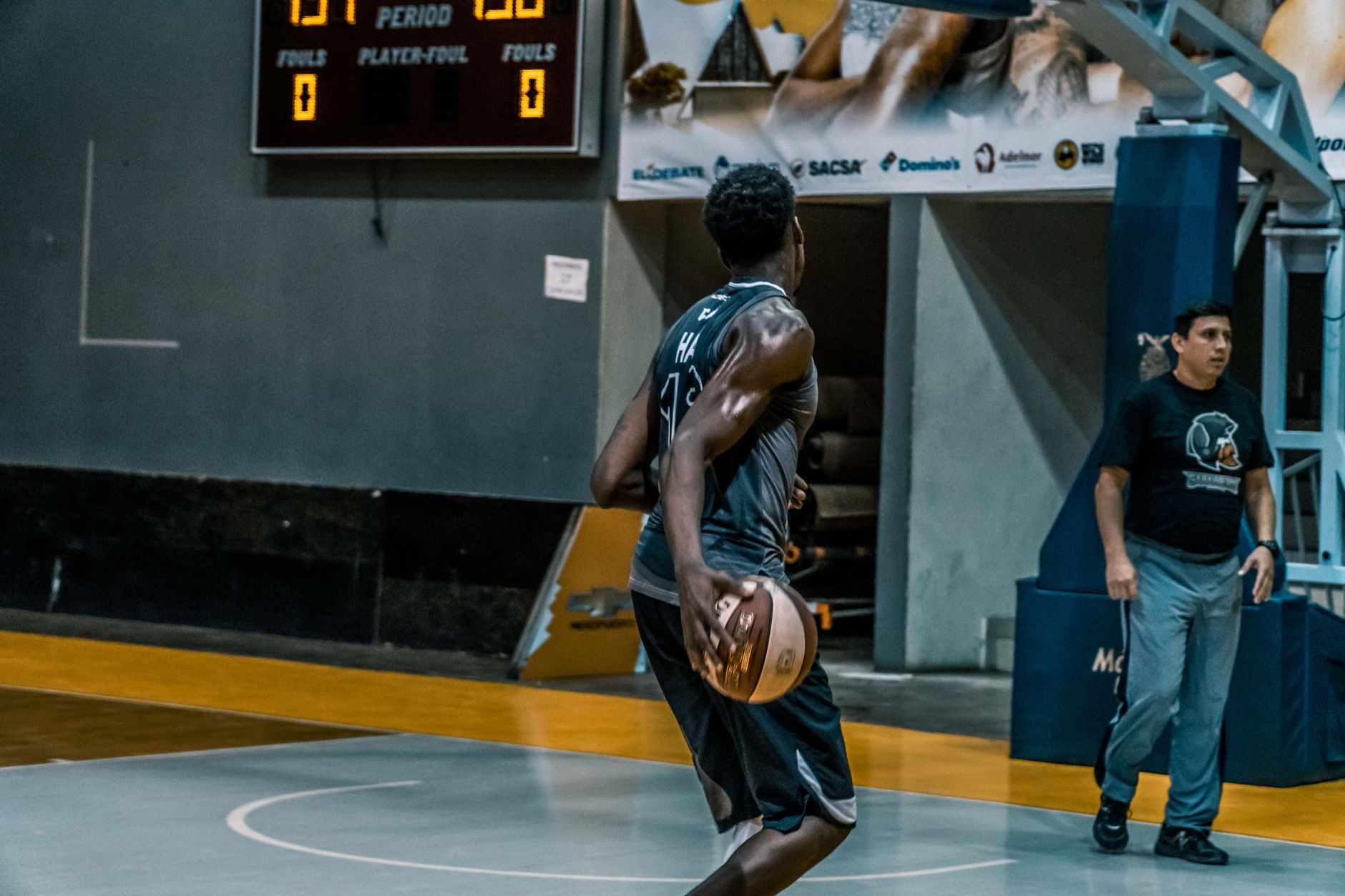
The Southeastern Conference will not penalize Louisiana State University if the Tigers add former St. John’s standout RJ Luis Jr. to their men’s basketball roster, removing a major obstacle to the player’s potential return to college competition following his entry into the 2025 NBA Draft. The conference confirmed Monday, November 16, that it would comply with a preliminary injunction issued by a Louisiana court and would not impose fines or other penalties on LSU for rostering Luis while the order remains in effect.
The development represents a significant shift in a dispute that had threatened to keep one of college basketball’s most accomplished returning players away from the court. The SEC’s position had previously placed LSU in a difficult situation: adding Luis could expose the university to conference sanctions under a recently adopted eligibility policy, while leaving him off the roster would prevent the former Big East Player of the Year from joining the Tigers’ competitive lineup.
CBS Sports reported Monday that the SEC communicated its position in writing to Luis’ legal representatives. The conference’s statement said it would abide by the preliminary injunction and would not impose penalties or fines if LSU placed Luis on its men’s basketball roster. The confirmation followed a court ruling issued Friday in East Baton Rouge Parish, Louisiana, that restricted the conference’s ability to take action against LSU over the player’s eligibility.
Luis’ attorney Elliot Abrams welcomed the development, telling CBS Sports that the SEC had confirmed it would respect the court’s order. Abrams said Luis was healthy, ready and looking forward to joining his teammates. The attorney also emphasized the player’s respect for the conference and its member institutions, presenting the latest development as an opportunity to resolve the immediate eligibility dispute through the legal process.
However, the SEC’s commitment does not necessarily settle every question surrounding Luis’ return. The preliminary injunction protects LSU from conference penalties if it adds him, but the precise implications for the university’s roster decisions have been described differently by the parties involved. WAFB reported that attorney Tony Clayton said the judge had specifically ordered LSU to place Luis on the team and allow him to participate in team activities. On3, meanwhile, reported that the injunction did not explicitly require the Tigers to add him. LSU had not publicly confirmed his addition to the roster as of Monday afternoon, according to WAFB.
The distinction between being permitted to join the roster and actually receiving playing time is also important. The SEC’s statement addresses institutional penalties, not a guarantee that Luis will appear in games. Even if LSU formally adds him, head coach Will Wade would retain responsibility for basketball decisions, including rotations and playing time. The university and the conference could also face additional legal proceedings as the eligibility dispute develops.
Luis brings a substantial college basketball résumé to the situation. During the 2024-25 season, he played for St. John’s and established himself as one of the Big East’s leading performers. The 6-foot-7 guard averaged 18.2 points, 7.2 rebounds, 2.0 assists and 1.4 steals across 35 games, including 32 starts. His performances earned him the 2024-25 Big East Player of the Year award, first-team All-Big East recognition and a place on the conference’s All-Tournament Team.

His final college season also included a major team achievement. St. John’s captured the outright Big East regular-season championship and won the conference tournament, with Luis earning the tournament’s Most Outstanding Player honor. Those accomplishments helped establish his professional prospects and made his subsequent attempt to return to college basketball particularly unusual. Before St. John’s, he had also played for the University of Massachusetts during the 2022-23 season.
After declaring for the 2025 NBA Draft, Luis went undrafted but continued pursuing a professional career. The Utah Jazz signed him to a two-way contract on July 7, 2025, according to the team’s official announcement. The arrangement gave him an opportunity to pursue NBA and developmental-league opportunities. Utah subsequently traded him to the Boston Celtics in August 2025. He later signed an Exhibit 10 contract with Boston, although he did not appear in a G League game. His professional contracts became central to the eligibility controversy when he sought another opportunity in college basketball.
The SEC’s restrictions were formalized in August 2026. Under the conference’s policy, member institutions were prohibited from placing athletes on their rosters if they had previously declared for the NFL, NBA or WNBA Draft without appropriately withdrawing, signed contracts with professional teams or appeared on qualifying professional rosters. The policy covered NBA and G League contracts as well as professional football and WNBA arrangements. The conference also authorized Commissioner Greg Sankey to enforce the requirements through institutional penalties.
Because Luis had entered the NBA Draft process and signed professional contracts, his circumstances appeared to fall within the categories covered by the SEC policy. His legal representatives challenged the restrictions, arguing that the conference’s eligibility position could not be applied in a way that prevented his return to college competition. The dispute had already produced earlier court intervention, including temporary relief involving the NCAA, before the latest preliminary injunction addressed the SEC’s ability to penalize LSU.
The timing of the SEC policy has also become an important element of the broader dispute. CBS Sports reported that Luis’ eligibility effort began before the conference adopted its more restrictive policy. His legal team argued that the SEC’s rules were closely connected to NCAA eligibility provisions and that the later policy changes should not automatically prevent his return. The Louisiana court’s intervention has given that argument practical significance, although the preliminary injunction does not necessarily resolve the underlying legal questions permanently.
The case also carries additional significance because LSU and the SEC have been involved in a separate dispute over professional eligibility in football. The conference previously opposed LSU’s efforts to add former Ole Miss players Dae’Quan Wright and Zxavian Harris after their attempts to secure NFL roster positions. The SEC maintained its position in that controversy, illustrating its willingness to enforce the professional-athlete restrictions against member institutions. Luis’ situation has produced a different immediate outcome because of the court order governing his individual case.

For LSU, the decision arrives during an encouraging start to the 2026-27 basketball season. The Tigers defeated No. 14 Gonzaga 81-80 in Spokane, Washington, on November 14, recording one of their most notable early-season victories. The result helped LSU move into the AP Top 25 on Monday at No. 25, marking its first appearance in the national ranking since the 2021-22 season. On3 reported that the Tigers had opened the season 4-0 under Wade.
Adding Luis could give LSU another experienced scoring option as it enters the more demanding portion of its schedule. His scoring average and rebounding production at St. John’s suggest the potential value of his presence, particularly for a team seeking to build on its early-season momentum. His experience competing at a high level in the Big East could also provide another established player in a roster containing several newcomers and returning college athletes.
Nevertheless, Luis’ immediate basketball readiness involves more than the resolution of his eligibility dispute. CBS Sports reported that he had not practiced with the team for more than a week before Monday’s announcement. Although his attorney described him as healthy and ready, the time away from regular team activities could affect how quickly he integrates into LSU’s system. The coaching staff would need to determine his role, conditioning and readiness before assigning him meaningful minutes.
LSU’s next scheduled game is against Louisiana-Monroe on November 18 in Baton Rouge. Whether Luis will be formally included in the roster and available for that contest remained uncertain following Monday’s announcement. Neither the conference’s statement nor the attorney’s comments established a definitive date for his first appearance.
The SEC’s announcement therefore resolves an immediate institutional concern without necessarily ending the broader controversy. The conference has agreed to follow the preliminary injunction while it remains in effect, but CBS Sports reported that the SEC does not intend to abandon its broader position on professional eligibility restrictions. Whether the dispute returns to court during the season, whether either side pursues an appeal and how LSU ultimately handles Luis’ roster status remain important unanswered questions.
For now, the development gives Luis a substantially clearer route back to college basketball. It also places LSU in a stronger position to consider adding a former conference player of the year whose professional experience had become the center of a high-profile eligibility dispute. The next decisive development will be whether the Tigers formally complete his return and translate the court victory into an actual opportunity to compete.



Leave a Reply