
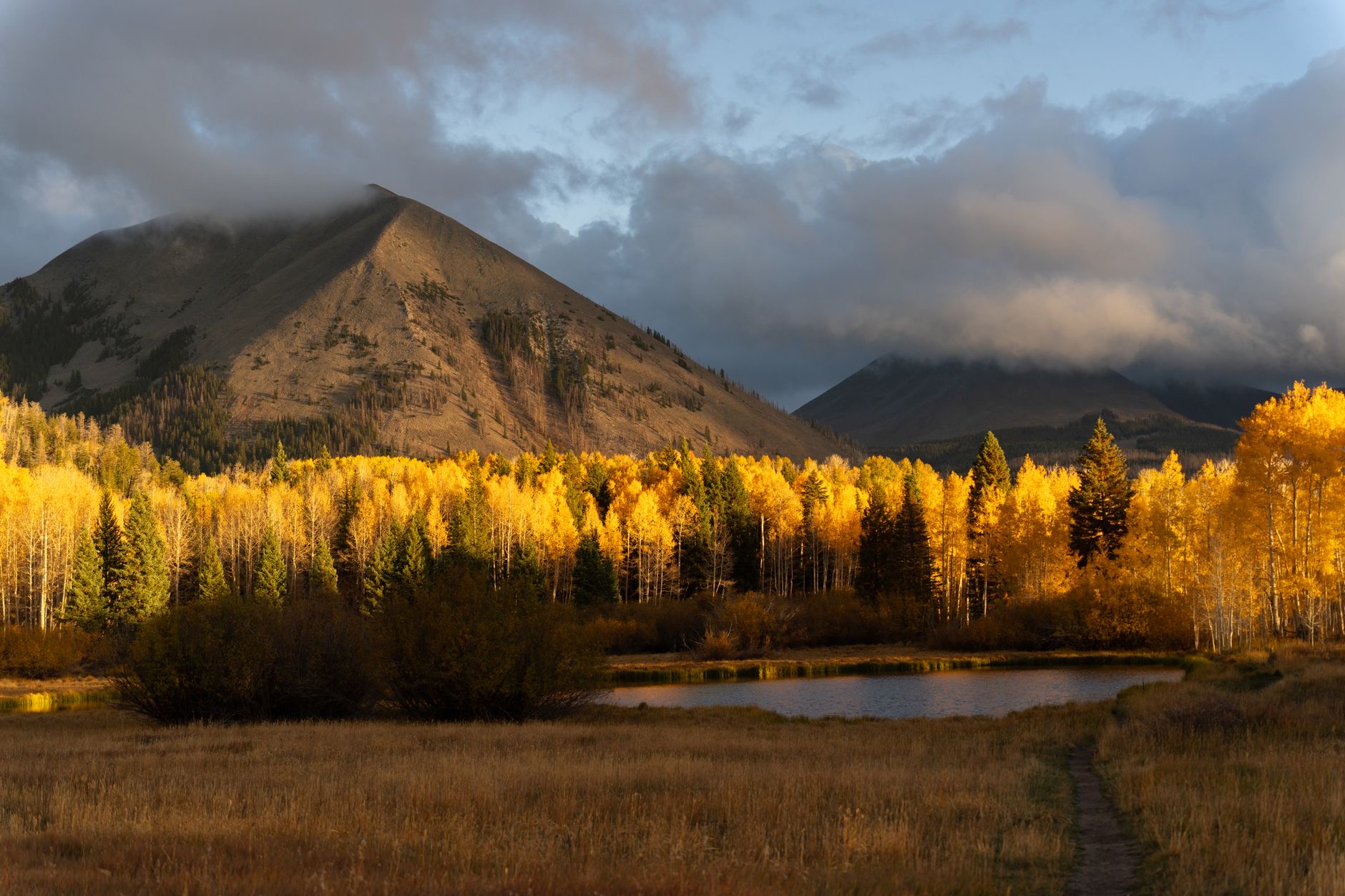
ASPEN, Colo. — Aspen Art Museum’s AIR Festival turned the city and its surrounding Rocky Mountain terrain into a dispersed cultural stage, with newly published critical accounts focusing attention on an event that placed contemporary art in settings ranging from an 11,000-foot summit to a working solid-waste facility.
The second annual festival, held July 27-31 under the title “Figures in a Landscape,” assembled artists, filmmakers, performers, poets, composers, scholars and cultural leaders for five days of commissions, conversations and live events. The museum’s official program listed activities at 10 locations, including Aspen Art Museum, Aspen Mountain, Old Snowmass, Maroon Creek Road, Aspen Chapel, the Wheeler Opera House, Aspen Meadows and Anderson Ranch Arts Center.
That geographic spread was not merely logistical. It supplied the organizing idea for AIR: audiences had to move through Aspen’s physical and social landscape to encounter the work. The mountain’s altitude, a ranch’s associations with the American West, a chapel’s acoustics and a waste center’s industrial activity became part of how individual projects were perceived.
A report published Aug. 7 by USA Art News described AIR as a festival that made terrain an artistic medium. The account emphasized how works appeared outside conventional exhibition rooms, including on Aspen Mountain, at a ranch and amid the machinery and debris of the Pitkin County Solid Waste Center. Artnet News, also writing Aug. 7, characterized the program as a sequence of cultural pilgrimages in which the audience’s travel and temporary assembly became inseparable from the art.
Among the festival’s most prominent outdoor encounters was Los Thuthanaka’s morning performance on Aspen Mountain. The Bolivian-American sibling duo of Chuquimamani-Condori and Joshua Chuquimia Crampton performed on a deck above the surrounding mountain landscape, combining electronic sound with references to Andean musical heritage. The setting placed an experimental concert against a dramatically larger natural scale and made the trip by gondola part of the experience.
Elsewhere, Lucy Raven and drummer-composer Deantoni Parks presented “Murderers Bar” along Maroon Creek Road. Raven’s film documents the planned demolition of a dam on Northern California’s Klamath River and the movement of water through the restored riverbed. At AIR, the film appeared on a tall outdoor screen at the edge of a forest, accompanied by a live score from Parks. The placement created a direct correspondence between the recorded transformation of one Western landscape and the Colorado terrain surrounding the audience.
The program took a more industrial turn with Ivan Cheng’s “16,” staged at the Pitkin County Solid Waste Center. Cheng performed around the facility as trucks and waste operations continued nearby, using the site’s machinery, discarded material and physical exposure as elements of the work. The unusual venue tested whether an audience accustomed to polished museum spaces would follow an artist into a functioning civic-industrial environment—and whether that environment would remain a backdrop or become an unpredictable collaborator.

Matthew Barney’s “ZONE DEFENSE: Old Snowmass Parallax” connected the festival to a different vision of the West. Presented in a ranch setting, the sculpture used bronze, steel and aluminum treated to resemble less permanent materials. Its framework, weights and football jerseys extended Barney’s continuing investigation of athletics, violence, masculinity and American myth. The installation followed a related performance commissioned for AIR’s previous edition, giving the new festival a point of continuity while relocating the work’s residue into the landscape.
AIR also used established cultural venues, though often in ways that emphasized their particular histories and atmospheres. At Aspen Chapel, composer Kali Malone performed an organ concert, placing her minimalist musical language within a resonant religious interior. Poets Kaveh Akbar and Paige Lewis appeared there for “Vertigo of the Infinite,” bringing literary work into the same contemplative setting.
At the Wheeler Opera House, French artist Camille Henrot debuted her first live artwork, “Commedia dell’arte.” Inspired by the stock characters and social types of Italian comic theater, the production addressed the pressures facing artists and other creative workers in contemporary New York. Its characters included a struggling artist, a landlord, a delivery worker, a graduate student and a technology entrepreneur. The performance was co-commissioned by Performa, Aspen Art Museum and the Wheeler Opera House, with the LYRA Art Foundation.
The work’s presentation in an ornate social venue sharpened its interest in the relationship among creators, patrons and wealth. Those tensions were particularly visible in Aspen, where major cultural programming exists alongside luxury retail, expensive real estate and a powerful donor class. AIR depended on that ecosystem while presenting artists whose work sometimes questioned the systems of money, labor and status supporting contemporary culture.
Lyle Ashton Harris’s “On Oracle,” performed at Aspen Art Museum with writer and activist Darnell L. Moore and artist-researcher Raymond Pinto, brought a more intimate register to the festival. Combining personal history, text, movement and projected imagery, Harris addressed grief and the experience of a Black gay man living between the United States and Ghana. A thunderstorm moving through Aspen became an unscripted environmental component, underscoring AIR’s vulnerability to weather as well as its embrace of it.
The festival’s public conversations expanded the program beyond visual and performance art. Filmmaker and writer Miranda July spoke with choreographer and performer Okwui Okpokwasili, while “Daughters of the Dust” filmmaker Julie Dash appeared in conversation with curator Hamza Walker. Other participants included poet and novelist Akbar, poet Lewis, writer Nuar Alsadir, neuroscientist Patrick House, performer Morgan Bassichis and curator Hans Ulrich Obrist.
Such interdisciplinary breadth helped distinguish AIR from a conventional art fair or exhibition. It also placed heavy curatorial emphasis on scheduling, transportation and audience formation. Attendees were repeatedly gathered, moved and positioned for singular events, producing a temporary community whose shared experience was part of the festival’s design.
That approach reflects a broader challenge for U.S. museums and cultural organizations. Institutions can no longer assume that audiences will appear simply because an exhibition is open. Destination festivals create urgency through limited-duration commissions, prominent participants and experiences that resist digital substitution. They can strengthen connections among artists, institutions, patrons and the public, but they can also reinforce exclusivity when attendance depends on travel, lodging, invitations or insider access.
AIR’s Aspen setting intensified both sides of that equation. The surrounding mountains allowed artists to work with scale, weather, distance and regional mythology in ways that a standard gallery could not. Yet the city’s concentration of wealth ensured that questions about cultural access remained close to the surface. The festival did not resolve that contradiction; in several instances, it made the contradiction part of the encounter.
For Aspen Art Museum, a non-collecting institution founded in 1979, temporary and site-responsive programming is a natural extension of its mission. Without a permanent collection defining the visitor experience, the museum can place greater weight on commissions, live work and partnerships. AIR gives that strategy a recognizable annual platform while distributing the museum’s identity across the city and surrounding landscape.
The freshest assessments suggest the festival’s central achievement was not any single performance or installation, but the way it joined otherwise separate artistic disciplines to a specific place. AIR treated the Rockies as more than promotional scenery. Mountain light, thin air, storms, industrial noise and the effort required to reach each venue affected how the works unfolded.
Whether that model can reach audiences beyond Aspen’s cultural and philanthropic network remains an open question. But the 2026 edition demonstrated how an American museum can use a festival to commission time-based work, build temporary publics and turn geography into a curatorial tool. For five days, Aspen itself functioned as the exhibition space—and the journey between works became part of the art.




Leave a Reply