
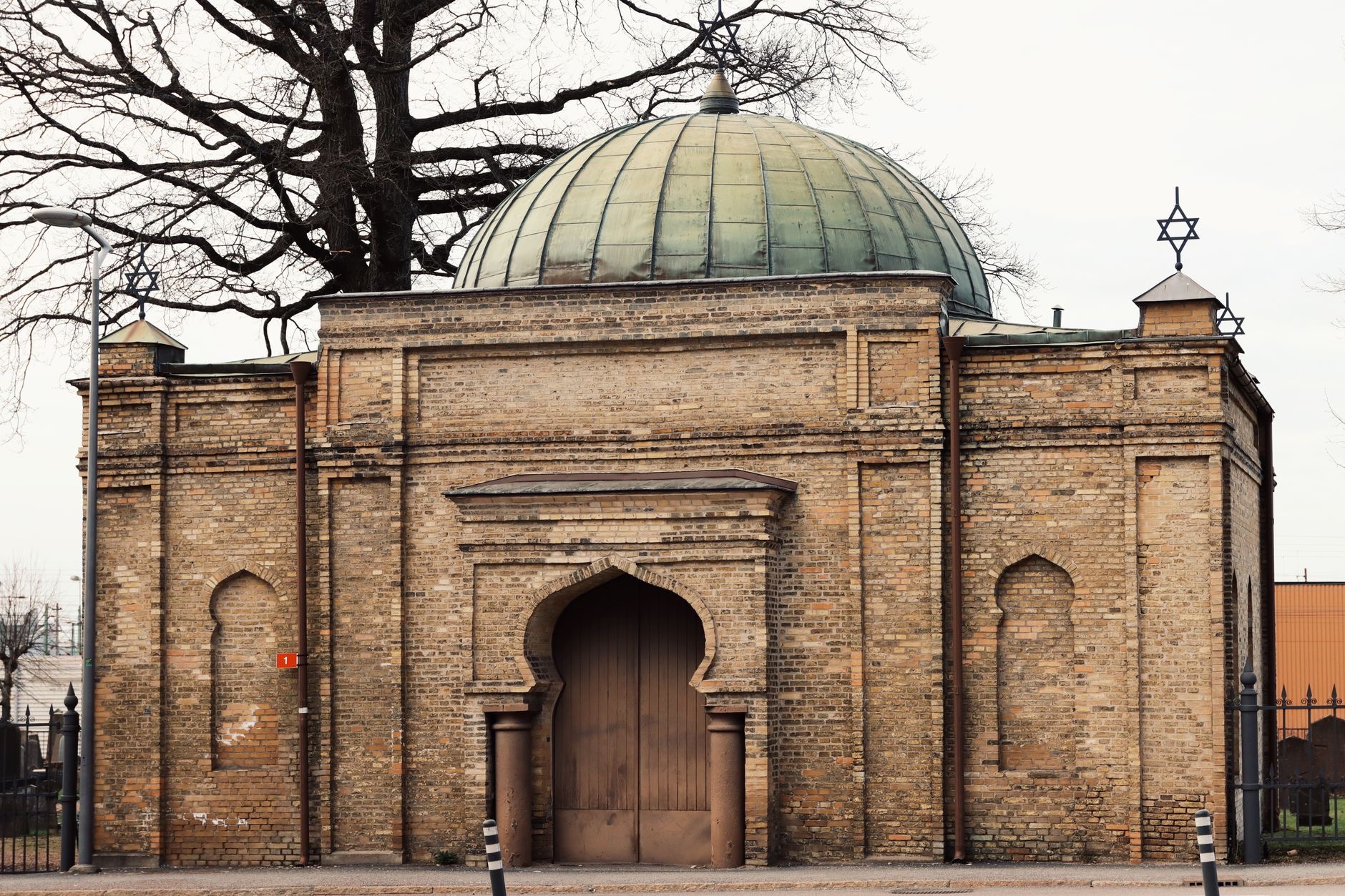
SALT LAKE CITY — A landmark that once stood at the center of Jewish religious life in Utah has reopened as the Salt Lake Art Museum, transforming the former B’nai Israel Temple into a permanent exhibition space for the state’s artists while preserving the history of the 135-year-old building.
The museum opened to the public on Friday, July 24, Utah’s Pioneer Day, at 249 South 400 East. Its arrival gives Salt Lake City its first new fine-art museum in more than four decades, according to the institution, and creates what organizers describe as Utah’s first museum dedicated entirely to artists connected with the state.
The setting distinguishes the museum from a conventional new cultural development. Completed and dedicated in 1891, B’nai Israel Temple predates the Salt Lake Temple of The Church of Jesus Christ of Latter-day Saints, which was completed in 1893 after four decades of construction. For generations, the synagogue was one of the most visible symbols of Utah’s small but influential Jewish community.
Congregation B’nai Israel was established in 1873 as Jewish merchants, craftspeople and other immigrants built lives in the Utah Territory. The congregation commissioned German-born architect Philip Meyer to design a larger synagogue after outgrowing an earlier house of worship. Local architect Henry Monheim supervised construction.
The resulting building blended Romanesque Revival architecture with eclectic European influences. Its principal facade was constructed from rusticated Kyune sandstone, while brick was used along its sides and beneath its prominent dome. Early plans drew inspiration from Berlin’s Fasanenstrasse Synagogue, reflecting the German origins of many congregants, although the final Salt Lake City structure differed substantially from the Berlin building.
The synagogue was not only a place for formal services. It provided classrooms, social spaces and a gathering point where immigrant families could maintain religious traditions, educate children and participate in a growing western city. A new historical gallery inside the museum recounts that role and preserves the stories of people who worshipped there.
B’nai Israel occupied the temple for about eight decades. In 1972, the congregation merged with Congregation Montefiore, which had maintained Orthodox traditions, to establish Congregation Kol Ami. The unified congregation eventually moved its religious life elsewhere, and the old temple was sold.

The building then passed through a series of commercial uses, including periods as a restaurant and office space. Although those adaptations altered parts of the interior, the main structure survived, along with significant architectural details such as its stained glass, galleries, masonry and sanctuary layout. The property was added to the National Register of Historic Places in 1978 as an important surviving monument to Utah’s early Jewish community.
By 2023, the former temple was again on the market. Art historian Micah Christensen and historic preservationist Chris Jensen acquired it for about $3 million the following year and began converting it into a museum. Christensen also had a personal connection to the site: His great-grandfather, Jewish immigrant Philip Louis Fishler, had been a member of the congregation.
The adaptive-reuse project sought to make the structure functional as a public museum without separating it from its religious history. Museum leaders have described the building itself as a work of art and have made its architecture and former congregational life part of the visitor experience rather than treating them as background to the exhibitions.
The museum’s central mission is to present work by Utah artists from different periods and disciplines. Its programming is intended to combine historical retrospectives with exhibitions by living creators, educational events, lectures and community activities. Organizers argue that many artists associated with Utah have achieved recognition elsewhere without receiving sustained attention in their home state.
Among the museum’s announced early exhibitions is a presentation of landscapes associated with Albert Bierstadt, the 19th-century painter known for dramatic images of the American West. Bierstadt spent time working in Utah, and the museum’s project pairs paintings of the state with modern photographs of related locations, allowing visitors to examine how settlement, development and environmental change have altered the landscape.
Other programming highlights the late Pilar Pobil, a Spanish-born Utah painter and sculptor, and Julia Reagan, whose image became familiar across the country after her husband, billboard executive Bill Reagan, placed memorial displays along American highways following her death in 2024. The museum is using such exhibitions to explore how local biography, immigration, advertising, memory and popular culture can intersect with visual art.

The institution has also begun developing its Utah Masters Series, which recognizes influential visual artists associated with the state. Earlier events honored artists including Galina Perova, Stanley Wanlass and Ben Hammond, combining displays of their work with public discussions of artistic practice and Utah’s creative community.
That focus gives the museum a different scope from Salt Lake City’s existing cultural institutions. Rather than assembling a broad national or international collection, it is concentrating on art made in Utah, inspired by Utah or created by people with meaningful ties to the state. Museum leaders say that narrow geographic mission will still allow exhibitions to engage with wider subjects, including migration, climate change, discrimination and the future of the Great Salt Lake.
The reopening also expands a national conversation about how historic houses of worship can survive after their original congregations relocate or merge. Across the United States, aging synagogues, churches and temples face expensive maintenance requirements and redevelopment pressure. Converting such buildings into museums or community spaces can preserve their architecture, but successful projects must also communicate the identities and experiences of the communities that created them.
At B’nai Israel Temple, the museum’s historical displays are intended to ensure that visitors understand the building’s original purpose and the Jewish pioneers whose civic, commercial and cultural contributions extended well beyond the congregation. Its new role does not replace that history; it depends on it.
The Salt Lake Art Museum is now scheduled to operate Monday through Saturday, with extended Wednesday hours. After more than a century of worship, commerce and preservation efforts, the former temple has again become a public gathering place—this time linking Utah’s religious past with the artists documenting its present.




Leave a Reply