
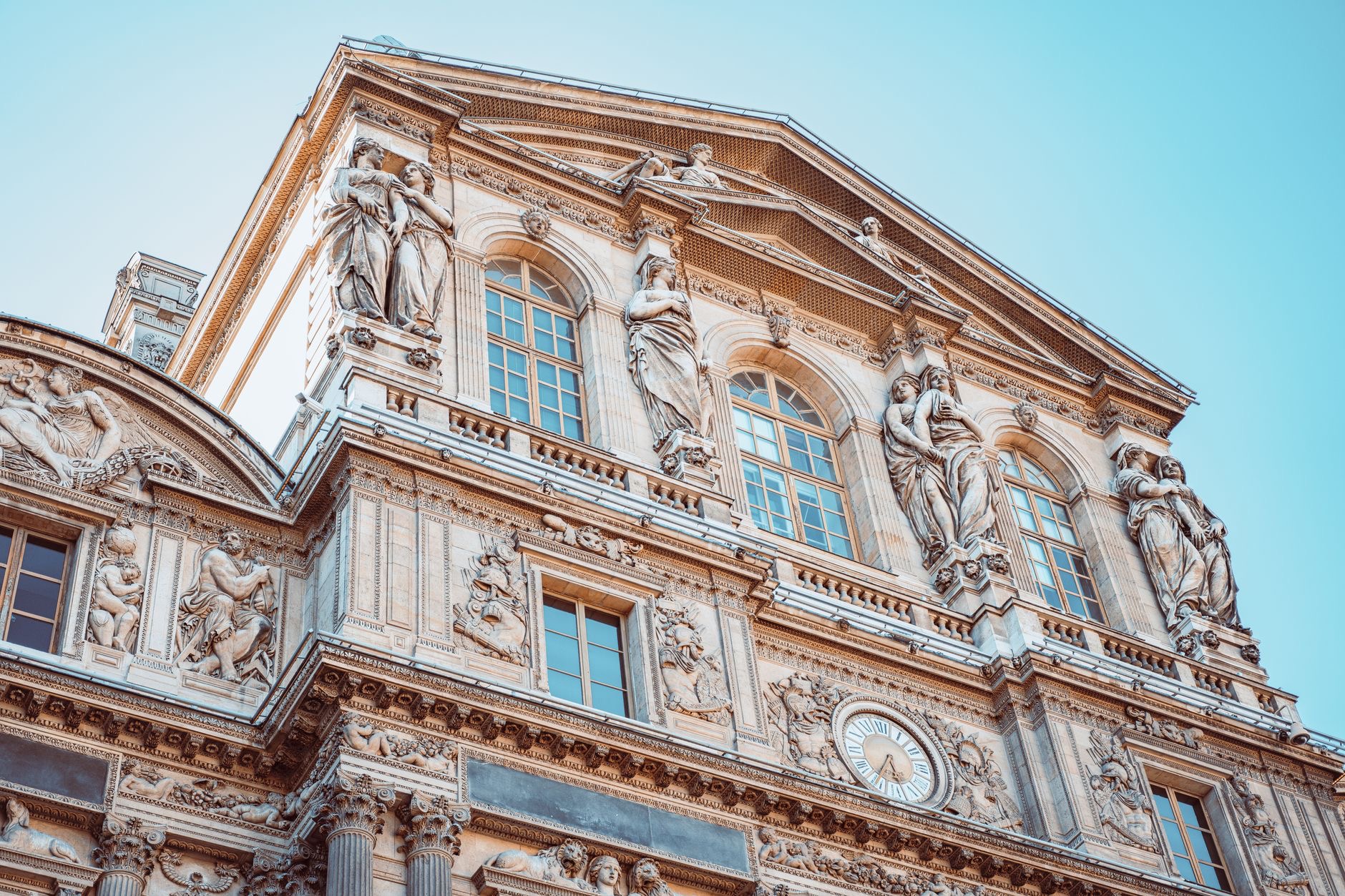
Two men accused of breaking into the Louvre and stealing part of France’s crown jewels say they were recruited by a mysterious sponsor who planned the operation, provided advance intelligence and took possession of the jewelry shortly after the October 2025 robbery.
The allegations, highlighted again in international coverage on July 18, emerged from lengthy interviews conducted by French investigating judges in June. The suspects, identified in French reporting as Abdoulaye N. and Ghelamallah A., had previously acknowledged only limited involvement before giving more detailed descriptions of the planning, execution and aftermath of the theft.
According to accounts reviewed by Le Monde, the men said they were approached two or three days before the robbery by an organizer whose full identity they would not disclose. They referred to the figure as a man named “Jo” associated with Aubervilliers, a suburb north of Paris where both suspects lived. They claimed he showed them footage recorded inside the Louvre’s Apollo Gallery and instructed them to break into the display cases and take as much jewelry as possible.
The organizer’s existence has not been established independently. Investigators reportedly have not uncovered digital communications or other direct evidence conclusively linking an outside sponsor to the theft. The suspects’ descriptions also contain inconsistencies, leaving authorities to consider whether the mastermind story is accurate, partly true or an effort to protect other members of the alleged crew.
Abdoulaye N., a former online motorcycle stunt performer who worked as an unlicensed driver, reportedly admitted that he knew the intended target was the Louvre. He said his motorcycle skills, physical fitness and financial difficulties made him attractive to the organizer. He was allegedly promised between €15,000 and €20,000, with the possibility of additional money depending on the value of the haul.
Ghelamallah A. gave a different account of his knowledge. He claimed he had been told the target was a Paris jewelry business rather than the world-famous museum. He said he was offered between €20,000 and €25,000. That assertion has not been verified and could become significant in assessing his intent and degree of responsibility under French law.
The robbery occurred on the morning of Oct. 19, 2025, after the Louvre had opened to visitors. Four people arrived near the Seine-facing side of the museum with two scooters and a truck fitted with a boom lift. Wearing high-visibility clothing that made them appear to be maintenance workers, two members of the group used the lift to reach a balcony outside the Apollo Gallery.

The intruders cut through a window and then used power tools to breach two display cases. They removed eight pieces associated with French queens and empresses, including tiaras, necklaces, earrings and brooches. The objects contained thousands of precious stones and were valued by French authorities at €88 million, then approximately $102 million. Their historical and cultural significance made their full value effectively impossible to measure.
The crew escaped within minutes. During the withdrawal, the Crown of Empress Eugénie fell from one suspect’s bag and was recovered near the museum in a severely damaged condition. The Louvre has since begun a specialized restoration process. The remaining stolen pieces have not been publicly recovered.
The suspects said the group attempted to destroy evidence around the lift truck and then fled on scooters toward vehicles positioned outside central Paris. One vehicle reportedly took an indirect route around the region, apparently intended to confuse investigators about where the jewels were being transported.
Abdoulaye N. said he carried the stolen pieces to an underground parking garage in Aubervilliers about an hour after the robbery. Low-quality surveillance footage reportedly showed a helmeted figure, identified by investigators as the suspect, handling objects at that location. He claimed the jewelry was delivered there to the organizer and that other people were waiting nearby to move it again.
The alleged sponsor was unhappy with the amount taken, according to the suspect’s account. Abdoulaye N. said the organizer believed the crew had spent too much time entering the gallery and should have removed additional items. That detail, although unverified, supports the suspects’ broader claim that they were hired for a defined task rather than acting entirely on their own initiative.
Both men have declined to give investigators a complete identification of the alleged organizer. They cited fears that their relatives could face retaliation. One suspect said he had received outside messages while in detention telling him to remain silent. Authorities have not publicly confirmed the origin or content of any such communications.

The new testimony leaves investigators weighing two central theories. Under one, no external mastermind exists and the men are using the story to obscure the location of jewels still hidden in or near the Paris region. Under the other, an organizer or intermediary commissioned the robbery and moved the pieces abroad soon after receiving them.
The second theory presents the greatest recovery challenge. Historic jewels are too recognizable to sell intact through legitimate auction houses, dealers or collectors. Criminal handlers can instead remove the stones, melt the settings and recut diamonds, sapphires or emeralds to erase identifying characteristics. Once dispersed among several buyers and countries, the components become much harder to connect to the original objects.
The case has broader implications for American cultural institutions. Major U.S. museums hold similarly recognizable jewelry, antiquities and decorative objects whose cultural value greatly exceeds the resale value of their raw materials. The Louvre robbery demonstrated how relatively ordinary equipment, worker disguises and knowledge of surveillance gaps could be combined against a globally prominent institution during operating hours.
It also illustrates the importance of tracking not only the people who physically enter a museum, but the financiers, brokers and buyers who may create demand for stolen objects. U.S. investigators and museum-security specialists have long treated cross-border trafficking, private storage facilities, free ports and opaque ownership arrangements as potential obstacles to recovering cultural property.
No evidence disclosed publicly has connected the Louvre theft to an American buyer, institution or criminal organization. Its relevance to the United States rests instead on the international nature of the art and gemstone markets, where objects or their components can move quickly through intermediaries far from the location of the original crime.
For now, the central questions remain unresolved: whether the mysterious sponsor described by the suspects is real, who ultimately received the jewels and whether the historic pieces still exist in recognizable form. The suspects’ testimony gives investigators a more detailed narrative, but without corroborating records or recovered property, it remains an allegation rather than a solved chain of command.




Leave a Reply