
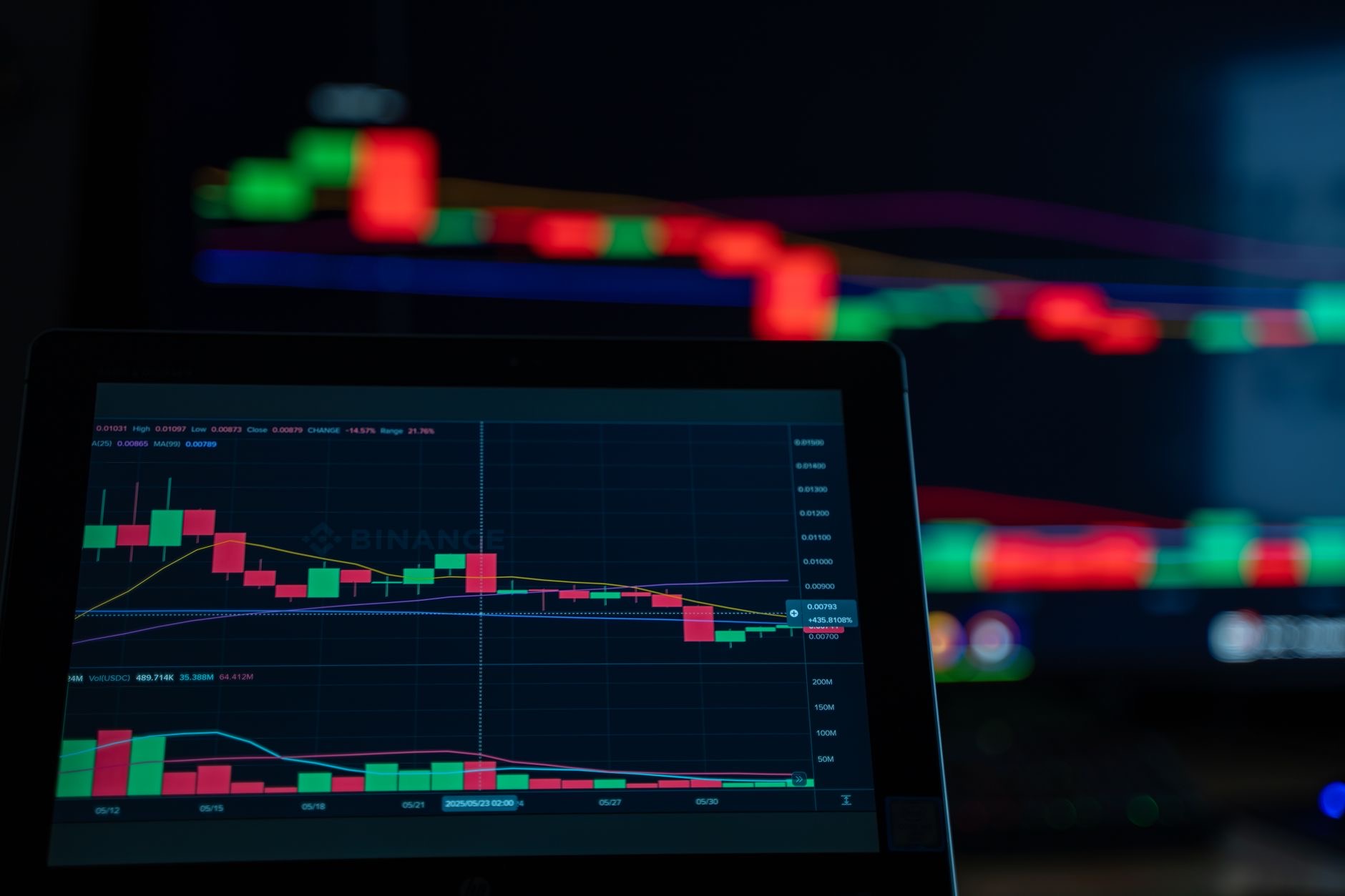
Chinese hedge fund warnings that the artificial intelligence trade has become a “super bubble” are gaining new relevance for U.S. technology investors as Wall Street enters the second half of 2026 questioning whether the AI buildout can keep justifying its cost.
The warnings came from some of China’s most closely followed money managers, including Wealspring Asset Management founder Yang Dong and Shanghai Banxia Investment Management Center founder Li Bei, according to Bloomberg reporting republished by Yahoo Finance Hong Kong and summarized by other technology outlets. Their central argument is blunt: AI remains a powerful technology, but the stocks tied to its infrastructure boom may have been priced for growth that is too certain, too profitable and too immediate.
Wealspring, which Bloomberg described as managing more than $1.4 billion, told investors that global AI stocks had formed a “super bubble” and that the collapse point may not be far away. The firm’s concern focused partly on Chinese AI infrastructure companies that it said lack durable competitive moats, have relatively ordinary business models and require continuous capital expenditure to sustain growth. Bloomberg reported that Wealspring warned some of the hottest domestic AI shares in China could fall more than 80%, though it did not name specific companies in the letter.
Banxia, reported to manage more than $294 million, framed the risk differently. The firm said the trigger for an AI bubble burst had already appeared and pointed to pressure on Anthropic PBC’s rapid revenue growth. Its argument was that large technology customers may resist rising token costs, while competitors could erode Anthropic’s popularity with software developers. Banxia did not respond to Bloomberg’s request for comment, and Wealspring did not respond through a representative, according to the report.
For Silicon Valley and U.S. markets, the significance is not that Chinese funds have suddenly become the arbiters of the AI trade. It is that their concerns echo a broader question now being asked across global markets: how much capital spending can the industry absorb before investors demand clearer evidence of returns?
That question became more visible over the July 4 holiday weekend. Business Insider reported on July 5 that investors were focused on the split between hardware winners and the hyperscalers funding the AI expansion. The Philadelphia Semiconductor Index had recently posted a record 88% gain in the second quarter, while the largest U.S. technology platforms had lagged the Nasdaq 100. The market’s debate, as framed by analysts cited in that report, is whether this is a healthy rotation toward “picks and shovels” suppliers or an early warning that the companies buying the shovels are struggling to prove the economics.

The same weekend, MarketWatch reported that U.S. stocks could face sharp internal rotations in July after a powerful momentum rally led by semiconductor shares. That kind of rotation matters because the AI trade is unusually concentrated. A small number of U.S. companies are responsible for much of the infrastructure spending, while a relatively narrow group of chip, memory, networking, data-center and power-equipment suppliers have captured the market’s enthusiasm.
The Bank for International Settlements added an institutional warning in its 2026 Annual Economic Report. The BIS said the five largest U.S.-based hyperscalers — Alphabet, Amazon, Meta, Microsoft and Oracle — are set to spend more than $1 trillion on AI-related capital expenditure across 2025 and 2026. It said those commitments are outpacing earnings and free cash flow for the group, leading some firms to issue debt to raise additional financing.
The BIS did not declare AI a bubble. Its argument was more measured and, in some ways, more relevant to policymakers and investors: genuine technological breakthroughs can still produce overinvestment cycles when capital floods in faster than commercial returns can support. The report compared the AI buildout with earlier investment booms tied to canals, railways, electrification and the dot-com era. In those episodes, transformative technologies survived, but many financial claims attached to them did not.
That distinction is important for technology readers. A bubble warning does not mean generative AI, cloud inference, coding assistants or autonomous agents are fake. It means the market may be capitalizing years of expected productivity gains before enough cash flow has appeared. The risk is especially acute when the same companies must spend heavily on GPUs, memory, networking gear, data-center real estate, electricity access and long-term cloud capacity before knowing which AI products will produce durable margins.
In the U.S., the pressure points are increasingly visible. Hyperscalers are promising massive infrastructure expansion while investors scrutinize monetization from AI subscriptions, enterprise tools, developer platforms, advertising products and cloud workloads. AI labs are raising capital at high private valuations while depending on compute contracts that often link them back to the same cloud providers. Chipmakers and memory suppliers benefit from the spending surge, but their revenue outlook would change quickly if the largest cloud buyers slowed orders.
The Chinese hedge fund warnings also show how global the AI valuation cycle has become. Chinese markets have produced their own wave of AI-themed stocks, including infrastructure and application names tied to domestic demand, government priorities and restrictions on access to advanced U.S. chips. Yet the funds’ concerns overlap with U.S. investor anxiety: business models may be less defensible than assumed, capital intensity may be higher than expected and competition may compress returns before investors see enough profit.

There are counterarguments. AI adoption is broadening across software development, customer service, cybersecurity, drug discovery, data analytics, media production and enterprise productivity. U.S. cloud providers continue to report strong demand for AI capacity, and semiconductor suppliers have benefited from real orders rather than only speculative narratives. Some investors argue that hardware outperformance is a rational stage of an infrastructure cycle, not a warning sign. In that view, the first large profits naturally accrue to chipmakers, memory suppliers and data-center equipment providers before software applications fully mature.
Still, the burden of proof is shifting. In 2023 and 2024, investors often rewarded companies for announcing AI strategies. In 2026, they are asking more specific questions: whether AI workloads are profitable after compute costs, whether enterprise customers will pay enough to cover model and infrastructure expenses, whether open-source models will pressure margins, whether power and grid bottlenecks will slow data-center deployment, and whether debt-funded AI infrastructure can withstand a downturn in demand.
For startups, the bubble debate may show up first in fundraising terms. If public AI multiples compress, private investors are likely to ask more aggressively about revenue quality, gross margins, compute efficiency and customer concentration. Startups that sell tools into the AI buildout could face budget delays if large platforms tighten capital plans. Conversely, companies that help reduce inference costs, improve data-center efficiency or deliver measurable enterprise productivity gains may become more attractive as customers look for return on investment rather than experimentation.
For public markets, the next tests will come through earnings guidance, capital-spending updates and commentary from the largest cloud and chip companies. Investors will be watching whether hyperscalers maintain AI capex plans, whether semiconductor backlogs remain firm, whether enterprise AI revenue continues to accelerate and whether model providers can convert usage growth into sustainable economics.
The Chinese hedge funds’ warning is therefore best read not as a verdict, but as a marker in the market cycle. AI’s long-term technological importance remains widely accepted. The open question is whether the 2026 price of the AI trade already assumes too much of that future, too soon.


Leave a Reply