
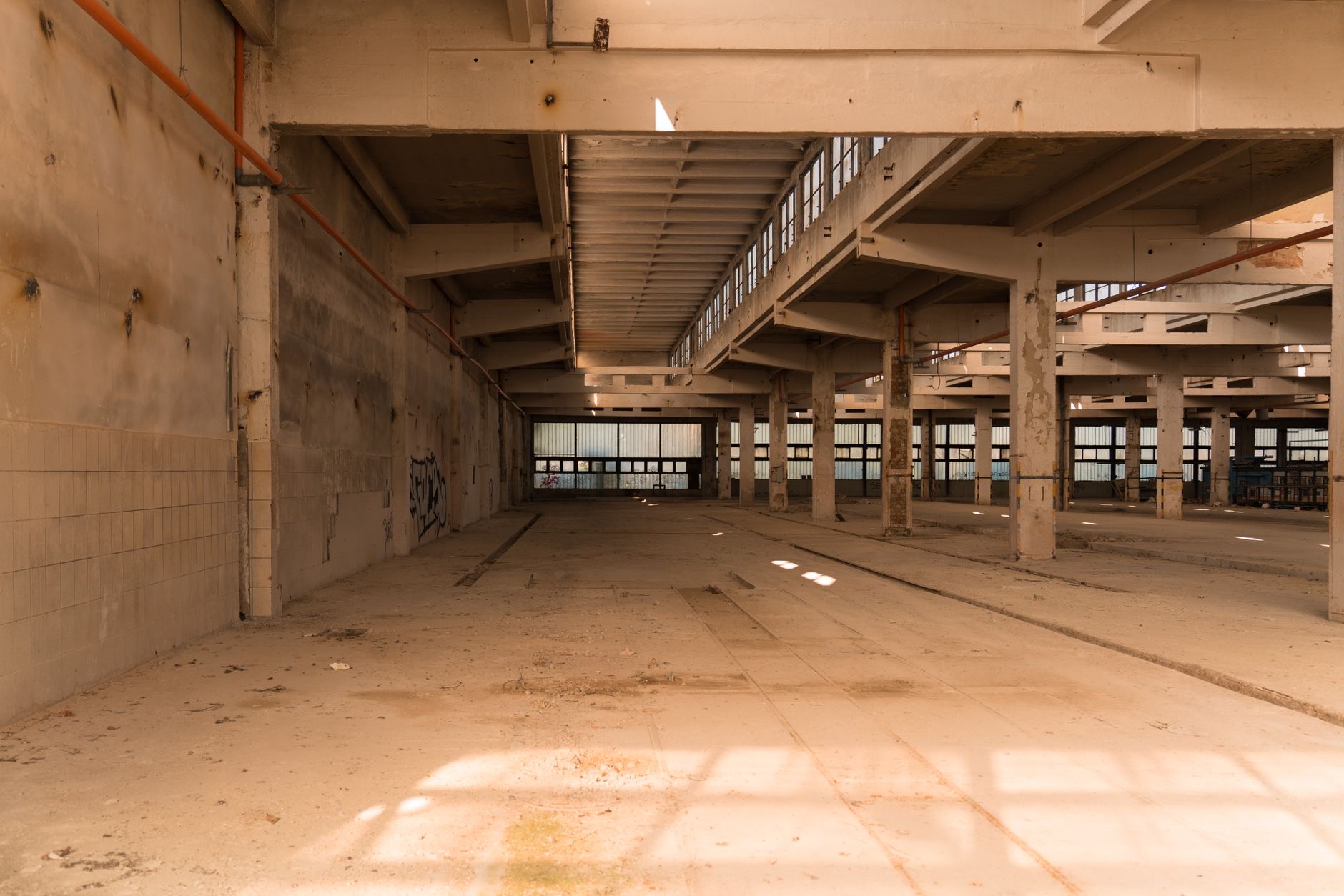
Federal officials have formally told a judge that they no longer intend to turn a Romulus, Michigan, warehouse into an immigration detention center, a court filing that suggests one of the region’s most contested federal immigration projects may be nearing its end.
The joint status update, filed Monday in U.S. District Court for the Eastern District of Michigan, says the federal defendants “no longer intend to convert the Romulus Warehouse into an immigration detention facility” and “intend to sell the warehouse.” The parties said they would discuss next steps in the litigation and provide another report to the court by July 17. They also jointly asked the court to cancel a conference previously scheduled for July 1.
The filing is brief, but it is significant because it was signed by attorneys representing the U.S. Department of Justice, the Michigan Department of Attorney General and the City of Romulus. The litigation remains active for now, and the filing does not say when the sale would occur or who might buy the property. But it puts the government’s retreat in writing after months of legal and political opposition to the proposed detention site.
The warehouse at issue is located at 7525 Cogswell Street in Romulus, a Detroit-area city near major airport and industrial infrastructure as well as residential neighborhoods. Michigan officials said earlier this year that U.S. Immigration and Customs Enforcement had purchased the commercial warehouse with the intention of converting it into a mass immigration detention facility. The state attorney general’s office said the site lacked the infrastructure needed to support hundreds of detainees and staff and was located too close to homes, schools and environmentally sensitive areas.
Michigan Attorney General Dana Nessel and the City of Romulus sued the Department of Homeland Security and ICE in March, seeking to block the conversion. The complaint argued that the federal agencies moved ahead without adequately considering alternatives, without proper environmental review and without sufficient cooperation with state and local officials. The lawsuit also alleged that the site was within a mile of schools, abutted residential neighborhoods, sat in a floodplain and lacked adequate sewer and other infrastructure for a large detention operation.

In the latest statement from her office, Nessel said the court filing formalized the federal government’s intent to sell the property. She said Romulus was not an appropriate place for a large-scale detention center and called the expected sale a victory for residents and the broader metro area. Her office said the state would continue watching the case until the next court update and the property’s future is clearer.
Romulus Mayor Robert McCraight also framed the development as a location-specific win. In comments reported by Spectrum News, McCraight said the city’s position should not be understood as opposition to “responsible enforcement” of federal law. Instead, he said the facility’s proximity to neighborhoods, schools and wetlands would have made it the wrong location and would have imposed a heavy burden on local public-safety resources. He also said the project would have violated the city’s zoning ordinance.
The local dispute unfolded as the federal government pursued a broader effort to add immigration detention capacity through large warehouse-style properties. The Associated Press reported that Romulus is among several communities where warehouse detention plans have run into lawsuits, permitting obstacles, cost questions or public opposition. AP reported that the federal government spent a combined $1.074 billion on warehouses in 11 cities and that officials have moved to offload or rethink some of those properties.
For Romulus, the central issue was not only immigration policy but also land use, municipal authority and whether a federal agency could rapidly repurpose a commercial warehouse into a large detention facility without addressing local infrastructure and environmental concerns. State and city officials said they were blindsided by the purchase and did not receive adequate answers before seeking court intervention.

The federal government’s filing does not concede the legal claims brought by Michigan and Romulus. It also does not spell out whether DHS or ICE could pursue a different detention arrangement elsewhere in Michigan. The narrow point placed before the court is that the defendants no longer intend to convert the Romulus warehouse and now intend to sell it. That means the immediate fight over the Cogswell Street property may be winding down, but the lawsuit will remain unresolved until the parties agree on what happens next or the court takes further action.
The timing matters because the court had been preparing for a July 1 conference. By asking to cancel that conference and setting a July 17 status-report deadline, the parties effectively gave themselves several weeks to determine whether the case can be paused, narrowed or dismissed. The July update is expected to clarify whether the property sale is proceeding and whether Michigan and Romulus believe their claims have been fully addressed.
The case also provides a concrete example of how immigration enforcement policy can collide with state and local planning rules. Even where federal agencies have broad authority over immigration detention, converting a warehouse into a secure residential detention site can raise questions about water, sewer capacity, emergency response, transportation, environmental review and land-use compatibility. Those issues were central to Romulus officials’ objections and could shape similar disputes in other communities.
For residents and local officials who opposed the Romulus project, Monday’s filing is the clearest sign yet that the detention center will not open there. For the federal government, it appears to mark a tactical retreat from a specific property rather than a broad retreat from detention expansion. The practical outcome now depends on whether the warehouse is actually sold, whether the court accepts the parties’ next steps and whether DHS or ICE identifies another site to serve the same detention-capacity goals.




Leave a Reply