
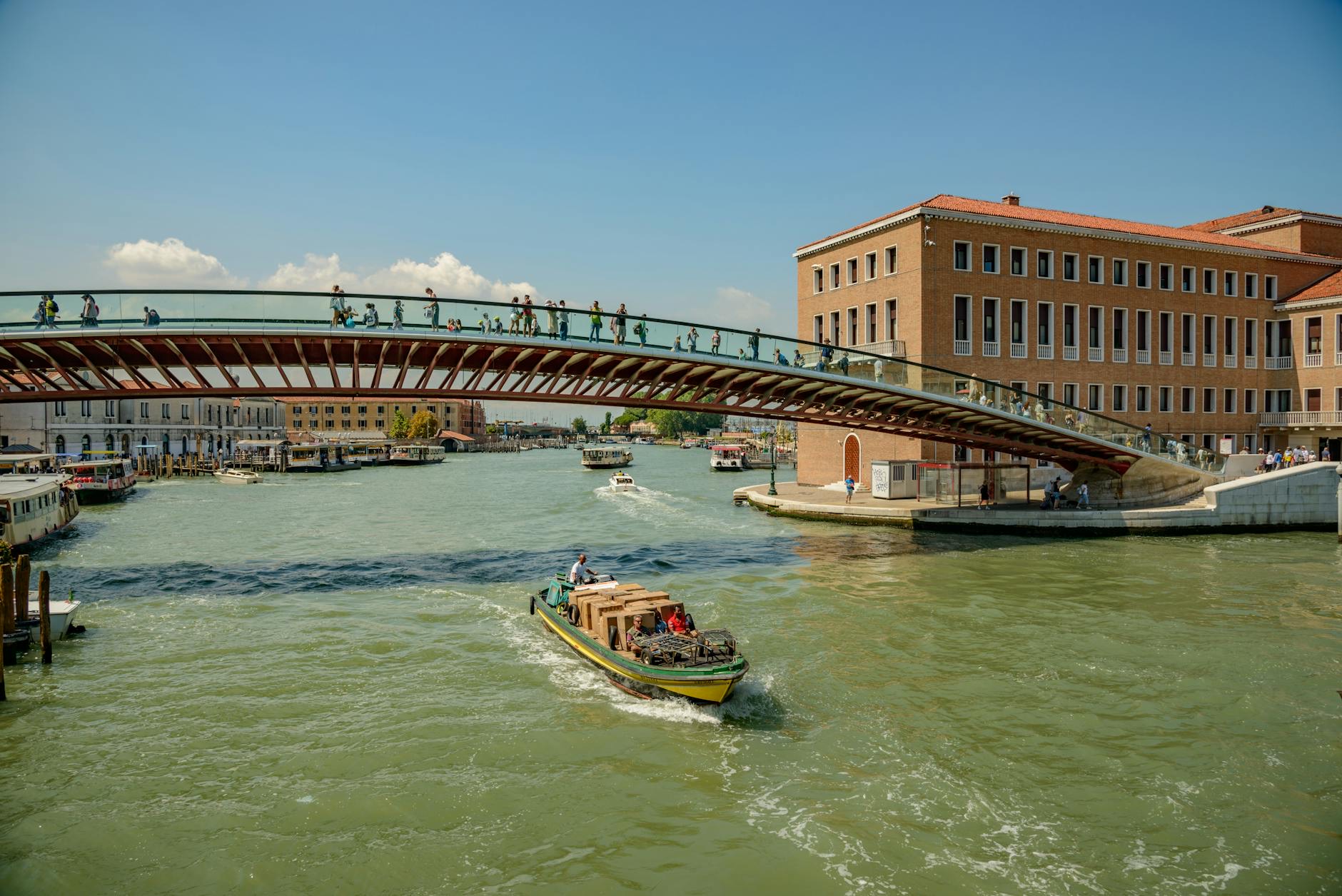
When the 61st Venice Biennale—arguably the world’s most influential and closely watched international art exhibition—opened its doors this spring, it did so amid a debate many in the U.S. art community had not anticipated: whether the selection of Utah?born sculptor Alma Allen to represent the United States was an inspired choice or the latest illustration of cultural politics overriding artistic judgment.
Allen’s appointment to lead the U.S. Pavilion exhibition *Alma Allen: Call Me the Breeze* has attracted attention not primarily for the work itself—his biomorphic sculptures are known to collectors and a circle of contemporary art devotees—but for the context of his selection and what it signals about U.S. cultural diplomacy. A native of Salt Lake City who has spent much of his career in Mexico, Allen was confirmed by the U.S. State Department in November 2025 after bureaucratic delays tied to a government shutdown delayed the announcement. The commission places him on an international stage typically reserved for artists with broad critical acclaim and entrenched art?world pedigrees.
Unlike many who have held the honor of representing the United States at Venice, Allen does not come out of the traditional American art establishment. He is largely self?taught and rose to prominence through a body of work that shuns narrative or overt political content in favor of abstract, polished forms that suggest neither figurative storytelling nor easy interpretation. Critics have described his pieces as “sensuous biomorphic forms,” but his relative obscurity among mainstream art media has made him a controversial figure for one of the Biennale’s marquee national presentations.
In coverage leading up to the Biennale’s opening, some art commentators and institutions expressed surprise that acclaimed artists and widely recognized figures such as William Eggleston and Barbara Chase?Riboud declined the commission or were not selected, leaving Allen, who until recently had remained outside the top tier of U.S. contemporary artists, to occupy the pavilion. This has fueled a narrative that the selection may be less about Allen’s artistic stature and more about broader cultural or political priorities in how the U.S. chooses to project itself on a global stage.

The controversy, as reported this week by The Salt Lake Tribune, also underscores the unique tension of having a Utah native—a figure whose career has largely unfolded outside traditional art?world centers—become the focus of international cultural diplomacy. The local reaction in Utah reflects a blend of pride and bewilderment, with some community members hailing his achievement as a validation of diverse artistic pathways and others questioning the decision as out of step with expectations for such a high?profile appointment.
Supporters of Allen’s selection point to the broader mandate of the U.S. Pavilion: to present contemporary American art that is both culturally resonant and reflective of diverse creative voices. The Biennale’s curator for the U.S. Pavilion, Jeffrey Uslip, has emphasized that Allen’s work, grounded in material experimentation and global sensibilities, presents a compelling vision for American artistic expression. Under this framing, Allen embodies a forward?looking articulation of U.S. cultural identity at a moment when the nation also marks 250 years since the signing of the Declaration of Independence.
Yet, detractors argue that Allen’s relatively limited profile—and the broader political environment surrounding arts funding and national cultural strategy—raises questions about whether the Biennale appointment is being used as a symbol of national messaging rather than artistic achievement. Some within the art community see the selection as aligned with recent federal priorities that favor a particular articulation of American “excellence,” an argument that resonates especially amid debates over public arts funding, cultural representation and the role of government in shaping artistic narratives abroad.
The Biennale controversy sits within a larger pattern of debates in the U.S. about the boundaries between art and politics. In recent years, artists and cultural institutions have grappled with issues ranging from censorship and institutional autonomy to the influence of political considerations on exhibition content. Cases such as university museums altering exhibits to comply with institutional policies or artists withdrawing works over disputes about political interpretation have illustrated the fraught landscape of contemporary cultural discourse. While the controversy around Allen is less about the content of his work and more about the process and implications of his selection, it nonetheless reflects that art on international stages is not immune to the reverberations of domestic cultural debates.

For the Biennale’s global audience, this means that Allen’s pieces will be interpreted against the backdrop of these discussions. His sculptures, often described as straddling the line between organic presence and abstract form, may be seen by some as an arresting counterpoint to the highly politicized environment from which they emerge—a reminder that, even amid controversy, art retains the capacity to provoke thought beyond the headlines.
Allen himself has addressed the controversy in sparse public comments, suggesting that much of the pushback stems from misunderstanding his work rather than from critique of its content. He has emphasized that his practice is rooted in material engagement and intuitive exploration, not in overt political commentary, and maintains that the Biennale representation is an opportunity to present American art that transcends conventional expectations.
As the Biennale progresses, discussions about Allen’s role and the pavilion’s reception will likely continue among critics, collectors and cultural policymakers. Whether his work will ultimately shift perceptions of what constitutes American art on the world stage remains to be seen—but the conversation itself underscores the enduring significance of artistic representation, national identity and the sometimes uncomfortable intersections between culture and statecraft.




Leave a Reply