
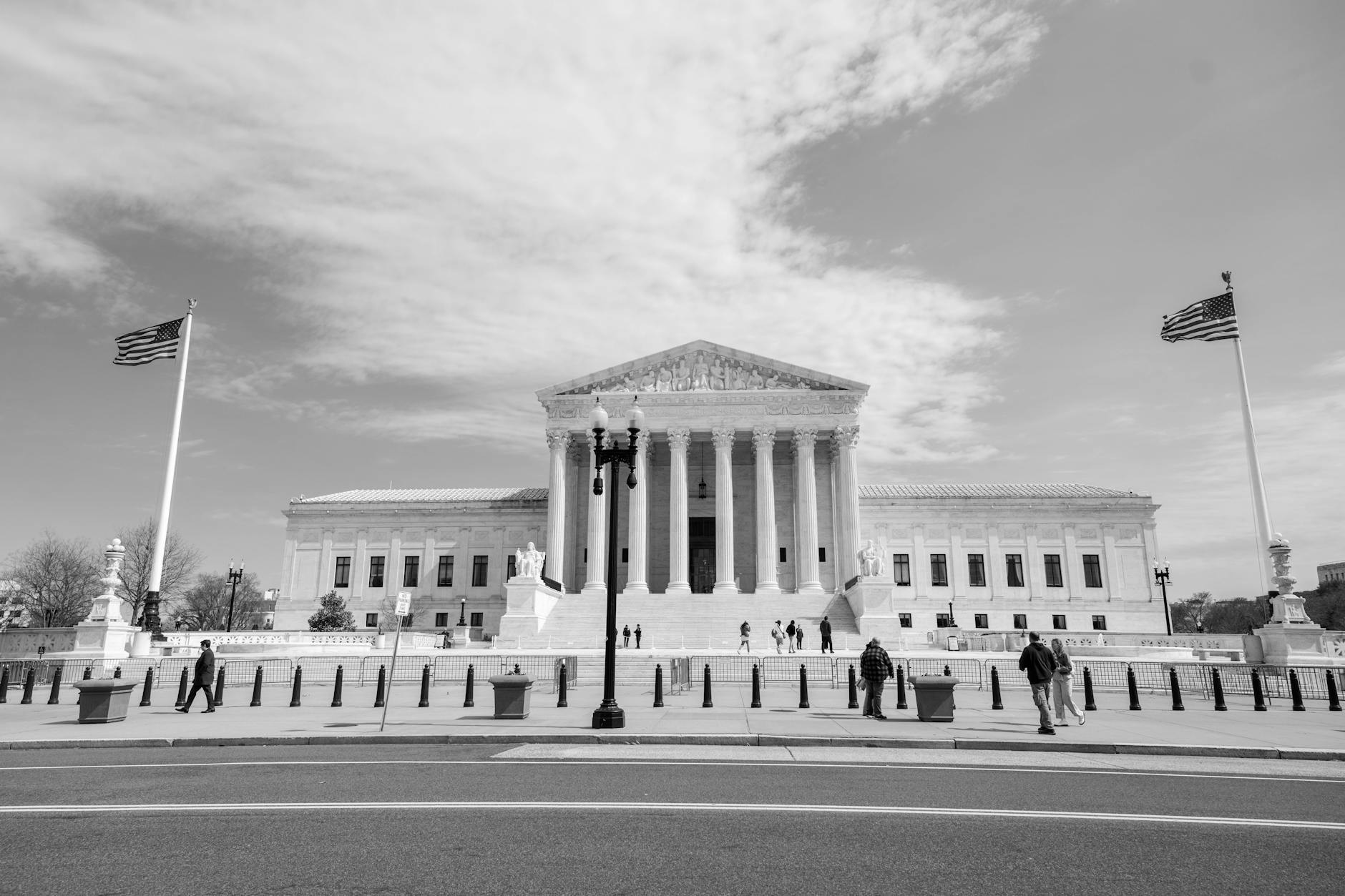
The Supreme Court is weighing whether the Trump administration may end Temporary Protected Status for Haitians and Syrians, a pair of consolidated cases that could decide how much power courts have to review federal immigration protections for people fleeing armed conflict, disaster and political instability.
The arguments center on Mullin v. Doe and Trump v. Miot, cases involving the Department of Homeland Security’s attempt to terminate TPS designations for Syria and Haiti. The court’s docket shows the cases were consolidated after the justices treated emergency stay applications as petitions for review before judgment and granted an unusually fast path to oral argument. The cases were set for argument on April 29, with the court allotting 80 minutes after granting in part a request for divided argument.
Although the assigned issue is narrow in statutory terms, the stakes are broad. Temporary Protected Status allows eligible nationals of designated countries to remain in the United States and obtain work authorization when their countries cannot safely receive them because of natural disaster, armed conflict or other extraordinary and temporary conditions. TPS does not create a path to citizenship, but it can be renewed in increments when DHS determines that qualifying conditions persist.
The administration’s position is that the Homeland Security secretary’s TPS determinations are committed to executive discretion and that federal law sharply limits judicial review. Solicitor General D. John Sauer argued in filings and at argument that courts should not override decisions involving immigration, national security and foreign policy judgments. The administration has said lower courts improperly blocked the government from carrying out a central immigration-policy initiative.
Lawyers for Haitian and Syrian TPS holders frame the dispute differently. They argue that the statute may limit review of the ultimate country-designation decision, but it does not prevent courts from checking whether DHS followed required procedures, consulted relevant agencies, applied the correct legal standard and avoided constitutionally impermissible bias. The challengers also say Haiti and Syria remain unsafe for return and that abrupt termination would expose longtime U.S. residents to deportation, job loss and family separation.

The Haiti case involves hundreds of thousands of people whose protections trace back to the country’s 2010 earthquake and subsequent years of instability. The Associated Press reported that lower courts had stopped the immediate end of TPS for about 350,000 Haitians and 6,000 Syrians. Haiti’s protections have been extended repeatedly as the country has faced gang violence, displacement, limited health care and weak governance. A current State Department advisory tells U.S. citizens not to travel to Haiti because of crime, kidnapping, unrest and limited health care, and says the U.S. government has extremely limited ability to provide emergency services there because of security-related restrictions.
The Syria case involves a smaller group but raises similar questions about executive authority and reviewability. Syria was first designated for TPS in 2012 during the civil war. According to Cornell Law School’s Supreme Court Bulletin, Syrian TPS holders argue that the government’s termination did not comply with statutory procedures and that the case implicates safety, national security and the meaning of judicial-review bars. The administration argues that the relevant DHS consultation and decision-making were lawful and that courts should not examine the substance or methodology of the TPS termination.
Several justices appeared focused on the statutory text governing TPS and whether Congress intended to shield DHS decisions from most court challenges. Conservative justices have previously given the administration room to move ahead with other TPS-related terminations while litigation continued. But the Haiti and Syria cases present a broader merits question: whether courts can examine not only the secretary’s final determination, but also alleged procedural flaws and constitutional claims behind the decision.
The equal-protection argument in the Haiti case adds another layer. Plaintiffs have argued that the termination process was influenced by hostility toward nonwhite immigrants. The administration denies that racial animus played any role and says DHS relied on country-conditions assessments and national-interest determinations. Lower courts credited enough of the challengers’ claims to keep protections in place while litigation proceeded, but the Supreme Court’s eventual ruling could limit how far those claims may go in TPS litigation.

The dispute arrives amid a wider effort by the administration to narrow or end immigration protections created or extended under prior administrations. TPS holders from multiple countries have faced uncertainty as DHS reassesses designations. Immigration advocates say mass termination would disrupt industries, families and local communities that have relied for years on TPS holders’ lawful employment. Supporters of the administration’s position say the program was designed to be temporary and that courts should not convert it into a long-term immigration status by blocking terminations.
For states and cities with large Haitian and Syrian communities, the practical effects could be immediate if the administration prevails. Work permits could lapse, employers could lose experienced workers, families with U.S.-citizen children could face new instability, and local service systems could see increased demand. Public Rights Project said a coalition of local governments and leaders filed an amicus brief warning of harm to communities if TPS is abruptly revoked, including in jurisdictions with large Haitian and Syrian populations.
The court is expected to issue a decision before the end of its term. Until then, lower-court orders have left protections in place for the affected groups. The ruling could either preserve judicial review over alleged procedural and constitutional defects in TPS terminations or give DHS substantially more room to end designations without court intervention. Either outcome would shape not only the future of TPS for Haitians and Syrians, but also the legal terrain for immigrants from other countries whose temporary protections are under review.




Leave a Reply