
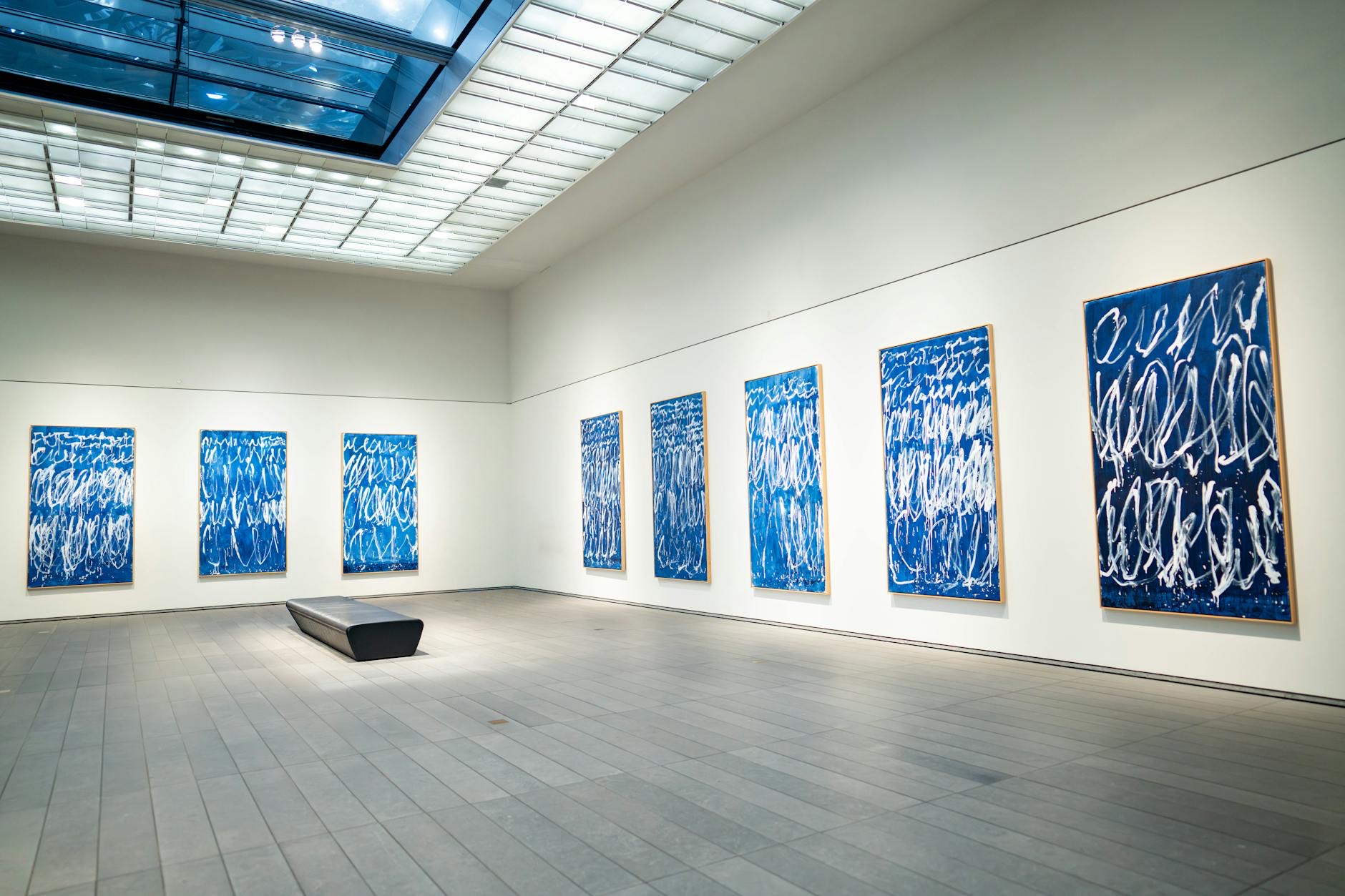
New York’s spring art season, traditionally anchored by marquee gallery openings and major museum exhibitions, is this year marked by a quieter but notable recalibration: a wave of institutional attention directed at artists who have long worked outside the spotlight. Across several venues, five such figures are emerging into broader recognition, their work reframed through curatorial narratives that emphasize historical context, cultural specificity, and formal innovation.
At a midtown museum, one painter whose practice began in the late 1990s is receiving a long-overdue survey that traces a career defined by persistence rather than market momentum. Known for densely layered canvases exploring diasporic identity, the artist’s work had previously circulated primarily through smaller nonprofit spaces. The current exhibition situates those paintings within a broader art-historical framework, drawing connections to both postwar abstraction and contemporary figurative revival. Curators have emphasized archival material alongside finished works, underscoring the continuity of themes that critics now describe as prescient.
In Brooklyn, a sculptor working with industrial materials is drawing renewed attention through a site-specific installation that transforms a former warehouse space. The artist’s practice—centered on repurposed metals and urban detritus—had been largely overlooked in mainstream venues despite decades of production. The new exhibition, supported by a major foundation grant, positions the work within conversations about sustainability, labor, and the built environment. Visitors encounter large-scale assemblages that blur the line between sculpture and architecture, prompting reconsideration of how material histories shape aesthetic experience.
Another artist, whose interdisciplinary practice spans performance, video, and sound, is being featured in a prominent Chelsea gallery. Their work, often addressing themes of migration and linguistic fragmentation, has historically resisted easy categorization, which some curators now argue contributed to its marginalization. The current presentation includes newly commissioned pieces alongside earlier works, creating a dialogue that foregrounds continuity rather than rupture. Critics have noted that the exhibition reflects a broader willingness among galleries to support non-commercially conventional practices.
A fourth figure, a photographer whose early work documented overlooked communities in New York during the 1980s and 1990s, is the subject of a retrospective that recontextualizes those images within contemporary debates about representation. The exhibition highlights not only the aesthetic qualities of the photographs but also their sociological significance. Curators have emphasized the artist’s long-standing engagement with community-based storytelling, positioning the work as both artistic and archival. The renewed attention comes as institutions increasingly seek to address gaps in their historical narratives.
The fifth artist, working primarily in mixed-media painting, is being introduced to a wider audience through inclusion in a major group exhibition focused on emerging and rediscovered voices. Although the artist has exhibited consistently in regional venues, this marks their first presentation in a high-profile New York setting. The works combine traditional painting techniques with unconventional materials, challenging distinctions between craft and fine art. Curators have framed the inclusion as part of an effort to broaden definitions of contemporary practice.

While each artist’s trajectory is distinct, several common factors underpin their current recognition. One is the role of curatorial advocacy. In many cases, individual curators have championed these artists over multiple years, building the institutional support necessary for larger exhibitions. Another factor is the evolving priorities of museums and galleries, which are increasingly attentive to diversity in both representation and medium.
Market dynamics also play a role, though often indirectly. As the commercial art market continues to concentrate around a relatively small group of highly visible artists, institutions have sought to differentiate their programming by highlighting less familiar voices. This strategy not only attracts critical attention but also aligns with broader cultural conversations about inclusion and equity.
Academic engagement is another critical component. Several of the artists now gaining recognition have recently been the subject of scholarly research, including exhibition catalogs and university-led symposia. Such scholarship provides the intellectual framework that supports institutional programming, helping to situate individual practices within larger historical narratives.
Audience reception has so far been notable for its attentiveness rather than spectacle. Visitors to these exhibitions encounter work that often demands sustained engagement, whether through complex visual language, layered historical references, or unconventional presentation formats. This contrasts with more commercially oriented shows, which tend to prioritize immediate visual impact.
The developments in New York also reflect broader national and international trends. Museums across the United States have in recent years undertaken initiatives to reassess their collections and exhibition histories, often revealing significant gaps in representation. The current wave of exhibitions can be seen as part of this ongoing process, translating institutional commitments into visible programming.

For the artists themselves, the implications are significant. Institutional recognition can lead to acquisitions by major collections, increased critical coverage, and expanded opportunities for future exhibitions. It can also reshape how their work is understood, shifting narratives from marginality to centrality within contemporary art discourse.
Curators involved in the spring exhibitions have emphasized that the goal is not simply to correct past omissions but to create a more inclusive and accurate representation of artistic production. This involves not only highlighting individual artists but also reconsidering the frameworks through which art is evaluated and presented.
As the season continues, attention is likely to remain focused on how these exhibitions influence both critical discourse and market behavior. While it remains uncertain whether the current recognition will translate into sustained visibility, the immediate impact is clear: a set of artists who have long worked outside the spotlight are now being integrated into the mainstream narrative of contemporary art in New York.
The shift underscores a broader transformation within the cultural sector—one that values depth, diversity, and historical reconsideration alongside innovation. For audiences and institutions alike, the spring 2026 exhibitions offer a moment to engage with artistic practices that challenge established hierarchies and expand the scope of what is considered central to the art world.




Leave a Reply