
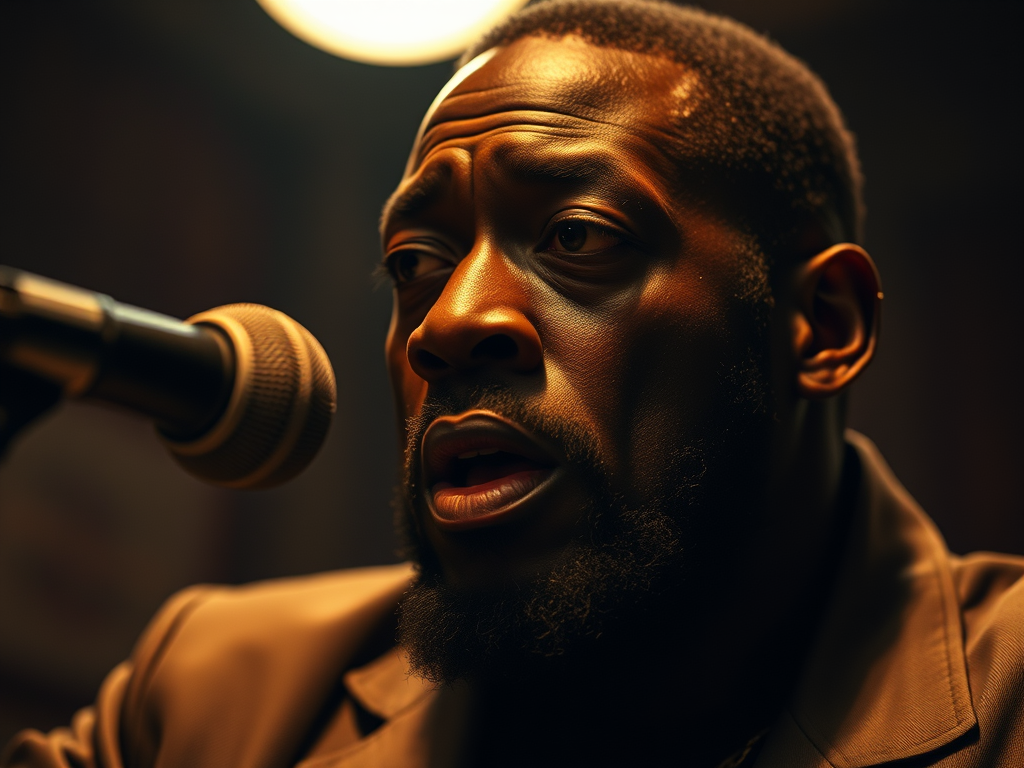
At 73, Delroy Lindo admits he has grown weary of hearing his own voice. It is a voice audiences instantly recognize — resonant, deliberate, commanding — the kind that resists glib sound bites and favors reflection over flash. In recent months, however, that voice has echoed across awards-season panels, interviews, and industry conversations as admirers dissect his performance as Delta Slim, the hard-drinking blues musician at the center of Sinners, directed by Ryan Coogler.
The role earned Lindo his first Academy Award nomination for Best Supporting Actor, one of 16 nominations the film received — a milestone that cemented its place as one of the year’s most celebrated releases. For many observers, the recognition felt long overdue. Over the course of three decades, Lindo has delivered indelible performances in films such as Da 5 Bloods, The Cider House Rules, and Malcolm X. Coogler himself has credited Malcolm X as a life-changing cinematic experience, and he has spoken openly about the emotional force Lindo brought to Delta Slim.
According to Coogler, Delta Slim is a character defined by fractures — moments when sorrow seeps through the cracks between sobriety and intoxication. In those flashes of vulnerability, he said, the performance lands with devastating honesty.

For Lindo, the most meaningful aspect of this moment has not been prestige but affirmation. He insists the joy he feels has little to do with ego. What moves him is the sense that his work resonates with others — that art can affect people in tangible, human ways. That, he says, is why he became an actor in the first place.
One of the most discussed sequences in Sinners is Delta Slim’s extended monologue recounting a lynching near a railroad station — a pivotal scene in which trauma transforms into music. By the time Lindo filmed it, he felt fully immersed in the character’s emotional landscape. The speech is steeped in pain, but Lindo is careful to point out that Delta Slim does not speak as a victim. He speaks as someone resisting violation, someone pushing back. The blues, in this context, emerges as both testimony and survival mechanism — an art form born from suffering yet aimed at endurance.
During early edits, portions of that monologue — along with a chain gang sequence — were removed. Lindo, along with other cast members, advocated for their restoration. For him, it was not about securing a showcase moment. Those scenes, he argued, were foundational to the character’s origin story and structurally vital to the film’s narrative logic. Without that trauma, Delta Slim’s self-medication would feel unmoored, stripped of context.
He recalls an encounter in a New York restaurant when a patron remarked that he “played the drunk” in Sinners. The comment unsettled him. To reduce Delta Slim to alcoholism, he suggests, is to miss the deeper currents of grief, resilience, and creative alchemy that define the role. The drinking is not spectacle; it is a coping strategy — flawed, human, understandable.
Lindo’s connection to Delta Slim is not purely technical. In recent years, he appeared on the genealogy series Finding Your Roots, where he confronted elements of his own family history. He acknowledges that his personal struggles — his pain, anxieties, and eccentricities — have consistently fueled his craft. Acting, he says without hesitation, has saved his life, both metaphorically and literally. It has offered him a channel for emotional turbulence, transforming private struggles into structured expression.

Affirmation has played a critical role in that survival. Lindo often recounts performing in a Nativity play during elementary school, when a teacher’s encouragement ignited his love for acting. It was not applause that sustained him but validation — someone recognizing his potential.
Years later, during a professional drought that left him questioning his future, veteran actor Earle Hyman offered a simple yet life-altering reassurance: “Young man, you have nothing to worry about.” Even now, recalling those words brings Lindo to tears. He interprets such moments as signs — reminders to continue, to persist, to trust the calling.
That sense of responsibility extends beyond himself. Lindo feels compelled to offer similar affirmations to younger artists whenever possible. Encouragement, he believes, can mark the difference between hope and despair. In a cultural climate that often feels unstable and disheartening, especially for parents raising the next generation, he insists that giving up is not an option. Young people, he notes, observe everything — how adults speak, how they carry themselves, how they respond to adversity.
Lindo’s career trajectory has hardly been linear. After a prolific run in the 1990s, including collaborations with filmmakers like Spike Lee, he spent years moving between film and television before experiencing a renaissance in the past decade. He laughs when asked whether he ever had a master plan. If there was a blueprint, he says, it was simply to keep working.

Not every project fulfilled him artistically. There were moments when he accepted roles while quietly questioning the experience. Yet even then, he searched for meaning within the work — some angle that would allow him to contribute with integrity.
His candor, however, sometimes carried professional consequences. Offering direct feedback to collaborators did not always endear him to decision-makers. In hindsight, he admits he could have been more diplomatic, more attuned to the dynamics of power. The entertainment industry, he observes, is not a pure meritocracy. It is small, interconnected, and often tilted.
As a Black actor navigating Hollywood, Lindo says he has always been acutely aware of how he presents himself. He has told his son — now 24 — that awareness of one’s comportment is essential. The oft-repeated phrase about having to work twice as hard for half the reward may be cliché, but it contains truth. Still, he cautions against allowing that reality to define one’s spirit. Awareness should inform strategy, not become a guiding philosophy.
When asked what he cherishes most about this chapter of his life, Lindo returns to the same theme: respect. Early in his career, when his résumé was nearly empty, a casting professional once asked where he hoped to be in a decade. His answer was simple — he wanted to be respected for his work. The response drew little reaction at the time.
Today, that aspiration has materialized. Awards and nominations are symbols, but the deeper satisfaction lies in knowing that peers, audiences, and collaborators recognize the integrity of his craft. After decades of persistence, setbacks, reinvention, and renewed momentum, Delroy Lindo finds himself exactly where he hoped to be — not defined by fame, but by respect.




Leave a Reply