
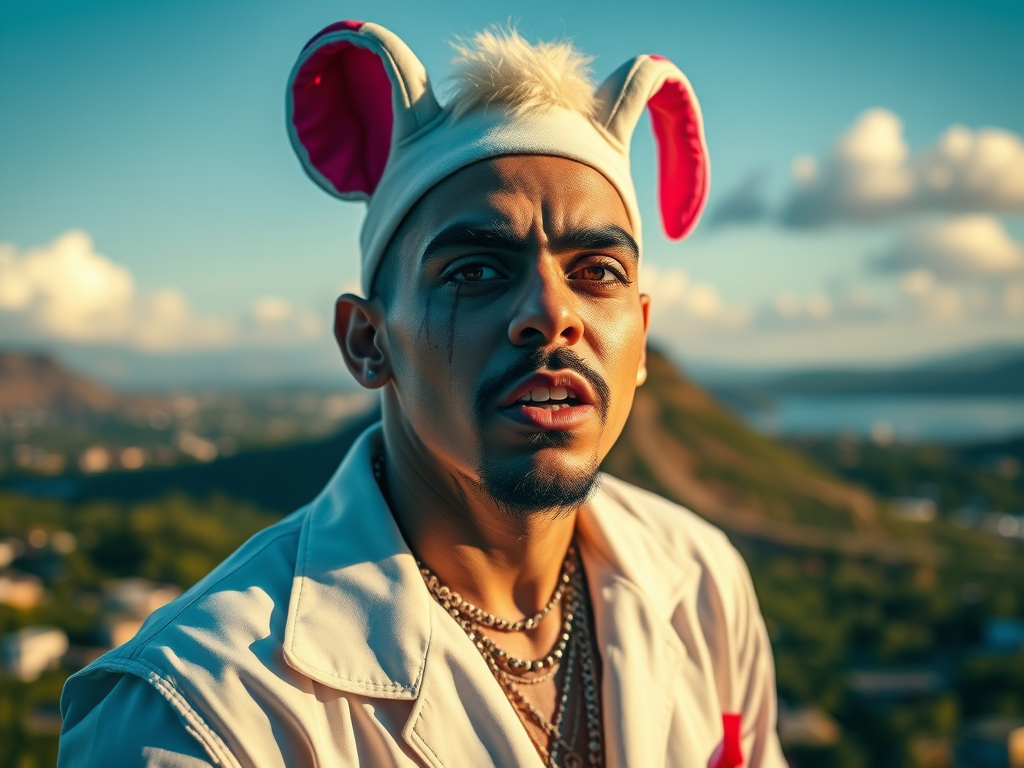

Benito Antonio Martínez Ocasio, known worldwide as Bad Bunny, is widely seen as one of the most prominent cultural voices to emerge from what many Puerto Ricans call the “crisis generation.” This label refers to those who came of age on the island during the 1990s and 2000s, a period marked more by instability than prosperity.

Bad Bunny was only 12 when Puerto Rico slid into a deep economic downturn that has yet to fully reverse. By the time he began recording music at 22 in 2016, the island’s government had declared bankruptcy. The following year, Hurricane Maria struck with catastrophic force, leaving nearly 3,000 people dead and inflicting long-lasting damage on infrastructure and daily life. Political turmoil, the COVID-19 pandemic, and rapid gentrification soon followed.
Many in his generation believe that Bad Bunny, now 31, has articulated their frustrations and hopes in a way few others have. At the same time, his global success has drawn unprecedented attention to Puerto Rico’s complicated and unequal relationship with the United States.
Alejandro Bracero, a 23-year-old political science and economics student at the University of Puerto Rico in San Juan, said that Bad Bunny’s music captures what it feels like to grow up amid crisis. “Through his art, he has helped make our reality visible to the world,” Bracero said.
Throughout his career, Bad Bunny has referenced the struggles of young Puerto Ricans in his lyrics, interviews, and social media posts. The island experienced major economic disruption after a federal corporate tax incentive expired in 2006, prompting many residents to move to the mainland in search of jobs. During the debt crisis, harsh budget cuts led to shuttered schools, deteriorating roads, and frequent power outages.
Census data shows that Puerto Rico’s population declined by 11.8 percent between 2010 and 2020. Bad Bunny has been openly critical of former President Donald Trump’s immigration policies, and when he won the Grammy for Album of the Year, he dedicated the award to those who had been forced to leave their homeland to pursue opportunities elsewhere.

Bracero recalls his grandmother, born in 1946, describing a very different Puerto Rico. She often spoke of the post–World War II era, when a corporate tax program fueled industrial growth and created a sense of optimism. “She talks about a time of abundance,” he said, “which feels completely unlike the Puerto Rico we grew up in.”
Mayra Vélez Serrano, chair of the political science department at the University of Puerto Rico, first used the term “crisis generation” in 2016. She argues that the label has become even more accurate over time. Members of this generation are, on average, more educated than their parents, yet face stagnant wages and a cost of living that far outpaces their earnings.
According to Vélez Serrano, a public school teacher in Puerto Rico earns around $32,000 per year, compared with roughly $50,000 in Orlando, Florida, a city where many Puerto Ricans have relocated. Meanwhile, the average home in Puerto Rico costs about $300,000, only slightly less than the average price in Orlando.
“This gap between professional salaries and living costs has pushed many young people to leave,” she said, noting that most of this out-migrating group is between their twenties and forties, the same generation as Bad Bunny.
Bad Bunny’s Grammy-winning album, Debí Tirar Más Fotos, reflects these realities. The title track expresses regret about not taking more pictures before loved ones moved away. Another song speaks about resisting the pressure to leave the island. Yet another warns against Puerto Rico experiencing a fate similar to Hawaii, where rising property prices and outside investment have displaced local residents.
Abdiel Vargas Sánchez, 24, expressed surprise at how much his hometown of Caguas has changed. Once a relatively quiet city in a mountain valley south of San Juan, Caguas has seen an influx of mainland U.S. residents, particularly during the pandemic. Many of these newcomers were likely attracted by tax incentives for wealthy investors, driving up housing prices and squeezing out local families.
Vargas Sánchez said that Bad Bunny’s influence could spark positive change for Puerto Rico, but he also worries that commercial success alone may not translate into real political or economic transformation.
There are already signs that younger Puerto Ricans are reshaping the island’s politics. In 2019, widespread protests erupted after leaked private messages from Governor Ricardo A. Rosselló and his aides were revealed, some of which mocked Hurricane Maria victims. Bad Bunny cut short his tour to join the demonstrations and collaborated with other artists on a protest anthem that became widely popular.
Camila Herrera Biaggi, now 24, remembers attending her first protest during that period. “Seeing Bad Bunny and others stand up made me feel like I had to be there too,” she said, describing it as the beginning of her political awareness.

In the years since, new political movements have gained support as young voters questioned whether traditional parties were truly committed to addressing Puerto Rico’s problems. In 2024, Bad Bunny funded billboards criticizing the New Progressive Party, which has governed since 2017 and advocates for Puerto Rican statehood. He has also voiced support for pro-independence candidates and incorporated independence symbols into his music and visuals.
Puerto Rico has been a U.S. territory since 1898, following the Spanish-American War. Puerto Ricans were granted U.S. citizenship in 1917, yet residents cannot vote in presidential elections and have limited representation in Congress, along with unequal access to federal benefits.
Two major events in the past decade have deepened debates about Puerto Rico’s status. In 2016, Congress created a federally appointed fiscal oversight board that assumed control over the island’s finances, a move many viewed as colonial. Then, the slow and disorganized federal response to Hurricane Maria further damaged trust in Washington.
Last year, Bad Bunny collaborated with Puerto Rican historian Jorell Meléndez-Badillo to create short educational videos explaining key moments in Puerto Rican history. Some of these were displayed on large screens during his concert residency on the island.
Meléndez-Badillo said that Bad Bunny’s high-profile performances, including the Super Bowl halftime show, offer a chance for broader conversations about Puerto Rico’s past and future. He described the artist’s work as both cultural and educational.

“He is not just waving the Puerto Rican flag,” Meléndez-Badillo said. “He is encouraging people to engage with the island’s history, its struggles, and its identity.”
Nathalia Méndez Rodríguez, a 23-year-old graduate student in public administration and law at the University of Puerto Rico, said she hopes Bad Bunny continues to speak to the world about what her generation values most: protecting Puerto Rican culture, community, and identity.
For many young Puerto Ricans, she said, Bad Bunny embodies their collective anxieties, resilience, and desire for a more just future.




Leave a Reply