
Many people raise an eyebrow when Luke Thompson draws parallels between Bridgerton and Shakespeare.
Yet the British actor, who headlines the latest season of Netflix’s global romance hit and has spent more than ten years performing Shakespeare on stage, stands firmly by the comparison. Speaking at a London hotel, Thompson said that at its core, Bridgerton carries a distinctly Shakespearean spirit.

Both works, he explained, thrive on heightened reality. Each uses a historical backdrop to reflect modern emotions and social questions. Bridgerton unfolds in Britain’s Regency era, while plays such as A Midsummer Night’s Dream are set in ancient Athens, yet both speak directly to the concerns of their own times. Thompson, now 37, believes this shared approach is key to understanding the connection.
He also noted that Shakespeare, in his own era, was far more accessible and popular than many people assume today. Just as Bridgerton features a string quartet reimagining modern pop songs, Shakespeare’s verse was written for mass audiences, not academic elites. The challenge modern viewers feel when encountering iambic pentameter often hides how entertaining and direct the work originally was.
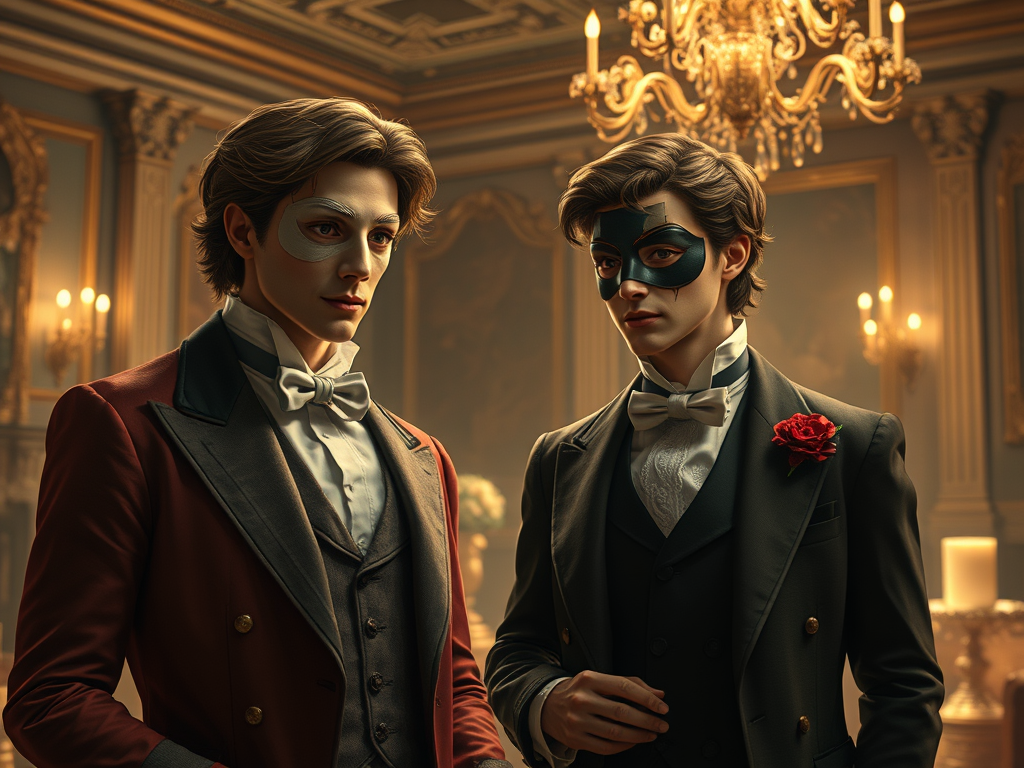
The upcoming fourth season of Bridgerton seems to reinforce Thompson’s argument. Set to premiere on Netflix on Jan. 29, the new season centers on Benedict Bridgerton, Thompson’s character, who becomes enamored with a mysterious woman at an elaborate masked ball. Unbeknownst to him, she is a maid posing as a lady. Thompson describes this kind of mistaken identity and romantic confusion as classic Shakespearean comedy.

Finding unexpected connections between revered literary traditions and one of today’s most talked-about streaming shows reflects Thompson’s broader approach to acting. He joined Bridgerton in 2019 in what he describes as his first substantial screen role. Over time, Benedict has become a fan favorite: the witty and charming second son, offering contrast to his stern older brother Anthony and emotional support to his outspoken younger sister, Eloise.
Beyond the family estate, Benedict embraces parties, art, and sexual freedom. By the start of Season 4, his indulgent lifestyle has become so excessive that his mother accuses him of turning into a rake. In the competitive marriage market of Regency society, however, this reputation hardly diminishes his appeal. As one ambitious mother remarks, his family name matters more than his behavior, and reformed rakes, everyone knows, often make the best husbands.
Still, the Bridgerton siblings are ultimately searching for genuine love, which on the show inevitably leads to marriage. In the new season, Benedict begins to seriously consider commitment after his chance encounter at the masked ball. Thompson sees this dilemma as deeply contemporary, noting that many people today struggle with the same realization that, at some point, a choice must be made.
The woman who captures Benedict’s heart is Sophie, played by Yerin Ha. Though she is the daughter of an earl, she has been forced to support herself after her father’s death. Unlike many of Benedict’s admirers, Sophie is independent and unafraid to challenge his carefree, libertine ways. According to Thompson, this accountability is precisely what frightens Benedict the most.
Some of the most revealing moments for Benedict occur in quiet conversations with Eloise, portrayed by Claudia Jessie, as they sit together on swings in the family garden. Jessie recalls that from the very first swing scene they filmed, working with Thompson felt effortless rather than like labor. Having played siblings on and off for seven years, the two actors have grown alongside their characters. Jessie describes Thompson as someone who deeply values the craft of acting, a dedication she finds genuinely romantic.

Each season of Bridgerton focuses on a different sibling’s love story, following the romance novels by American author Julia Quinn. According to the books, Benedict’s story should have taken center stage earlier. Instead, it was postponed to allow the romance between Penelope and Colin Bridgerton to unfold first, a delay that feels fitting for a second son often waiting his turn.
Now that moment has arrived. Producer and director Tom Verica said the creative team was especially eager to tell Benedict’s story, as he had long served as playful comic relief while attention rested on others.
When Luke Newton prepared to lead Season 3 as Colin, he sought advice from previous male leads, though Thompson was not one to offer guidance unsolicited. Newton recalled that Thompson always seemed ready for the spotlight and never appeared to need reassurance. Long before Benedict became the central figure, Newton looked to Thompson as an example on set, particularly admiring how he blended modern physicality with a Regency-style performance.
The only advice Newton felt compelled to give concerned managing the added responsibilities that come with leading Bridgerton, especially the show’s famously demanding promotional schedule. Thompson admitted that public promotion does not come naturally to him. On his second day of press for Season 4, he confessed that talking about himself is uncomfortable, though he views it as a worthwhile challenge.
In conversation, Thompson is warm and reflective, particularly when discussing acting itself. With increased attention arriving alongside the new season, he has been thinking carefully about how to protect both his private life and the essence of his work, which he describes simply as the chance to become other people.
He believes he is better equipped to handle this moment now than he would have been at 20. That earlier period, he said with dry humor, might not have ended well. At the time, he had just returned to Britain after growing up near Paris, an experience that left him feeling culturally split.

Thompson began piano lessons at six. With British parents, he spoke English fluently, but he never felt fully at home in the language or culture. In England, he encountered references he did not understand and had to consciously claim a language that did not initially feel like his own. He sees a clear parallel with acting, which he describes as taking words that belong to someone else and making them personal.
Before university, Thompson spent a year in Stratford-upon-Avon, Shakespeare’s hometown, on a theater course. He later studied English and Drama at the University of Bristol. From a young age, he felt drawn to performing, to the strange balance of revealing and concealing oneself in front of an audience.
Committing fully to acting took time. He was rejected by drama schools before university, but in his final year he applied again and was accepted into a three-year program at the Royal Academy of Dramatic Art in London. His first professional job came at Shakespeare’s Globe, an experience he describes as eye-opening, especially in discovering just how playful and humorous Shakespeare’s work could be.
Since joining Bridgerton, Thompson has alternated between filming and major stage roles, including performances in A Little Life in London’s West End and Love’s Labour’s Lost with the Royal Shakespeare Company. In debates about whether Shakespeare should be modernized, Thompson firmly supports adaptation. He believes the plays remain powerful but must be reshaped and trimmed so they can continue to resonate with contemporary audiences.

This view aligns closely with that of director Robert Icke, with whom Thompson has collaborated on multiple projects, including Oresteia and Hamlet. Icke has said Thompson’s subtle understanding of character motivation significantly shaped their interpretations, particularly in Hamlet.
According to Icke, Thompson is not driven by fame or branding. Whether acting among the pastel mansions of Bridgerton or on a bare Shakespearean stage, Thompson sees acting as a way to understand himself and the world. For him, it is proof that people are not confined by their past experiences.
Looking ahead, Thompson hopes to act in French someday and to find a role that incorporates his piano skills. He dreams of playing Hamlet or Iago, but feels no rush.
He sees his career as a lifelong journey. He wants to keep exploring, learning, and performing for as long as possible, ideally well into old age.




Leave a Reply