
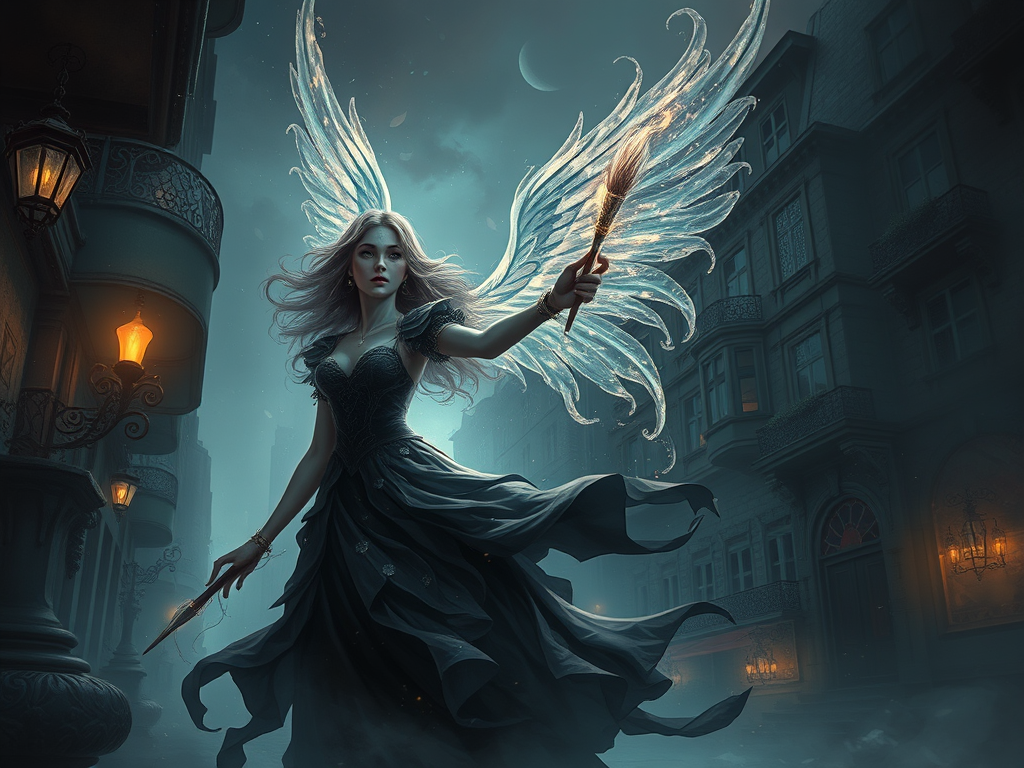

Two years ago, Guillaume Broche walked into a modest theater tucked away in the back alleys of Paris. Instead of preparing for a live performance, he arrived with motion-capture gear, an experimental script, and a story centered on a mysterious figure known as the paintress — a mythic being capable of killing with a single stroke of her enchanted brush.
Actors moved across the stage with iPhones fixed to their heads, recording every subtle facial movement. They were not rehearsing for a traditional stage production. They were creating scenes for Clair Obscur: Expedition 33, a role-playing video game that has quickly earned praise for its strategic combat system and emotionally complex narrative filled with unexpected turns.
At just 33, Broche had taken an unlikely path to leading a major creative project. He left a brand management job at Ubisoft in the early days of the pandemic, stepping away from the stability of a major studio. Although he lacked formal training in game development, he was unfazed. His solution was simple: he taught himself online.
“I wouldn’t be an artist without YouTube,” Broche explained during a video call from Montpellier, France, where his studio, Sandfall Interactive, is now headquartered. “There’s almost nothing you can’t teach yourself with the internet.”
That self-guided approach shaped the development of one of this year’s most acclaimed titles.
Broche learned directing techniques from online tutorials and recruited a team using unconventional methods. The game’s lead writer connected with him through a Reddit thread originally seeking voice actors, while the composer — whose score has climbed ahead of icons like Andrea Bocelli and Yo-Yo Ma on the classical music charts — was discovered through a SoundCloud upload.
The unexpected rise of Clair Obscur drew national attention. After its release in April, French President Emmanuel Macron publicly praised the project, calling the studio “a shining example of French audacity and creativity.”
The success has been staggering. The game has sold over five million copies and earned 12 nominations at this year’s Game Awards, positioning it as one of the strongest contenders for the top honor. Even those involved in the project did not anticipate such rapid momentum. For a long time, investors were uninterested.
“Venture capital wasn’t willing to back us,” said François Meurisse, Sandfall’s chief operating officer. “Investors wanted metaverse projects or products that could scale instantly. We ended up turning to friends and family.”
Yet the game’s premise and business model held undeniable appeal. In Clair Obscur, players enter Lumiere, a fictional reinterpretation of Belle Époque Paris haunted by repeated tragedy. At unpredictable intervals, the paintress appears on the horizon and inscribes a number onto a foreboding monolith. Every person whose age matches that number dies instantly. Each year, a new expedition is launched in hopes of confronting and defeating her before the next deadly marking appears.
Sandfall sought to demonstrate that small independent studios could produce high-quality, ambitious games without blockbuster budgets. The challenge is significant: even best-selling titles often struggle to recover their enormous production costs. Marvel’s Spider-Man 2 reportedly required around $300 million to develop, and Call of Duty: Black Ops Cold War reached a staggering $700 million.
By contrast, Sandfall kept the budget for Clair Obscur under $10 million. Instead of building an expansive open world, they drew inspiration from classic role-playing games. Levels were carefully designed corridors rather than sprawling maps, and battles took place in dedicated arenas rather than in seamless real-time environments. An overworld map offered the impression of a vast world while sparing the studio from having to construct every corner of it in full detail.
“With today’s tools, small teams can build these kinds of experiences,” Broche said. “More games like this will come. We were fortunate to be early.”

Billy Basso, an indie developer who released Animal Well to great success last year, noted that instability within the industry has encouraged many creators to start their own studios. Players, he added, increasingly appreciate focused, thoughtfully designed games.
“You don’t need hundreds of hours of filler content,” Basso said. “People want more streamlined experiences.”
After Sandfall secured a publishing partnership, the core team expanded to about 30 people. The studio outsourced battle animations to a small team in Korea and relied on external partners for localization and marketing. From the start, Sandfall maintained transparency, sharing development clips and playable demos on social media that helped build an early following. When the polished version finally arrived, gameplay videos spread quickly across online platforms, drawing even more attention.
“A promising concept doesn’t look polished in the beginning,” said Tom Guillermin, Sandfall’s chief technology officer. “It takes time before you can see what the final product will become.”
The characters of Clair Obscur — at least the few who survive the brutal opening scenes — embark on a quest to uncover the truth of the world they inhabit. Broche said his team reworked the early chapters many times to ensure players would form strong emotional connections with the protagonists. “We kept adjusting things all the way through the final production cycle because everything needed to feel absolutely right,” he said.
Still, the seriousness of the narrative is tempered by humor and unexpected whimsy. Players encounter a puppet named Esquie who discovers how to fly, baguette-shaped melee weapons, and a troupe of unsettling mimes.

“We don’t take ourselves too seriously with the mimes,” Broche said with a casual shrug. “The writing is unmistakably French.”
Clair Obscur openly embraces French cultural stereotypes, much like how Japanese role-playing games often incorporate folklore or mythology into their universes. While franchises such as Final Fantasy and Persona weave legendary creatures and historical figures into their stories, Sandfall drew from Impressionist art, Haussmannian architecture, and exaggerated French imagery. The result is a world that feels familiar yet distinctly stylized.
“The idea of France being full of mimes is exaggerated,” Broche said. “But it’s a global image — so French that it’s practically a meme.”
Still, behind all the humor and artistic embellishments, the developers remained committed to a simple guiding principle.
“The vision was always consistent,” Broche said. He believes the game succeeded because the team refined proven design strategies rather than chasing trends. Moving forward, Sandfall plans to remain focused on quality rather than scale.
“It’s about finding a project that resonates with your whole soul,” he said. “We’re always searching for that place of honesty and truth.”




Leave a Reply