
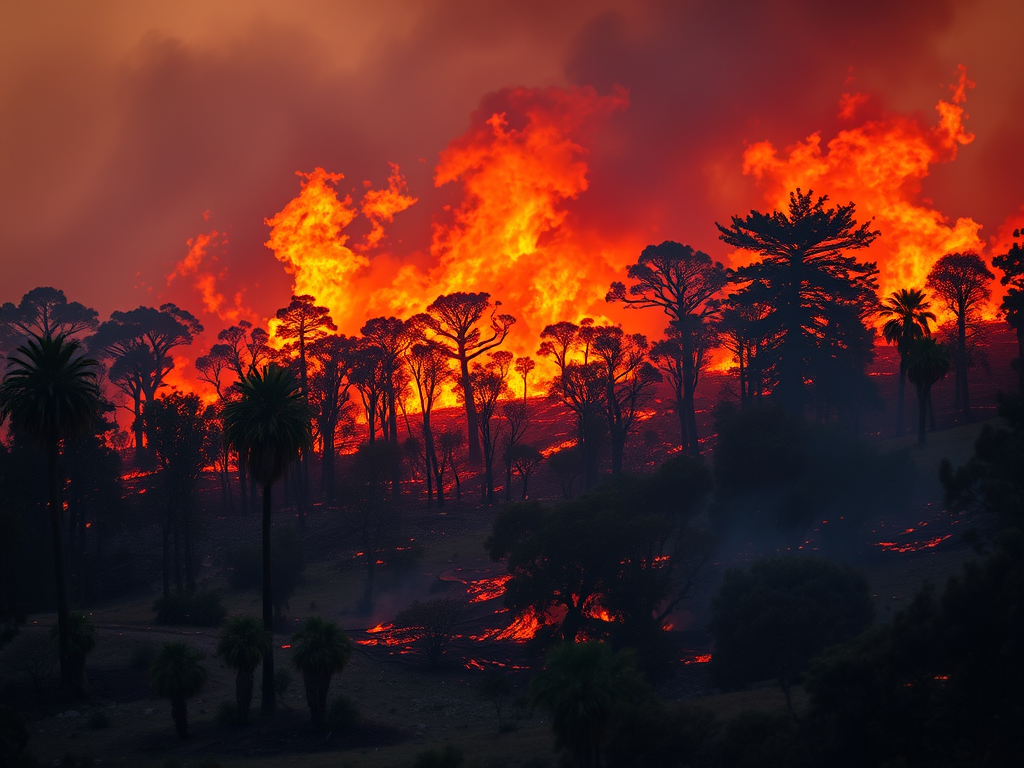

After an extensive federal investigation spanning several months, authorities announced on Wednesday the arrest of a suspect tied to the Palisades fire—one of the catastrophic blazes that ravaged Los Angeles this past January. Officials allege that Jonathan Rinderknecht ignited a small fire on New Year’s Day, which eventually escalated into the inferno that devastated much of Pacific Palisades and claimed the lives of 12 people.
Who Is Jonathan Rinderknecht?
The suspect, Jonathan Rinderknecht, 29, had been working as an Uber driver and living in Pacific Palisades, not far from the hiking paths along Temescal Ridge, when investigators say the initial blaze began on January 1. In a sworn affidavit supporting the federal complaint, authorities state that Rinderknecht dropped off passengers nearby and then later started a fire around midnight. Based on cellphone records and surveillance footage, he appeared to be the only person present on the trail at the time the fire ignited.
Further scrutiny into his digital footprint revealed a fascination with fire and destruction. Investigators cited a pattern of online behavior, including requests made via ChatGPT, that appeared to reflect destructive impulses.
Interestingly, investigators also highlighted Rinderknecht’s repeated listening to a French rap track, “Un Zder, Un Thé” by Josman, during the days leading up to Jan. 1. The song—which delves into themes of despair and malaise—was streamed nine times in the four days before the fire, and he also viewed the associated music video, which depicts burning imagery. Rinderknecht later told authorities he was raised in France, speaks French fluently, and had lived in Florida after the fire. According to Uber, he is now banned from the platform, and public records show he had also worked for DoorDash.
Rinderknecht’s legal counsel in Florida, assistant federal defender Aziza Hawthorne, has not responded to inquiries for comment.
The Charges He Faces
Federal prosecutors have charged Rinderknecht with maliciously initiating a fire that damaged and destroyed federal property. The blaze, now referred to as the Lachman fire, consumed lands within the Santa Monica Mountains National Recreation Area and areas owned by both state and federally supported conservation groups.
Bill Essayli, acting U.S. Attorney for the Los Angeles region, asserted: “One person’s reckless act triggered one of the worst fires Los Angeles has ever endured.” If convicted, Rinderknecht could face up to 20 years behind bars.
The Bureau of Alcohol, Tobacco, Firearms and Explosives (ATF) revealed that investigators sifted through more than 13,000 pieces of evidence and over a million phone records during the inquiry. Their reconstruction suggests that Rinderknecht had been driving near Pacific Palisades on New Year’s Eve, then ventured to the trail where the smaller fire was ignited shortly after midnight. Prosecutors allege he used a lighter to set the blaze intentionally.
Intriguingly, the affidavit notes that Rinderknecht made multiple attempts to dial 911 before succeeding. He also recorded video footage at the trailhead and, while retreating from the site, offered to aid firefighters who were arriving on the scene.
Local fire authorities initially believed the Lachman fire had been contained by January 2. But on January 7 an anomalous, powerful windstorm reactivated hidden embers. Those embers, once inflamed, expanded beyond control and merged into what became the Palisades fire.
The Palisades Fire Unleashed
The Palisades fire officially began on January 7 shortly before 10:30 a.m. Fueled by gale-force winds, unseen embers transformed into full-blown flames, racing down from hiking trails into upscale residential neighborhoods. The flames continued their ruinous advance into January 8. Meanwhile, firefighting resources were overwhelmed — multiple fires had broken out across Los Angeles County that same day, including the devastating Eaton fire, which killed 19 people and destroyed thousands of homes.
ChatGPT’s Role in the Case
The government’s depiction of Rinderknecht draws heavily upon his interactions with ChatGPT, according to the affidavit. In July, he instructed the AI to generate a “dystopian painting” divided into two halves: one side showed a forest ablaze with panicked figures fleeing, while the other portrayed a massive gate marked by a dollar sign, beyond which wealthy elites watched the world burn with amused detachment. The image was later displayed by prosecutors at the press conference announcing the arrest.
In November, Rinderknecht purportedly typed a prompt stating he had burned a Bible—and claimed, “It felt amazing. I felt so liberated.” A similar sentiment was allegedly shared in a message to a family member. Soon after the Lachman fire was set, he asked ChatGPT: “Are you at fault if a fire is lift because of your cigarettes?” (I.e., “lit”). The AI responded “Yes,” and provided an explanation.
An OpenAI spokesperson confirmed the company cooperated with law enforcement in this case. They emphasized that while ChatGPT assisted with responding to specific user requests, the system has not generated content that violates its policy standards.
Fires’ Survivors and Their Frustrations
Homeowners affected by the blaze have voiced criticism over the handling of the situation. Brian Park, whose residence was destroyed late on January 8, expressed anger that although earlier fires had been detected, officials did not deploy firefighting resources or keep watch over the prior ignition site.
“Whatever started on Jan. 1 is almost beside the point,” Park said, lamenting the lack of follow-through.
Terry Fahn, whose newly constructed Palisades home was lost in the fire, shared that he and his family submitted rebuild plans two months ago—plans identical to the ones used to build the original house. Yet city planning officials requested modifications and repeatedly delayed permit approval. Though city leaders promised fast-track rebuilding without bureaucratic drag, Fahn insists they have failed to deliver.
“It would give us a sense of closure,” he said, “if we could finally move forward.” For now, he added, “our elected leaders are not living up to their promises.”
Broader Implications and Pending Questions
This arrest marks a pivotal moment in the quest for accountability in the wake of one of Los Angeles’ deadliest firestorms. Still, many questions remain unanswered:
- How will prosecutors prove intent beyond reasonable doubt?
- Will the defense challenge the use of ChatGPT prompts and digital history as evidence?
- Could this case set a new precedent regarding liability for wildfires triggered by individual actions?
- Will rebuild efforts in Pacific Palisades and surrounding areas finally gain momentum, and will victims receive timely support?
As the legal process unfolds, the community and the nation will be watching closely. The case underscores not only the devastating power of nature but also the potential consequences of human recklessness, especially in a region prone to extreme weather and fire risk.




Leave a Reply