
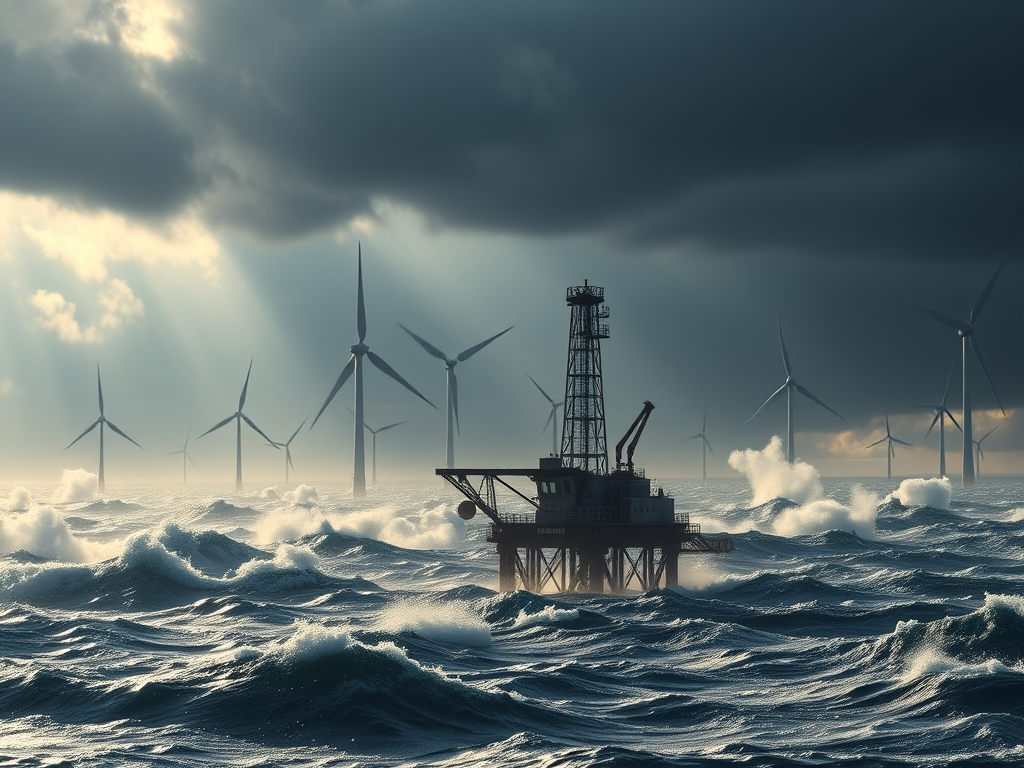

The U.S. energy sector is facing a new wave of tension as the Trump administration intensifies its opposition to offshore wind development. While oil and gas executives rarely criticize the former president directly, a growing number are speaking out about what they see as excessive political interference in the energy market, raising alarms over long-term consequences for both renewable and traditional energy infrastructure.
Oil and Gas Leaders Worry About Policy Instability
Executives across the fossil fuel industry have expressed discomfort with the administration’s attempts to block offshore wind projects along the East Coast. Although most leaders have avoided public confrontations with President Trump, private conversations and recent interviews suggest that many believe the current approach could backfire.
Darren Woods, CEO of ExxonMobil—the largest American oil and gas company—spoke cautiously when asked about the administration’s push to halt offshore wind development. In a recent interview, Woods stressed that “ever-changing policy, particularly as administrations change, is not good for business. It’s not good for the economy and ultimately, it’s not good for people.” While he stopped short of explicitly condemning Trump’s actions, his remarks highlighted broader industry concerns about political unpredictability.
Behind closed doors, other executives have been more direct. Some worry that rescinding federal approvals for renewable projects could create a dangerous precedent. If one administration can revoke permits for offshore wind, they fear a future president could just as easily use the same tactic against pipelines, liquefied natural gas (LNG) terminals, or other fossil fuel infrastructure projects.
A recent survey conducted by the Federal Reserve Bank of Dallas captured this unease. One anonymous respondent wrote: “Life is long, and the sword being wielded against the renewables industry right now will likely boomerang back in 3.5 years against traditional energy.”
Offshore Wind Projects Face Major Setbacks
The administration has already attempted to stop several high-profile offshore wind farms. Revolution Wind, a nearly completed project off Rhode Island, was temporarily blocked before a federal judge allowed construction to resume. Another project, Empire Wind, managed to move forward after federal officials lifted a stop-work order following negotiations with New York Governor Kathy Hochul.
The official justification for these interventions has been national security concerns, with the administration claiming offshore wind farms may pose risks. However, critics argue that such reasoning is politically motivated rather than based on concrete evidence.
Meanwhile, Congress has accelerated the phaseout of federal tax credits for wind energy, adding further strain on developers. Energy analysts now warn that no new offshore wind farms are likely to be built in the U.S. after 2028, signaling a potential slowdown in the country’s renewable energy transition.
Trump’s Longstanding Criticism of Wind Energy
Trump’s hostility toward wind power is not new. He has repeatedly made exaggerated and unsubstantiated claims, including that wind turbines cause cancer and contribute to whale deaths. During a recent cabinet meeting, he bluntly stated, “Windmills, we’re just not going to allow them.”
His administration has gone further than rhetoric, actively seeking to halt new leasing for wind farms on federal lands and waters. Officials have also moved to revoke approvals for projects off the coasts of Maryland and Massachusetts, and multiple federal agencies have been instructed to investigate offshore wind risks.
This aggressive stance has alarmed renewable energy advocates and raised fears that the U.S. could lose momentum in its clean energy expansion just as global competition intensifies.
Comparisons With Previous Administrations
The practice of blocking energy projects is not unique to Trump, but industry experts note that the scale and intensity appear to be escalating. President Joe Biden revoked the federal permit for the Keystone XL oil pipeline in 2021, citing environmental concerns, and later paused approvals for new LNG export terminals pending climate and economic impact studies. That pause was ultimately lifted by court order.
These examples demonstrate that both political parties have used executive authority to shape the nation’s energy landscape. However, business leaders argue that constant reversals create uncertainty that discourages long-term investment.
Trade Groups Sound the Alarm
Major trade organizations are increasingly vocal about the dangers of revoking permits that were already granted. Martin Durbin, senior vice president of policy at the U.S. Chamber of Commerce, recently warned that such actions “inject significant uncertainty into the infrastructure development process, invariably increase the price of projects, and risk raising the cost of electricity—diminishing our ability to meet growing demand.”
The American Clean Power Association, which represents renewable energy companies, has also raised concerns. Its CEO, Jason Grumet, said that members now see the U.S. as carrying a “risk premium” for investment, a sharp departure from its reputation as a stable rule-of-law country. “Which is horrifying,” Grumet added. “We always were the rule-of-law place.”
Even the oil and gas lobby, while often critical of renewable projects, has expressed frustration with the way permitting is being weaponized. Mike Sommers, CEO of the American Petroleum Institute (API), has called for Congress to reform federal permitting rules. On a recent podcast, he noted, “We’ve seen both sides of the aisle abuse the permitting process.” However, he also pointed out that clean energy advocates did not rally behind fossil fuel projects like Keystone XL, underscoring the deep divide within the energy sector.
Industry Solidarity Over Project Uncertainty
Interestingly, some oil and gas leaders have shown sympathy for renewable developers facing sudden project cancellations. Toby Rice, CEO of EQT, one of the largest U.S. natural gas producers, remarked: “I feel for the wind guys, man. I know exactly how it feels when you have an energy project that’s close to getting built getting stopped. I would like to see a world where that doesn’t happen.”
This rare moment of solidarity reflects a broader truth: regardless of whether a project involves wind turbines or pipelines, unexpected political intervention threatens billions of dollars in investment and the livelihoods of thousands of workers.
Broader Implications for U.S. Energy Policy
The debate highlights a growing tension in U.S. energy policy: how to balance fossil fuels and renewables while navigating sharp political divisions. The energy transition is a decades-long process, yet the rules that govern it are shifting with each new administration. For businesses tasked with building long-term infrastructure, this instability undermines confidence and complicates planning.
The Trump administration’s stance on offshore wind may appeal to political supporters skeptical of renewable energy, but it also risks alienating parts of the fossil fuel industry that depend on regulatory consistency. By pushing aggressively against one sector today, the administration may be inadvertently setting a precedent that future leaders could use against oil and gas tomorrow.
Conclusion: Uncertainty Undermines the Energy Future
As the United States seeks to maintain its leadership in global energy markets, industry leaders are urging policymakers to adopt a more consistent and balanced approach. Whether the focus is on pipelines, LNG export terminals, or offshore wind farms, the message from executives is clear: constant reversals, political battles, and revocations of permits threaten investment, raise consumer costs, and slow progress toward a secure and sustainable energy future.
The unfolding battle over offshore wind underscores how deeply political polarization has penetrated the nation’s energy debate. For now, oil, gas, and renewable leaders alike agree on at least one point: unpredictable policy is bad for business, bad for the economy, and bad for America’s ability to meet its growing energy demands.



Leave a Reply