
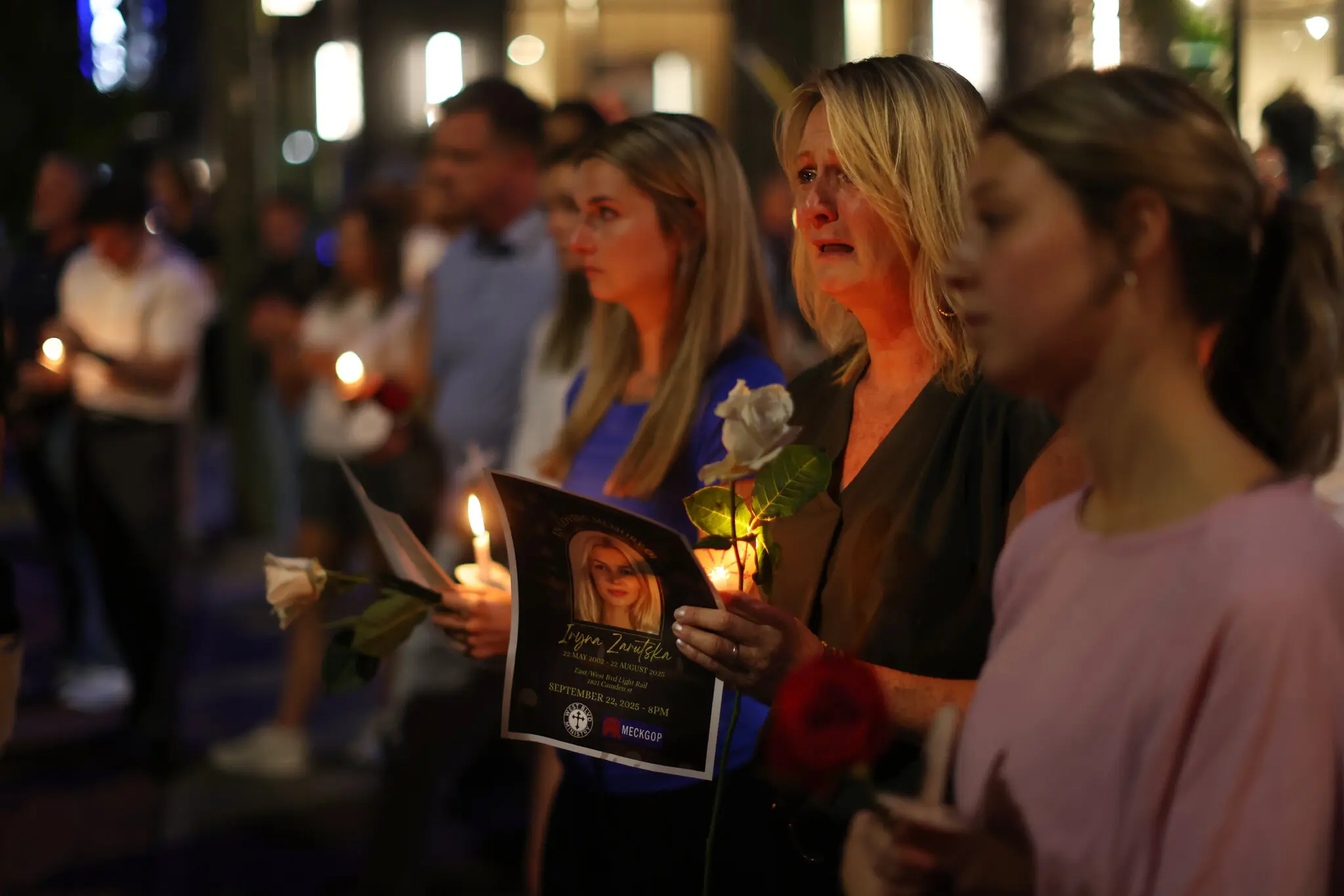

A shocking crime in Charlotte, North Carolina, has reignited national debate about the U.S. criminal justice system, mental health treatment, and public safety. Just days after being accused of fatally stabbing 23-year-old Iryna Zarutska, a Ukrainian refugee, Decarlos Brown Jr. called his sister from jail with a bizarre explanation. He claimed that his body had been contaminated by a mysterious “foreign material” that caused him to attack a complete stranger.
“I didn’t even know the lady,” Brown said in the recorded call. “I never spoke a word to her. That’s the scary part. Why would somebody just stab someone for no reason?”
Zarutska’s death provoked outrage in Charlotte and beyond. Critics pointed out that Brown had a long history of arrests, violent episodes, and untreated schizophrenia, yet he was free on the streets. Former President Donald Trump quickly blamed what he described as “radical left judges” and “Democrat-run cities releasing dangerous criminals.”
But the reality of Brown’s case is far more complex. His history reveals systemic failures that transcend partisan politics. Prosecuted by both Republican and Democratic district attorneys in a state with a Republican-controlled legislature, Brown slipped repeatedly through the cracks of a system struggling to balance civil liberties, limited resources, and public safety.

A Pattern of Mental Illness Ignored
Brown’s life took a darker turn after he developed schizophrenia, a severe mental illness often emerging in young adulthood. Following his release from prison in 2020, relatives noticed troubling behaviors: he stared into space, muttered incoherently, and became increasingly paranoid. He began insisting that a man-made substance inside his body allowed authorities to manipulate his movements.
His mother, Michelle Ann Dewitt, recalled trying to calm him, only for Brown to punch walls in frustration. His sister, Tracey Brown, described a violent outburst when she asked him to help with household chores. Brown allegedly choked her until she managed to push him off. Despite calling the police, she chose not to press charges, and the case was later expunged.
His family sought help at Atrium Health, a local mental health facility. But they were told there was no room. Even when Brown was briefly admitted under an involuntary commitment order, he was released after only 14 days, diagnosed with schizophrenia but without a long-term care plan. Under a 50-year-old U.S. Supreme Court ruling, involuntary psychiatric treatment requires proof that a person poses an imminent threat to themselves or others. This legal threshold often prevents families from securing treatment until it is too late.
Policy experts describe this as a bipartisan failure. Stephen Eide of the Manhattan Institute argued that liberal emphasis on civil liberties combined with conservative resistance to funding mental health infrastructure created a crisis. North Carolina ranks 36th in psychiatric bed availability nationwide, underscoring how unprepared the system is for patients like Brown.
A Revolving Door of Arrests and Jail Time
Brown’s encounters with the justice system stretch back to his teenage years. From 2007 to his arrest in August 2024, he had nearly 20 run-ins with police.
In 2013, he pleaded guilty to burglary and received probation. A year later, he committed armed robbery, brandishing a gun to steal cash and a cellphone. His $75,000 bond kept him in jail until trial, and he ultimately served more than six years in prison—the maximum under state guidelines.
Yet after his release in 2020, his mental health spiraled. Instead of receiving treatment, Brown cycled between jail cells, shelters, and hospitals. He was arrested for calling 911 unnecessarily, detained for minor incidents, and repeatedly bounced back into the community. Despite his schizophrenia diagnosis, his case manager from the treatment provider Anuvia failed to place him in long-term care.
The so-called “revolving door” of arrests without meaningful rehabilitation left Brown untreated, unstable, and increasingly dangerous.

A System Stretched Too Thin
Charlotte police records reveal six interactions with Brown in just a few months before Zarutska’s killing. Officers sometimes called crisis intervention specialists, but in most cases, Brown was arrested instead of treated.
The gaps were not limited to policing. Magistrates—officials who handle bail in minor cases—also missed red flags. In January 2024, Brown was arrested again for misusing 911. Magistrate Teresa Stokes released him without requiring bond, despite his extensive history and mental illness. Critics later accused her of negligence, but under state law, magistrates cannot consider expunged records, leaving them with incomplete information.
Even when Brown’s lawyer requested a mental health evaluation in June, systemic delays stalled the process. By late July, the evaluation had been approved, but Brown was still waiting when the deadly stabbing occurred just 25 days later.
The Victim and the Aftermath
The victim, 23-year-old Iryna Zarutska, had fled Ukraine’s war for what she hoped would be a safer life in the U.S. Her brutal death shocked Charlotte’s Ukrainian community and drew nationwide attention. Critics argued that her murder could have been prevented if the mental health and justice systems had acted sooner.
Charlotte Mayor Vi Lyles acknowledged the role of mental illness but sparked backlash by comparing it to conditions like cancer and heart disease, remarks seen as minimizing Brown’s accountability. In response, North Carolina lawmakers passed “Iryna’s Law,” a reform package that tightened bail rules but failed to address the shortage of psychiatric treatment options.

A Tragedy Reflecting a Larger National Crisis
The Charlotte case illustrates how untreated mental illness, inadequate resources, and rigid legal standards combine to endanger communities. Families like Brown’s are often caught in a painful bind: unable to force treatment until violence occurs, but terrified of what may happen if their loved ones remain untreated.
Advocates argue that reforms must address both mental health infrastructure and public safety. Longer-term treatment programs, expanded psychiatric capacity, and more flexible legal criteria for involuntary commitment could prevent tragedies like Zarutska’s death.
For now, Brown faces both state and federal charges, with Trump calling for the death penalty. He remains in custody, awaiting a psychiatric evaluation that may finally confirm what his family had been warning about for years.
Conclusion
The killing of Iryna Zarutska is not just a story about one violent act; it is a window into systemic breakdowns in how America handles mental illness and criminal justice. From overburdened hospitals and underfunded treatment facilities to a legal system that waits until disaster strikes, the Charlotte tragedy underscores an urgent need for reform.
Until the U.S. reconciles its conflicting priorities of civil liberties, limited funding, and community safety, more families may face the same impossible choices that Brown’s family endured. And more innocent lives, like that of a young refugee seeking peace, may be lost in the gaps.




Leave a Reply