
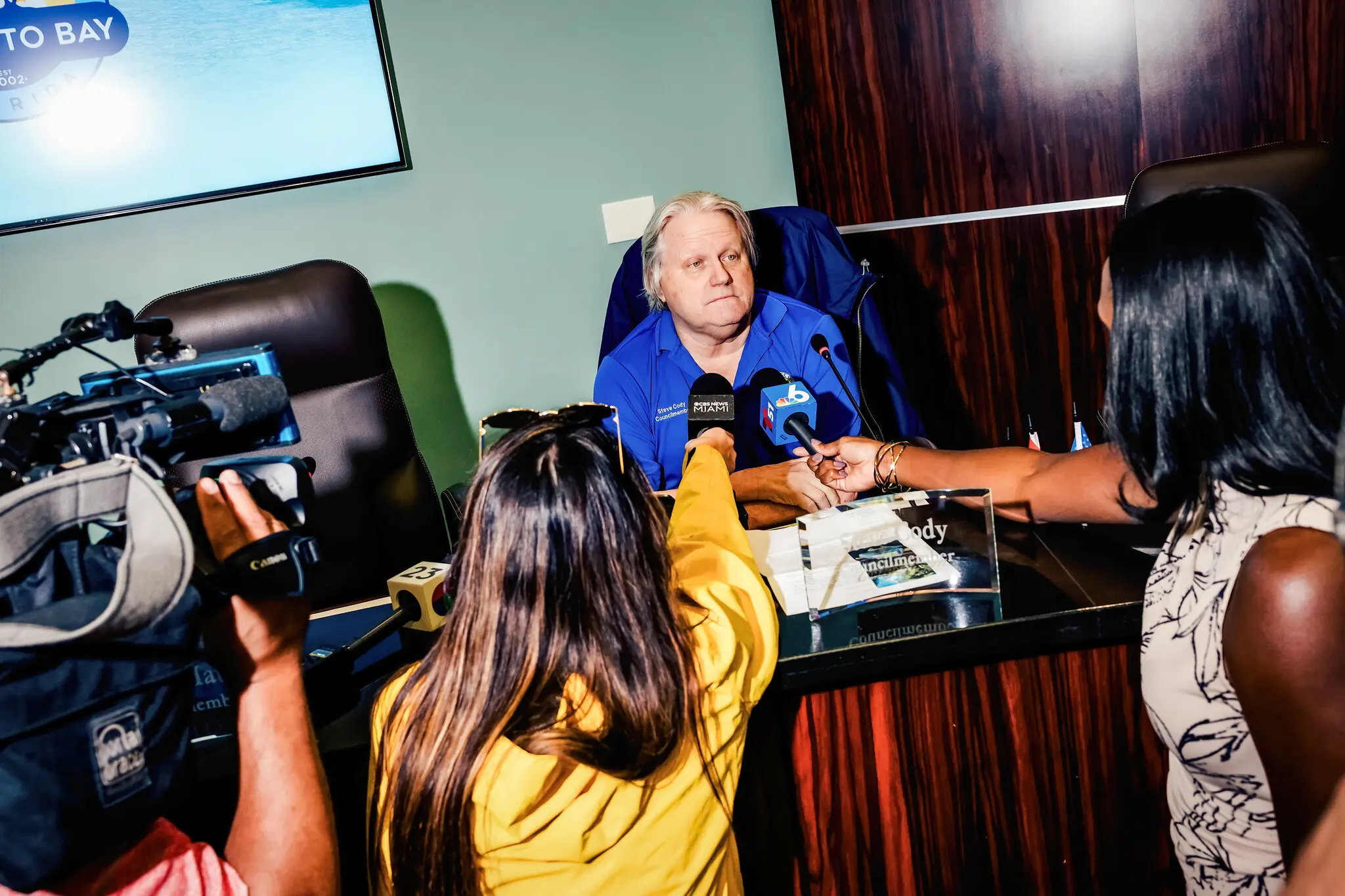

The normally quiet suburban community of Palmetto Bay, Florida, found itself thrust into national headlines this month after a heated confrontation erupted at a local council meeting. Residents crowded into the chambers, their voices echoing frustration and outrage at remarks made online by Councilman Stephen Cody. The uproar reflects broader tensions in American political discourse, where issues of free speech, accountability, and cancel culture have collided in dramatic fashion.
On Monday night, dozens of angry residents stepped forward one by one to denounce Cody for a Facebook post referencing the death of Charlie Kirk, a prominent conservative activist who was fatally shot in Utah earlier this month. Emotions ran high as speaker after speaker condemned Cody’s words, calling them “vile,” “abnormal,” and even “from the pit of hell.”
Several demanded that Cody resign immediately. One resident warned that if he refused, “he’s not going to have a very nice life while he’s living here.” While no physical threats were made, the statement captured the depth of resentment many in the community felt.

From Pickleball Contracts to Political Firestorm
Palmetto Bay, a relatively affluent Miami suburb of about 25,000 people, is usually preoccupied with issues like zoning disputes, tax rates, and even the details of a municipal pickleball facility. Yet in recent days, the town has been consumed by the controversy surrounding Cody’s Facebook post, which touched a raw nerve in the already polarized climate of American politics.
The debate over Cody’s words mirrors a growing trend across the country: conservatives mobilizing campaigns to publicly shame, censure, or even fire individuals who criticize right-wing figures. Once associated primarily with progressive activists, this type of “cancel culture” has now become a weapon used by voices on the political right.
Analysts have documented more than 100 cases of people—including teachers, police officers, students, medical professionals, and professors—facing disciplinary action or public backlash for comments about Kirk’s death.
The controversy even reached national media when ABC abruptly suspended Jimmy Kimmel’s late-night talk show after he made remarks about Tyler Robinson, the alleged shooter. Conservative critics argued that Kimmel’s comments unfairly linked Robinson’s politics to the MAGA movement, intensifying the storm surrounding Kirk’s killing.

Cody’s Words Spark Outrage
Stephen Cody, a 68-year-old Democrat and former lawyer with a reputation for combative politics, admitted that his post was poorly worded. The post contained a meme referencing one of Kirk’s well-known quotes defending the Second Amendment despite gun violence. Cody added his own biting commentary:
“Charlie Kirk is a fitting sacrifice to our Lords: Smith & Wesson. Hallowed be their names.”
Cody later removed the post and issued an apology, saying: “It was stupid, because I said something in a way that seemed cruel. I don’t support violence, but I thought it was ironic.”
Despite his apology, many residents and Florida Republicans remained unsatisfied. Prominent GOP figures called on Governor Ron DeSantis to suspend Cody, citing precedents where DeSantis had removed officials whose conduct allegedly undermined public trust.
Two members of Congress, Randy Fine and Carlos Gimenez, urged the governor to act, arguing that Cody’s comments represented a serious breach of the standards expected of public officials.
A Divided Council and a Community in Crisis
During the tense council meeting, Mayor Karyn Cunningham expressed disappointment in Cody, urging him to resign. “Violence has no place in our community or in our nation,” she said. “Words that diminish tragedy are equally harmful. Our residents deserve leadership rooted in compassion, responsibility, and dignity.”
The council eventually voted 4-1 to censure Cody, with Cody himself casting the sole dissenting vote. Although the council lacks authority to remove him, it amended the resolution to request a state-level investigation into whether Governor DeSantis could legally suspend him.
Councilwoman Marsha Matson emphasized the symbolic weight of Cody’s comments: “In just a few words, he managed to denigrate faith, civic engagement, and basic human compassion.”
Some residents began discussing a recall campaign to remove Cody, though state law prevents such efforts from starting until December. For now, the governor holds the decisive power to act—or not.

Cody’s Controversial Record
Cody is not a stranger to controversy. His legal career was marred by disciplinary issues, including a suspension of his law license by the Florida Bar in 2013. Court records show multiple bankruptcy filings. He has been accused of extortion in a political feud and criticized for posting caricatures of residents, some of which depicted women in ways critics called inappropriate.
Despite these controversies, Cody has also cultivated a reputation for irreverence and humor. He circulates a newsletter titled “Observations of a Half-Blind, One-Legged Council Member,” referencing his diabetes, vision problems, and prosthetic leg.
Cody insists that his political style may not appeal to everyone but argues that he is committed to speaking his mind. He remains adamant that the government should not punish individuals for speech that some find offensive. “If the rule is you can say something nice but not something upsetting, that’s a dangerous precedent,” he said.
The Broader Battle: Free Speech vs. Accountability
At the heart of the Cody controversy lies a broader debate about free expression, accountability, and the responsibilities of public officials. Supporters of Cody’s removal argue that elected leaders must be held to higher standards than private citizens, particularly when their words inflame grief and division.
As Governor DeSantis himself remarked during a public event last week, “When you’re in positions of trust—whether in education, government, or healthcare—there’s a higher standard of conduct that we have a right to insist upon.”
Legal experts note that the governor does have authority under Florida law to suspend local officials for misconduct, malfeasance, or neglect of duty. However, using that authority in this case could spark accusations of overreach and politicization, as critics have charged in previous suspensions.
Anthony Alfieri, a law professor at the University of Miami, warned that removing Cody solely for a Facebook post would be “a highly controversial and alarming use of the governor’s suspension powers.”

What Comes Next?
For now, Cody has vowed not to resign. He earns $1,000 per month as a councilman, along with health insurance and a car allowance—benefits he says are crucial given his medical needs. He has also promised to challenge any removal attempt in court.
“If every politician were instantly disqualified for doing something stupid,” he argued, “nobody would be allowed to serve at any level of government.”
Whether Cody survives politically remains uncertain. With residents mobilizing recall efforts, fellow council members pushing for investigation, and the governor weighing his options, Palmetto Bay may continue to face turmoil in the months ahead.
But the episode has already highlighted deeper national divides. It illustrates how personal grief, political identity, and freedom of speech can collide, leaving communities fractured and governance disrupted. For many in Palmetto Bay, the question is no longer just about one councilman’s Facebook post—it is about what kind of standards America should demand of its leaders, and how far communities should go in policing speech they find offensive.




Leave a Reply