

As global inflation continues to reshape consumer behavior, many businesses have turned to “value for money” strategies—selling more for less. Apple, however, has chosen a very different path. With its latest product announcements, the company has doubled down on its identity as a premium brand, offering sleeker but costlier devices designed to appeal to both status-conscious and technology-driven buyers.
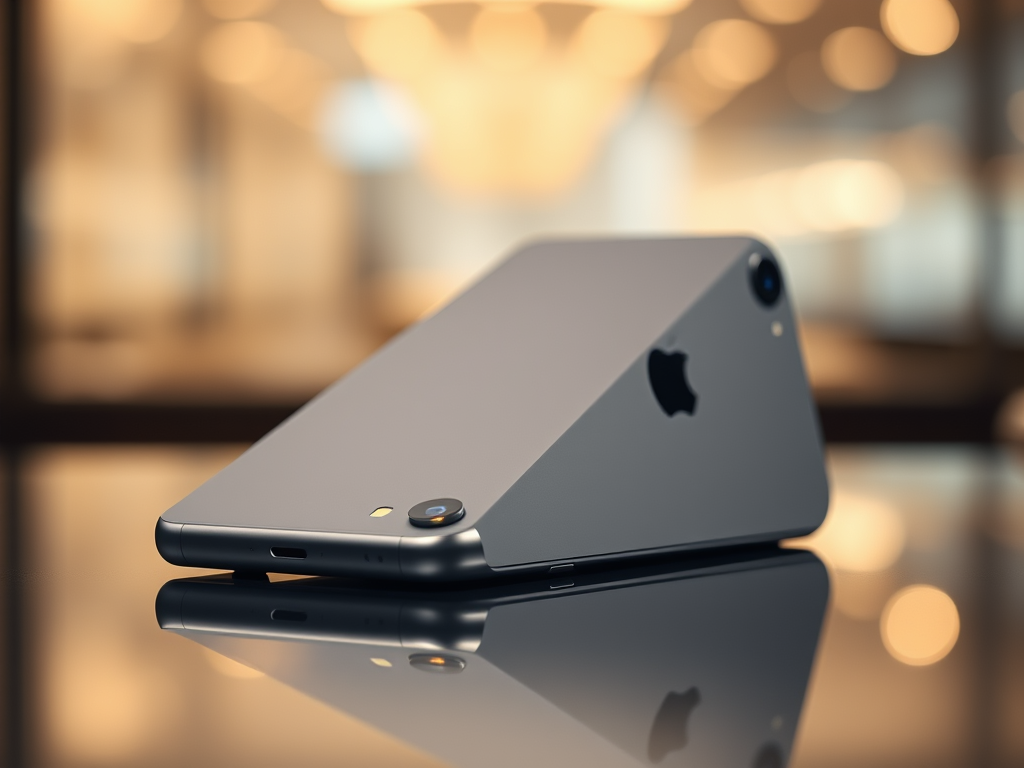
On Tuesday, Apple revealed the new iPhone Air, a model that breaks with the recent trend of larger, feature-packed smartphones. This device is thinner, lighter, and more minimalist in design than previous iterations. Constructed with a titanium frame, it is roughly one-third slimmer than earlier models. Yet this refinement comes at a cost: the phone sacrifices multiple cameras and battery size, offering less hardware for a higher price tag of $999.
Despite its reduced physical features, Apple claims the iPhone Air delivers comparable performance thanks to advanced software. The single camera is supported by a telephoto lens and enhanced with artificial intelligence tools that sharpen images, aiming to replicate the photographic power of earlier multi-lens devices. Battery-saving software has also been introduced, allowing Apple to maintain its promise of “all-day” performance despite the smaller battery.
During the launch event at Apple’s headquarters in Cupertino, California, industrial designer Abidur Chowdhury described the product as a “paradox” that challenges consumers’ expectations: less hardware, but marketed as equally capable through the power of AI-driven optimization.

Price Hikes Across the iPhone Line
The iPhone Air was the centerpiece of the event, but it was not the only major announcement. Apple confirmed that the iPhone 17 Pro and iPhone 17 Pro Max models will increase in price by $100, now retailing at $1,099 and $1,199 respectively. In a move that surprised analysts, Apple also replaced the titanium material used in previous Pro versions with aluminum, a more affordable material, citing design changes as the reason.
Industry watchers see these pricing shifts as part of a deliberate strategy. Richard Kramer, an analyst with Arete Research, noted that Apple appears to be lifting prices on its best-selling devices to offset stagnating sales volumes. The company sells about 200 million iPhones annually, but unit sales have plateaued in recent years. Raising prices may therefore be Apple’s most effective way to boost revenue. Kramer compared the iPhone Air to luxury goods like Manolo Blahnik shoes, suggesting that beyond functionality, the device carries symbolic value as a status item.
“It’s been years since a phone could spark that ‘wow factor’ at a party,” Kramer explained. “For at least a little while, the iPhone Air will bring that feeling back.”
Consumer Pushback on Higher Prices
Yet this strategy comes with risks. Surveys show that American consumers are already hesitant about upgrading their smartphones amid higher living costs. According to personal finance site WalletHub, 60% of Americans said they would hold onto their current devices longer if prices continue rising. This trend could counteract Apple’s efforts to encourage frequent upgrades.
Over the past few years, Apple has redesigned its phones to make repairs and battery replacements easier—similar to how car owners extend the lifespan of vehicles. While this has bolstered Apple’s reputation for sustainability, it may also reinforce consumer tendencies to delay new purchases, challenging the company’s growth strategy.
Apple’s Challenges With AI and Trade
The product showcase also comes during a turbulent time for Apple. Earlier this year, the company delayed the rollout of promised artificial intelligence features, after internal efforts to upgrade the Siri virtual assistant fell short of expectations. Meanwhile, trade disputes have added further complications. Former U.S. President Donald Trump’s tariffs on Chinese imports have directly affected Apple, as the majority of its devices are manufactured in China.
In response, CEO Tim Cook pledged to increase Apple’s investments in the United States, promising to spend $600 billion on building out domestic supply chains. In a high-profile moment, Cook appeared alongside Trump at the White House, presenting him with a 24-karat gold gift and highlighting Apple’s commitment to U.S. job creation.

Incremental Updates to the iPhone 17 Series
Aside from the iPhone Air, Apple also unveiled the iPhone 17 lineup. The standard iPhone 17 will include an upgraded camera, improved battery life, and faster charging capabilities. The premium iPhone 17 Pro introduces a new design, featuring a wide rectangular camera bump spanning the width of the phone.
Analysts, however, were less impressed. Thomas Husson, a senior analyst at Forrester Research, warned that Apple’s incremental innovation strategy is reaching its limits. “The lack of groundbreaking AI features could leave Apple vulnerable, especially when rivals are moving quickly to integrate generative AI into consumer devices,” Husson wrote in an analysis.
Updates to Apple Watch and AirPods
Apple also took the opportunity to update its other product lines. The Apple Watch Ultra received significant enhancements, including a larger display, satellite connectivity, and an impressive 42-hour battery life. Designed for outdoor adventurers and endurance athletes, it is priced at $799. Meanwhile, the Apple Watch Series 11 and SE 3 have been upgraded with better batteries and sleep-tracking features, offering users a “sleep score” based on overnight rest.
In the audio category, Apple unveiled new features for the AirPods Pro. The upgraded model includes real-time translation of foreign languages, transforming the earbuds into tools reminiscent of those used by United Nations interpreters. Health features are also being expanded: a built-in heart rate sensor will allow fitness enthusiasts to track workouts without relying solely on an Apple Watch.
Additional improvements include enhanced sound quality, twice the noise-canceling power, and a redesigned case. Despite these new features, the AirPods Pro will retain its previous retail price of $249. Considering that AirPods contribute around $14 billion annually to Apple’s revenue, these updates are aimed at maintaining consumer interest in a product category that has become one of Apple’s most consistent performers.


Apple’s Balancing Act
The launch event highlighted Apple’s ongoing balancing act between innovation, pricing, and consumer expectations. On one hand, the company is leveraging artificial intelligence and design efficiency to justify slimmer, more minimalist products like the iPhone Air. On the other, it is increasing prices across the board, testing how much loyalty its customer base is willing to sustain.
The broader question remains: how long can Apple rely on incremental design changes and brand prestige to fuel demand before consumers demand something truly transformative? With AI reshaping industries at breakneck speed, Apple’s cautious approach may either keep it stable or risk leaving it behind.
For now, Apple is betting that its reputation, ecosystem, and design prowess will keep its loyal customers lining up outside stores on release day—even if they are paying more for less.



Leave a Reply