
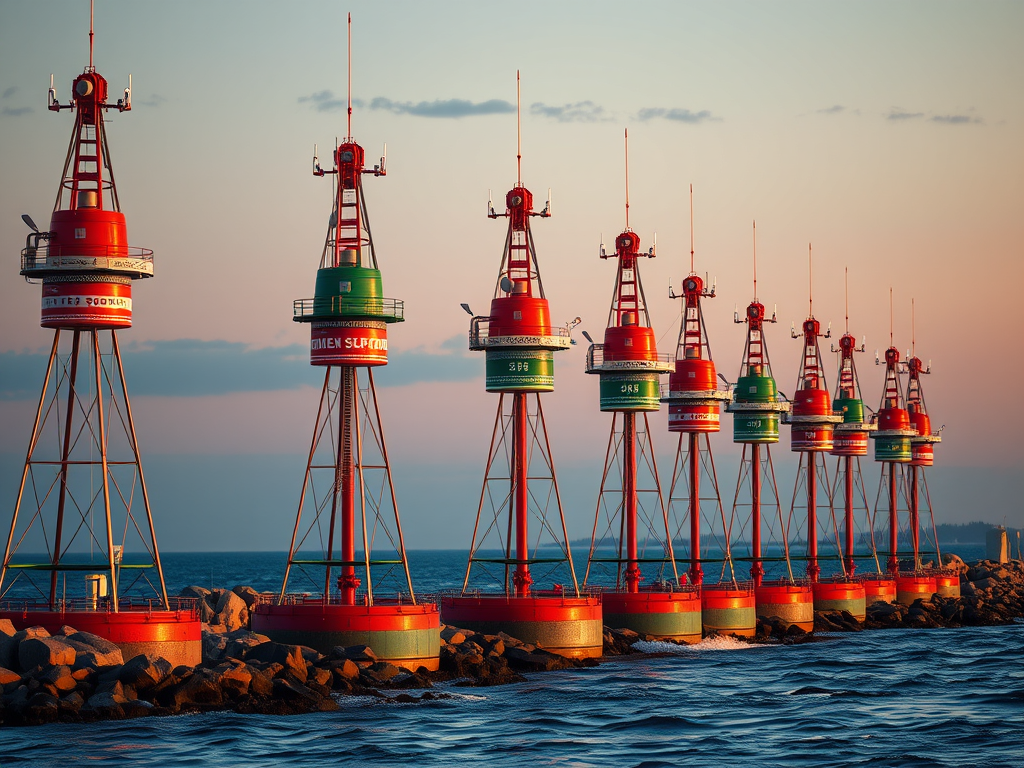

When the electrical system on Dominic Zanke’s 42-foot lobster boat, Tyrant, suddenly failed this spring, he found himself stranded 35 miles off the coast of Maine. Without radar, radio, or GPS, the veteran fisherman faced a daunting challenge. Yet Zanke wasn’t panicked. For generations, mariners like him have trusted an older, more reliable guide: the network of Coast Guard navigational buoys that stretch along the coastline from Maine to New Jersey. These steel giants, some towering more than 25 feet above the waves, have long been considered lifelines for fishermen, ferry operators, and recreational boaters when modern technology breaks down.
But today, that sense of security is under threat. The U.S. Coast Guard has proposed eliminating roughly 350 of these navigational buoys, arguing that advancements in digital navigation tools—from smartphone apps to GPS-enabled systems—have reduced the need for such physical markers. While officials insist the change is practical, mariners across New England see it as dangerous, even reckless.

A Tradition Anchored in Safety
To coastal communities, buoys are more than just floating metal towers; they are part of maritime culture and survival. Each buoy carries a name, often drawn from the treacherous rocks or shoals it protects sailors from—like “Baileys Mistake Entrance Buoy” or “Cross Rip Shoal South End Buoy.” At night, their red or green lights pierce through darkness. In fog or stormy seas, their bells, gongs, or low moans serve as audible beacons.
Jon Wilson, founder of WoodenBoat magazine and a respected voice in Maine’s sailing community, captured the sentiment shared by many mariners: “What is the value of a life at sea? These buoys exist because accidents demanded them. There’s genius in this system—it works for a reason.”
Wilson recalled one particularly foggy evening in Penobscot Bay when the familiar chime of the Green Ledge buoy saved him from running aground. The buoy’s bell, coming from an unexpected direction, alerted him that his boat had drifted off course. Without that warning, he admits, he could have struck the rocks.

The Coast Guard’s Position
The Coast Guard, which currently maintains about 1,700 large buoys from Maine to New Jersey, defends its proposal as a modernization effort rather than a cost-cutting scheme. According to Matthew Stuck, chief of waterways management for the Guard’s Northeast District, the agency must adapt to new realities.
“Every buoy is important to someone,” Stuck acknowledged. “But resources are limited, and our responsibility is to reduce risk in the most effective way possible. Buoys aren’t eternal.”
He emphasized that affordable and widely available navigation apps, coupled with electronic tools, now provide mariners with real-time positioning more accurate than buoys can offer. The proposal, he says, is about “fine-tuning” the system—maintaining only those buoys that are truly essential.
Still, the Coast Guard’s April announcement, which included a list of buoys slated for removal, triggered a massive backlash. More than 3,000 public comments poured in, dwarfing the district’s previous record of 450. Many responses were emotional pleas to save specific buoys that locals believe are vital for safety.
In response, officials promised to revise the list, possibly sparing some markers, before moving forward. No buoy removals are expected until next year.

A Costly but Crucial System
Maintaining the buoy system is no small task. Each buoy, anchored by heavy chains to massive concrete blocks on the seafloor, must be hauled out of the water every one to three years for inspection and repair. More than 200 personnel, along with six specialized vessels called buoy tenders, are dedicated to this mission.
Beyond the 1,700 large buoys, the system also includes about 3,000 smaller harbor buoys, though those are often maintained by local authorities. The tradition of marking hazards at sea dates back to the colonial era, when wooden barrels were used to warn fishermen of dangerous rocks.
Given the labor and costs involved, some mariners admit that not every buoy is indispensable. But they argue that many of the proposed cuts go too far, targeting buoys that still prevent accidents in busy waterways.
Local Outrage and Safety Concerns
On Cape Cod, Massachusetts, one of the buoys slated for elimination is Gazelle Rock Lighted Buoy 2, located near ferry routes to Nantucket. David Condon, Yarmouth’s harbor master, insists the buoy plays a crucial role in preventing collisions with hidden rocks. “Expecting every boater to rely on expensive navigation systems isn’t realistic,” Condon said.
The debate isn’t just about convenience—it’s about preventing tragedies. Some buoys mark locations of historic shipwrecks. Off Plymouth, Massachusetts, a buoy warns of the Mary Ann Rocks, where three Coast Guard crewmen perished in 1928 during a storm rescue mission. The rocks nearly wrecked the Mayflower in 1620 and remain hazardous today. Plymouth’s harbor master, Chad Hunter, warns that removing the buoy could increase the risk of oil spills if large vessels strike the rocks—similar to a 2003 spill in Buzzards Bay.
“Boats hit those rocks every couple of years,” Hunter said. “Without the buoy, there’s no clear indication of the danger.”

The Emotional Toll
For fishermen like Dominic Zanke, the proposal is baffling. “You might as well take down all the street signs since we all have GPS,” he said. To him, buoys are irreplaceable backups. Electronics fail, storms disrupt signals, and batteries die—but buoys remain visible and reliable.
Scott Anderson, whose grandfather helped rescue survivors of the 1928 wreck, believes the Coast Guard risks undermining its own mission. “Their job is to protect lives at sea. The cost of maintaining buoys is nothing compared to the cost of rescue operations—or the cost of lost lives.”
Technology vs. Tradition
The debate ultimately highlights a broader tension between modern technology and traditional safety infrastructure. While GPS and navigation apps have transformed seafaring, they are not infallible. Weather conditions, technical glitches, and human error still leave room for accidents. For many mariners, buoys are not outdated relics but critical safety nets.
Coastal residents also view the buoys as cultural landmarks. Their names, their sounds, and even their silhouettes against the horizon carry deep emotional meaning. Removing them, locals argue, would erase part of maritime heritage.

What Comes Next
The Coast Guard will publish its revised list of proposed removals soon, followed by another round of public feedback. Until then, the future of many buoys remains uncertain. Mariners, historians, and local communities are preparing to fight for markers they consider vital.
Whether the final decision leans toward modernization or preservation, one thing is clear: the debate over buoys is about far more than steel towers in the sea. It is about how we balance safety, technology, cost, and tradition in a changing world.
For Zanke, Wilson, and countless others whose lives depend on these floating guardians, the message is simple: electronic tools may guide, but buoys still save lives.




Leave a Reply