
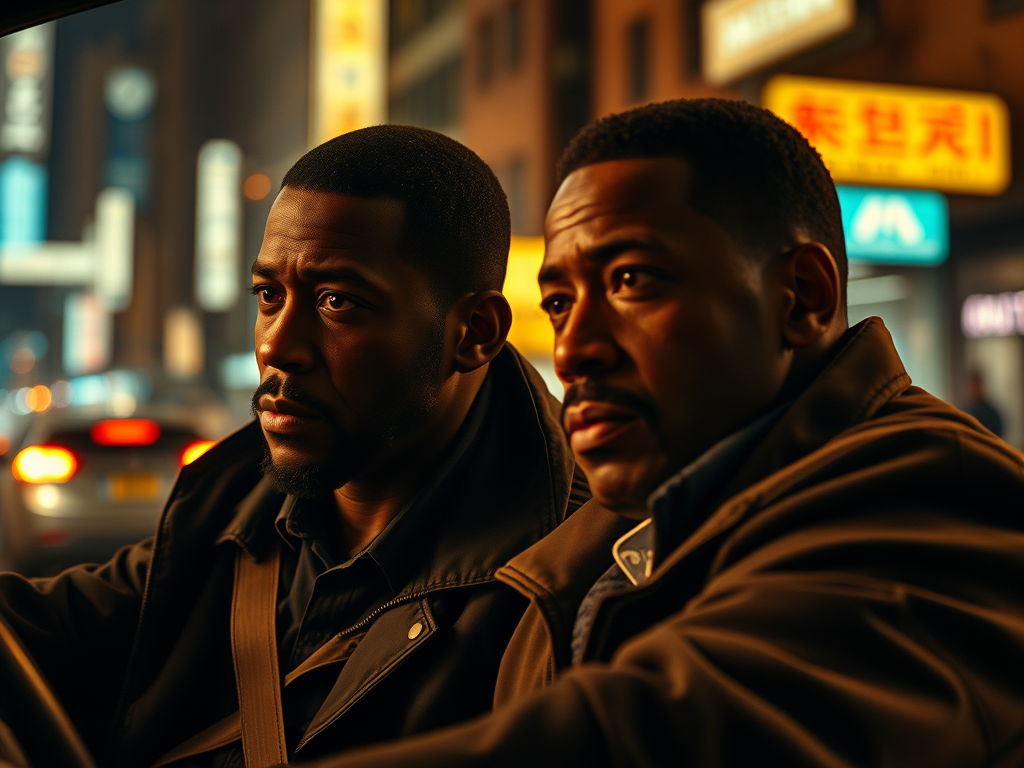

In 1963, Akira Kurosawa released High and Low, a gripping drama that explored the tension between moral duty and personal ambition. The central character, Gondo (Toshiro Mifune), faces a life-altering decision when his chauffeur’s child is kidnapped by mistake. Gondo must choose between saving his company or sacrificing his wealth to pay the ransom and rescue the boy. The story is as much about class divisions and human weakness as it is about crime.
More than half a century later, director Spike Lee reimagines Kurosawa’s narrative for modern audiences in Highest 2 Lowest, a film that once again places loyalty and morality at its center but adds layers of intimacy, cultural resonance, and personal history. Starring Denzel Washington as David King, a powerful music mogul, the story shifts focus from a transactional employer-employee relationship to one defined by lifelong friendship. King’s driver Paul (Jeffrey Wright), once his childhood companion, is the father of the kidnapped boy, and this emotional bond elevates the dilemma from a moral test into a profound exploration of brotherhood, sacrifice, and heroism.
This shift highlights one of Lee’s greatest strengths as a filmmaker: his ability to capture the complexities of Black male identity, generational struggle, and class conflict in ways that feel authentic, layered, and deeply human. While Kurosawa’s original explored ambition against duty, Lee expands the stakes to include love, kinship, and cultural survival. For Lee and Washington, who have collaborated for more than three decades, this film is more than just another entry in their partnership—it is a potential swan song, as Lee suggested during Cannes that Highest 2 Lowest might be their final work together.
A Legacy of Collaboration
Watching Highest 2 Lowest in the context of Lee and Washington’s shared history is an experience in itself. Their partnership spans five major films: Mo’ Better Blues (1990), Malcolm X (1992), He Got Game (1998), Inside Man (2006), and now, after nearly two decades apart, Highest 2 Lowest. Seen together, these works represent one of the most impactful actor-director collaborations in modern cinema.
What makes their relationship so unique is not only the chemistry on screen but the shared vision they bring to storytelling. From the beginning, their films rejected the binaries that had previously defined Black cinema: the “respectable” archetypes exemplified by Sidney Poitier during the civil rights era, or the aggressive stereotypes pushed during the Blaxploitation movement of the 1970s. Instead, Lee and Washington offered something new—characters that were complex, contradictory, and unmistakably human.

Breaking Ground with Mo’ Better Blues
Their first collaboration, Mo’ Better Blues, introduced audiences to Washington as Bleek Gilliam, a jazz trumpeter torn between his artistic integrity and personal flaws. For Washington, who had previously played largely heroic or stoic figures, Bleek was a revelation: a man who could be charismatic and talented but also selfish and deeply conflicted.
The film itself was groundbreaking not just for Washington’s performance but also for its style. Lee introduced his now-famous “double dolly” shot, where a character seems to glide through space, creating an otherworldly cinematic rhythm. The soundtrack, composed by jazz greats Terence Blanchard and Branford Marsalis, gave the film a vibrancy that blended art, commerce, and politics into a statement about the challenges facing Black artists.
The Monument of Malcolm X
Two years later, Lee and Washington tackled their most ambitious project yet: Malcolm X. Washington’s performance as the civil rights leader remains one of the most powerful portrayals in cinematic history. He captured Malcolm’s charisma, his anger, his transformation, and his spirituality with unparalleled depth.
Lee’s vision for the film went beyond a simple biopic. By showing Malcolm’s early life as a hustler known as Detroit Red—played with swagger and vulnerability alongside Lee’s character Shorty—the film humanized Malcolm while simultaneously presenting him as a figure of global significance. For Washington, the role cemented his reputation as one of the most gifted actors of his generation, while for Lee, it solidified his place as one of cinema’s boldest storytellers.

Darkness and Redemption in He Got Game
Their third collaboration, He Got Game (1998), brought a new kind of emotional depth. Washington played Jake Shuttlesworth, a father serving time for murdering his wife. His only chance for release comes from convincing his estranged son, Jesus (Ray Allen), a basketball prodigy, to play for a politically connected university.
The film is as much about sports as it is about broken families, forgiveness, and the burden of legacy. Washington reportedly took a pay cut to make the film possible, underscoring his commitment to Lee’s vision. The father-son tension in He Got Game echoes throughout Highest 2 Lowest, where David King must navigate the generational gap and moral complexity of dealing with the ambitious young rapper Yung Felon (ASAP Rocky).
The Thrills of Inside Man
By 2006, Lee and Washington returned with Inside Man, a crime thriller set in post-9/11 New York. Washington’s Detective Keith Frazier battles wits with Clive Owen’s mysterious bank robber Dalton Russell. While on the surface a heist film, Lee infused the story with commentary on Wall Street greed, systemic corruption, and power dynamics.
Washington’s improvisational flair gave the film a spontaneous, jazz-like rhythm, keeping audiences engaged while reinforcing the sense that Frazier was both deeply competent and morally complex. Inside Man became Lee’s highest-grossing film, showing that the partnership could achieve both commercial success and cultural impact.

Returning with Highest 2 Lowest
Now, with Highest 2 Lowest, Lee and Washington revisit familiar themes but in a contemporary context. David King, the music mogul, represents not just power but vulnerability. His bond with Paul, a friend-turned-chauffeur who has survived incarceration and found solace in Islam, becomes the emotional core of the story.
The antagonist, Yung Felon, embodies youthful ambition mixed with reckless defiance. Their confrontations, staged in recording studios, subway tunnels, and behind glass walls, highlight the generational and ideological clash between established authority and rising talent. For King, the question becomes not only how to save Paul’s son but also how to reconcile his own position of privilege with the loyalty he owes to those closest to him.
Lee fills the film with nods to earlier works. Props like a vintage Brooklyn Dodgers scoreboard, or cameos by actors Nicholas Turturro and Rick Fox, create intertextual connections across decades of storytelling. Jeffrey Wright’s portrayal of Paul carries echoes of Malcolm X, while the cat-and-mouse pacing recalls Inside Man. These Easter eggs reward longtime fans while grounding the film in Lee and Washington’s shared cinematic language.
Brotherhood on Screen and Off
What makes Highest 2 Lowest particularly moving is its meta-narrative. For over 35 years, Lee and Washington have described each other as brothers. Their families even jokingly refer to themselves as the “Washing-Lees,” a testament to the depth of their connection. Washington has said he trusts no one more than Lee to capture the rhythms of New York on screen, while Lee emphasizes that Washington’s performances bring truth and humanity to every frame.
Whether or not this film marks the end of their collaboration remains uncertain. But if it does, Highest 2 Lowest stands as a fitting tribute: a story that is not only about loyalty, sacrifice, and survival but also about the enduring bond between two of the greatest artists of their generation.

Conclusion
From the jazz clubs of Mo’ Better Blues to the political fire of Malcolm X, from the fractured family of He Got Game to the suspense of Inside Man, and now the emotional stakes of Highest 2 Lowest, Spike Lee and Denzel Washington have built a body of work that reshaped American cinema. Their films challenge audiences to rethink race, class, loyalty, and morality, while their partnership itself has become a symbol of trust, creativity, and shared purpose.
If Highest 2 Lowest is indeed their final collaboration, it is not simply the end of a chapter—it is the culmination of a cinematic legacy that will inspire generations to come.




Leave a Reply