
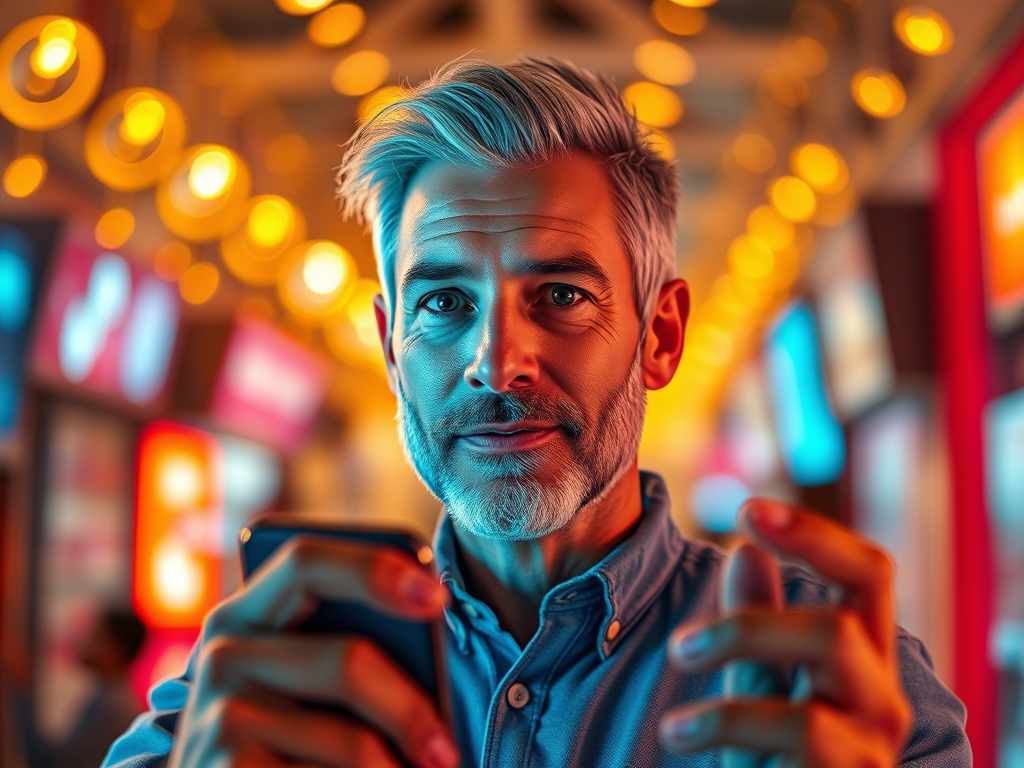

When 52-year-old Dallas actor Scott Jacqmein receives text messages from friends claiming they just spotted him on TikTok endorsing unusual products, he usually knows what they are referring to. The ads range from insurance comparison platforms to astrology apps, even brain teaser games where “he” speaks flawless Spanish. But something always feels strange to his friends — Jacqmein does not speak Spanish, his familiar facial hair is absent, and the movements and tone look oddly stiff.
The reason is simple: Jacqmein never filmed those commercials. Instead, the ads were created with an AI-powered digital avatar of him. After agreeing to license his likeness to TikTok last year, he now exists online as a virtual salesman for any advertiser willing to pay — provided the campaigns comply with TikTok’s internal guidelines.
At first, Jacqmein thought the arrangement might be a boost to his budding acting career. But once he saw how freely his avatar was being deployed, his enthusiasm turned into unease. “I’m not against TikTok or artificial intelligence,” he explained in an interview, “but you just don’t know the full consequences of letting technology replicate you.”
Welcome to the new frontier of advertising, where AI and generative tools are reshaping how brands reach consumers — and how performers are paid, or underpaid, for their digital doubles.
TikTok’s AI Avatars: A Growing Business
In 2023 TikTok quietly introduced a set of customizable avatars, offering advertisers the chance to place lifelike digital spokespeople directly into the platform’s endless feed. Jacqmein’s likeness is now one of more than a dozen avatars available for selection, giving businesses the freedom to choose presenters by age, ethnicity, or gender depending on the campaign.
The implications are huge. Actors like Jacqmein are entering uncharted territory where their faces and voices can be separated from their control. While some performers saw the opportunity as a career stepping-stone, many are now realizing they signed away more than they understood.
Compensation has been surprisingly low. Jacqmein recalls being paid just $750 plus a trip to the Bay Area. Others report similar experiences: Bay Area artist and part-time comedian Tracy Fetter said she earned less than $1,000, while another performer, whose avatar was used in what he considered embarrassing ads, was paid only $500. None of them receive royalties when their likenesses are reused across TikTok or potentially other ByteDance properties.
Meanwhile, TikTok’s parent company ByteDance continues to generate over $10 billion annually in U.S. ad revenue, making the project a far more lucrative deal for the platform than for the performers.
The Gap Between Contracts and Technology
Many of the actors who signed up were not represented by agents at the time. Jacqmein admitted that without professional guidance, he failed to negotiate safeguards over how his digital self could be used. “The technology is moving faster than the contracts,” he said. “New actors who are hungry for work are easy targets.”
Some performers also believed they would receive royalties whenever their avatars appeared in ads. That turned out not to be the case. TikTok stated that it maintains strict oversight to ensure transparency but emphasized that any third-party agency failing to meet its standards would no longer be used.
Still, confusion remains. Several actors discovered their avatars appearing beyond TikTok, such as on ByteDance’s CapCut editing app, or even outside the ByteDance ecosystem altogether, including ads on Facebook, Instagram, and YouTube. Jacqmein was shocked to find his likeness promoting a “male performance” supplement on YouTube — a campaign that clearly violated TikTok’s terms. Although YouTube eventually removed the ad, the incident underscored how easily these avatars can escape their intended boundaries.

AI Avatars Across Media
TikTok is not alone in this transformation. The use of AI-driven models and avatars is spreading across industries. Vogue magazine recently ran Guess brand ads using a fully AI-generated model. Google has promoted its Workspace avatars as tools for creating professional-looking onboarding or product videos without the “camera headaches.”
For small businesses, TikTok pitches avatars as a cost-saving innovation. Instead of hiring professional actors, companies can simply pick an avatar, enter a script, and push the ad out into TikTok’s ecosystem. Craig Brommers, chief marketing officer of American Eagle, even tested the system himself, creating a personal avatar in minutes by speaking to a camera. He later programmed the digital “Craig” to deliver messages on TikTok without further effort.
For advertisers, the appeal is obvious: cheaper, faster, and highly scalable campaigns. As former TV executive Joe Marchese noted, the shift could be “seismic for advertising” because cost savings always attract brands.

Ethical and Creative Concerns
Despite the enthusiasm from marketers, performers feel uneasy. For artists like Fetter, the payment was small but at least tangible. “I thought, well, my artwork has been stolen online before, so I might as well get compensated a little this time,” she said. Her avatar, nicknamed “Lucy,” now appears in ads she encounters herself while scrolling. Though she finds it “creepy” to watch, she admits she may renew the deal.
Others, however, feel exploited. Actors point out that while commercial jobs traditionally pay thousands of dollars, these AI avatar projects often pay under $1,000 with no residuals. Agencies like the Kim Dawson Agency in Dallas confirm that represented actors usually earn much more for traditional commercials.
Intellectual property experts warn that once performers hand over their likeness, their ability to control it is minimal. Jeanne Fromer, a law professor at New York University, explained that avatars could be manipulated to endorse products or views that clash with the performer’s beliefs, and legal recourse would likely be limited.
TikTok faced backlash last year when CNN revealed that certain AI avatars could be instructed to recite passages from Hitler’s Mein Kampf. Although TikTok claimed this was limited to an internal testing tool and would not be allowed in public advertising, the controversy showed the potential for abuse.
Advertisers Push the Boundaries
Some companies see TikTok’s avatars as a marketing goldmine. Yaniv Moore, CEO of Tel Aviv-based ad tech firm Tarzo, said the avatars allow businesses to A/B test scripts and presenters at scale, and in multiple languages, all without hiring more actors. While his firm sometimes pays performers $20 to $50 for small projects, he was surprised that TikTok’s avatar creators do not earn royalties at all.
He predicts that over time, companies may abandon real actors entirely and rely solely on synthetic AI personas that require no contracts, negotiations, or payouts.

The Human Side of Digital Doubles
For Jacqmein, the most unsettling part is watching an avatar version of himself stripped of his identity. Known for his salt-and-pepper beard, he was asked to shave before filming because the technology struggled with facial hair. The result, he said, was an avatar missing his trademark “silver fox energy.”
What began as a hopeful career opportunity now feels like a cautionary tale about how quickly AI can reshape industries — and how unprepared many individuals are to navigate the legal and ethical complexities.
As AI avatars become more common, the advertising industry faces pressing questions: How should performers be compensated? Who controls the digital versions of people? And how do we prevent misuse when avatars can appear in places never anticipated by their original creators?
For now, TikTok’s experiment is both a symbol of innovation and a warning. The avatars may save businesses time and money, but for the real humans behind them, the trade-off is far more complicated.




Leave a Reply