

New Orleans Mayor Joins Long Line of Louisiana Politicians Accused of Corruption

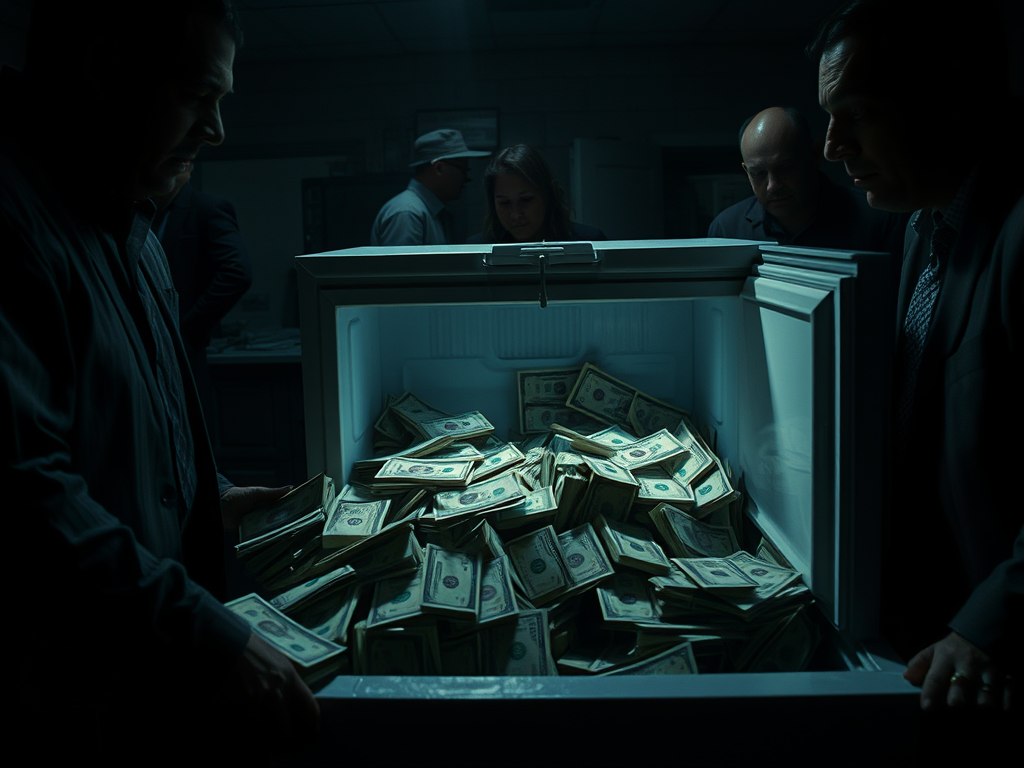
Hundred-dollar bills hidden in a freezer. Casino licenses traded for favors. Shipments of granite exchanged behind closed doors.
These vivid images are not works of fiction but rather glimpses into Louisiana’s long and complicated history of political corruption. For generations, the state has been synonymous with flamboyant leaders, scandalous backroom deals, and high-profile trials that have shaped both its political culture and national reputation. While corruption is not unique to Louisiana, the state’s colorful cast of characters and recurring scandals have made its story particularly notorious.
The latest chapter came with the federal indictment of New Orleans Mayor LaToya Cantrell, accused of misusing public funds to facilitate a personal relationship with her police bodyguard and attempting to conceal the extent of their travels together. According to prosecutors, taxpayer money was diverted to cover trips and time spent outside the city, all while the officer claimed to be on duty. Cantrell’s lawyer responded cautiously, saying he needed time to review the indictment before offering comment.
Cantrell’s case has drawn national headlines, but to longtime observers of Louisiana politics, it feels like history repeating itself. To better understand the weight of this moment, it’s worth looking back at the state’s most significant political scandals over the last century.
Richard Leche: The Governor Who Fell from Grace

After the 1935 assassination of populist firebrand Huey Long, Richard Leche rose to power as governor. His time in office was short-lived, collapsing under the weight of corruption allegations. In 1939, Leche resigned amid growing scandal. The following year, federal prosecutors convicted him of mail fraud, exposing a kickback scheme in which a truck dealer inflated prices charged to the state’s Highway Department and funneled money back to the governor.
Leche served five years in prison before receiving a pardon from President Harry Truman in 1953. His downfall marked one of the earliest examples of a Louisiana governor’s career ending in disgrace, setting a precedent that others would unfortunately follow.
The Long Brothers: Power, Populism, and Controversy
Few names loom larger in Louisiana politics than Huey Long and his younger brother, Earl Long. Huey, known as “The Kingfish,” built a legendary career as governor and later U.S. senator. His fiery rhetoric, sweeping social programs, and aggressive political tactics cemented him as both a hero to the poor and a target of corruption accusations. Huey was never convicted, but questions about his finances and methods swirled until his assassination in 1935.
Earl Long stepped into the political arena under his brother’s shadow, first becoming governor in 1939 after Richard Leche resigned. He, too, faced accusations of embezzlement, though charges did not stick. Despite controversy, Earl went on to win two additional terms, serving from 1948 to 1952 and again from 1956 to 1960. Known for his eccentric personality and personal excesses, Earl embodied the larger-than-life style of Louisiana politics, blending populist ideals with scandalous behavior.
Edwin Edwards: Four Terms and a Final Conviction
When it comes to corruption and charisma, no figure captures the Louisiana imagination quite like Edwin Edwards, the only four-term governor in state history. Edwards served from 1972 to 1996, embracing a flamboyant lifestyle that became part of his political brand.
Poker games with high stakes, expensive trips to Las Vegas and Monte Carlo, and public jokes about his own womanizing painted Edwards as both scandalous and magnetic. For decades, he dodged investigation after investigation, skillfully outmaneuvering prosecutors.
That changed in 2000 when Edwards was convicted of selling riverboat casino licenses in exchange for bribes during his final term. The once-untouchable governor was sentenced to over eight years in federal prison. Even after his release, Edwards attempted a political comeback in 2014, but the voters who once adored him turned the page.
William Jefferson: Cash in the Freezer
Perhaps no modern Louisiana scandal captured public imagination like the case of William Jefferson, a congressman who represented the state for 18 years. In 2005, an FBI investigation uncovered evidence that Jefferson had accepted bribes to promote American business interests in Africa.
In one infamous moment, federal agents recorded Jefferson receiving $100,000 in cash from an informant. Shortly afterward, agents searching his home discovered $90,000 of that money stuffed in frozen food containers inside his freezer.
The image of “cold, hard cash” became a lasting symbol of political greed. Jefferson’s trial dragged on for years, but in 2009 he was convicted of bribery, racketeering, and money laundering, receiving a 13-year prison sentence. A later Supreme Court ruling narrowed corruption statutes, and in 2017 a judge threw out several charges, leading to Jefferson’s release. Still, the scandal permanently tarnished his career.
Ray Nagin: From Katrina Leadership to Federal Prison
Ray Nagin rose to national prominence as the outspoken mayor of New Orleans during Hurricane Katrina in 2005. His leadership during the crisis made him a household name, but less than a decade later, his career collapsed.
In 2014, Nagin was convicted on more than 20 counts of bribery and fraud. Federal prosecutors revealed a pattern in which he awarded city contracts and special favors in exchange for bribes and gifts. Among the most unusual benefits was a steady supply of free granite to his family’s countertop business, tying his personal finances to city politics.
Sentenced to 10 years in prison, Nagin served part of his term before being released to home confinement in 2020 during the COVID-19 pandemic. His probation ended in 2023, but his legacy remains overshadowed by the scandal.
A Pattern That Persists
From Richard Leche in the 1930s to LaToya Cantrell today, Louisiana’s political stage has often been defined by a dramatic cycle: charismatic leaders rise to prominence, enjoy influence and power, and eventually face allegations of corruption. Some escape conviction, others spend years in prison, but the stories reinforce a narrative that has long haunted the state’s reputation.
Why does Louisiana, more than many other states, seem particularly prone to corruption? Historians point to several factors: a culture of patronage politics, deep economic inequality, and a tradition of strongman leaders who blurred the lines between public service and personal gain. The state’s colorful, theatrical style of politics also tends to attract personalities who thrive in the spotlight but sometimes cross ethical boundaries.
Looking Ahead
Mayor Cantrell’s indictment once again raises difficult questions for Louisiana residents: Can the cycle of corruption ever truly end? Is the state destined to repeat history, or can a new generation of leaders build a more transparent and accountable system?
While past scandals provide cautionary tales, they also offer lessons. Political accountability, vigilant media coverage, and engaged citizens remain the most effective safeguards against abuse of power. Louisiana’s history is full of scandal, but it is also full of resilience, with voters time and again demanding reform even after repeated disappointment.
Whether Cantrell’s case becomes another infamous chapter or marks a turning point remains to be seen. What is certain, however, is that Louisiana’s long dance with political corruption is far from over.




Leave a Reply