
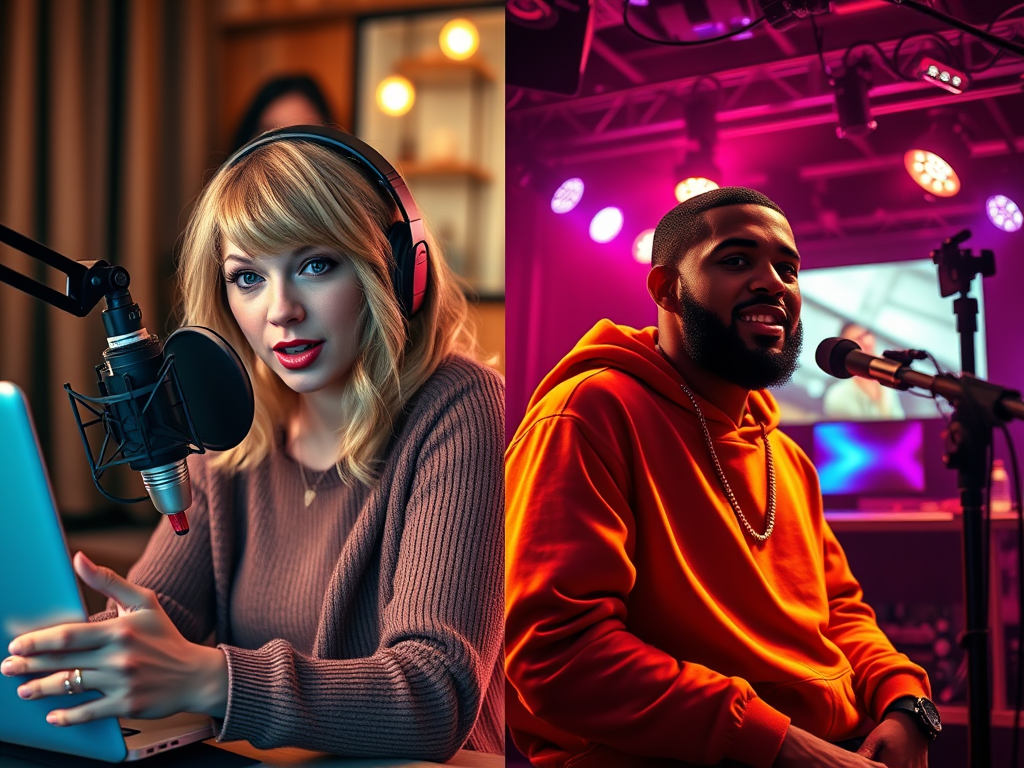

In the ever-shifting world of entertainment marketing, the rules of audience engagement are constantly evolving. For Taylor Swift, that meant sitting down for a 123-minute video podcast hosted by her boyfriend, Kansas City Chiefs star Travis Kelce, and his brother Jason. The conversation was warm and personal, touching on everything from her music to small moments in her personal life. For Drake, the strategy was different but equally bold: spending 189 minutes on a livestream with influencer Adin Ross, a session filled with candid banter, high-stakes gambling chatter, and bursts of irreverent humor.
This week, two of the most recognizable pop icons of the 21st century demonstrated their mastery of yet another promotional frontier — the power of going long. On Wednesday, Swift chose the Kelce brothers’ New Heights podcast to officially announce her 12th original studio album, “The Life of a Showgirl.” Over the weekend, Drake used his streaming session with Ross and others to keep fans buzzing about his ninth solo album, “Iceman.”
The decision to lean into longform media reflects a broader transformation in the digital landscape. In an age where attention spans are supposedly shrinking, the opposite trend is also gaining momentum: audiences are showing up for — and sticking around for — hours-long broadcasts. Whether it’s a celebrity podcast conversation or a casual livestream hangout, the appetite for unfiltered, extended content is bigger than ever.
Why Longform Content Is Winning the Internet
Longform video has emerged as a dominant force in online entertainment because it sits at the sweet spot between intimacy and accessibility. Top livestreamers on platforms like Twitch and Kick often broadcast for much of the day. The most influential podcasters on YouTube regularly post multi-hour interviews that rack up millions of views. And the reach doesn’t end there — these marathon sessions are clipped into short, shareable moments that flood TikTok, Instagram, and X (formerly Twitter), bringing both superfans and casual viewers into the conversation.
For Swift and Drake, embracing this trend is both a natural evolution and a strategic choice. Throughout the 2010s, both artists reshaped how fans connect with their idols. Swift built an obsessive, detail-oriented fan base by sprinkling hidden clues about her projects across her music, videos, and social media. Drake, meanwhile, became a pioneer in using digital platforms for real-time audience interaction, from Instagram Live sessions to spontaneous collaborations.
Their latest embrace of longform content represents a new chapter. These formats — observational, imperfect, and a little rough around the edges — offer just enough personal access to feel genuine, without crossing into overexposure.
Taylor Swift’s Podcast Power Move
Swift’s choice to unveil The Life of a Showgirl on the New Heights podcast was both a personal and calculated move. The conversation revealed lighthearted details — Kelce praised her beer pong skills, she confirmed her knowledge of NFL quarterbacks Jared Goff and Josh Allen, and she opened up about helping care for her father, Scott Swift, following his recent quintuple bypass surgery.
Perhaps the most anticipated moment came when she shared background on her upcoming album. Kelce described it as “a lot more upbeat” and “fun pop excitement,” calling it a “complete 180” from her previous record, The Tortured Poets Department. Swift agreed with the description, positioning the project as a refreshing shift in tone.
The rollout was smartly orchestrated. The clip announcing the album dropped online just after midnight Tuesday, and by morning, GQ had released its cover story featuring Kelce. This dual promotion blended personal chemistry with professional ambition, offering fans a glimpse into their relationship while spotlighting her music.
In the podcast, Swift and Kelce leaned into playful banter. At one point, she teased him, saying, “He may not have read Hamlet, but I explained it to him,” turning the moment into a charming couple’s joke that fans instantly shared across social media.
Drake’s Livestream Strategy
Drake’s approach to longform content couldn’t have been more different. On Adin Ross’s livestream, he barely discussed Iceman at all. When Ross hinted that he’d already heard much of the album, Drake quickly cut him off: “Now people are going to say you’re underwhelmed when you talk about it like that.”
This moment of tension underscored the unpredictable nature of livestreaming — part of its allure for viewers. Over the course of the stream, Drake shared personal anecdotes, joked about a failed DM attempt with an influencer, and engaged in edgy humor alongside other streamers like Trainwreckstv.
Over the past year, Drake has leaned heavily into the streaming world, teaming up with figures like Ross and the Nelk Boys. He even flew a group of livestream personalities to cover his recent three-night headlining run at London’s Wireless Festival. For Drake, this is not just about promotion — it’s about inserting himself into the spaces where the next generation of fans already spend their time.
Interestingly, while Drake never fully cracked TikTok’s code, he seems to intuitively understand livestreaming culture. It’s an environment where audiences linger for hours, develop parasocial relationships, and experience an artist as more than just a performer. By stepping into that space, Drake gains cultural relevance beyond his music alone.
Why It Works for Both Artists
While Swift and Drake operate in very different styles, their adoption of longform content comes from the same realization: in today’s media climate, time equals connection. Spending hours with an audience — whether in the cozy intimacy of a podcast or the unpredictable chaos of a livestream — fosters a level of engagement that short social media posts can’t match.
Swift’s polished yet playful approach reassures her fan base that she’s still in control of her image while giving just enough personal insight to deepen loyalty. Drake’s raw, sometimes risky livestream appearances signal that he’s willing to loosen the reins, inviting fans into a more casual, unpredictable version of himself.
Both strategies also take advantage of the “clip economy.” The most memorable moments — a teasing comment, a surprising personal detail, an awkward silence — get clipped, captioned, and shared endlessly, reaching audiences far beyond the original broadcast.
The Celebrity Longform Future

As the media landscape continues to splinter, longform content offers celebrities a rare opportunity to stand out. The formats are cost-effective, endlessly repurposable, and capable of creating both must-watch live moments and viral bite-sized clips.
For Swift, a long podcast appearance is the perfect venue to roll out a major album while subtly reinforcing her personal narrative. For Drake, livestreaming provides a playground for unscripted interactions that feel authentic to a younger, internet-native fan base.
In both cases, the choice reflects a broader truth: audiences don’t just want the music — they want the time, the presence, and the sense of being in the room. By giving hours instead of minutes, Swift and Drake are not only promoting their albums; they’re deepening their cultural footprint in a way that short-form content alone can’t achieve.
And so, in an era where the most famous people in the world could be anywhere, Swift and Drake are choosing to be here — sitting for hours, sharing moments, and letting their fans in, one long conversation at a time.




Leave a Reply