
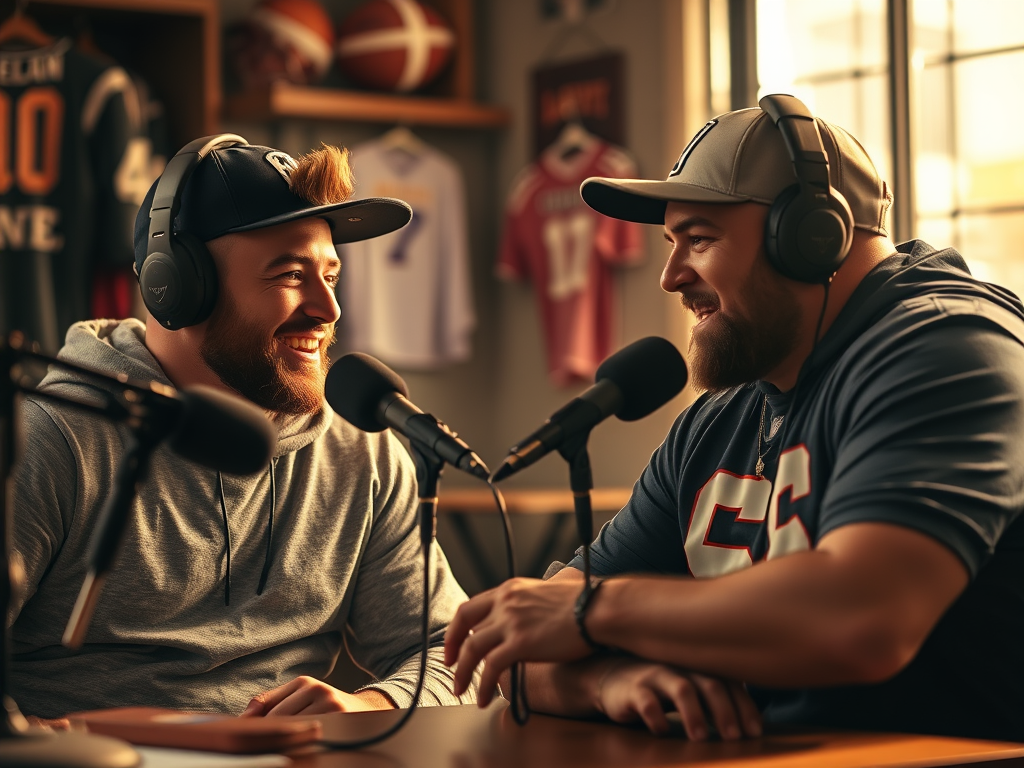

The Rise of Bussin’ With the Boys: From NFL to Political Spotlight

When former NFL players Taylor Lewan and Will Compton launched their podcast Bussin’ With the Boys in 2019, few could have predicted that the two athletes—neither of whom was a household name—would one day find themselves mentioned during a presidential victory speech. Yet, on election night in November, that’s exactly what happened.
Lewan, a starting offensive lineman for the Tennessee Titans at the time, and Compton, a journeyman linebacker best known for his backup role with the same team, went to bed expecting a smooth win for Donald J. Trump, whose campaign they openly supported. They had even interviewed Trump just weeks earlier. When they woke the next morning, they were stunned to learn that Dana White, president of the Ultimate Fighting Championship (UFC), had name-dropped their show—alongside big names like Joe Rogan, Theo Von, and Adin Ross—during Trump’s televised acceptance speech.
“Centuries from now, if there’s a history museum playing clips, Bussin’ With the Boys will be mentioned in a presidential victory speech,” Compton marveled. “That’s just wild.”
Building a Brand from the Ground Up
Unlike many athletes who find immediate fame after transitioning into media, Lewan and Compton started with almost no mainstream recognition. Their early appeal wasn’t built on celebrity status, but rather on a raw, testosterone-driven style of conversation that mirrored the unfiltered banter of NFL locker rooms.
From outrageous hypotheticals—like their coach joking he’d “probably” cut off his genitals for a Super Bowl win—to candid chats with sports figures and entertainers, the show quickly gained traction among young male audiences.
Over the years, the guest list has been a who’s who of modern sports and pop culture. Rapper-turned-country star Jelly Roll has appeared. Buffalo Bills quarterback Josh Allen has talked about life in the spotlight. Kansas City Chiefs tight end Travis Kelce discussed how dating Taylor Swift transformed his relationship with paparazzi. Comedian Shane Gillis opened up about losing his Saturday Night Live role over past remarks.
The “Manosphere” Connection
Their podcast has often been associated with the so-called “manosphere”—a loosely defined ecosystem of male-focused podcasts, YouTube channels, and alternative media outlets that critics say have amplified Trump’s appeal among certain demographics. Whether they embrace the label or not, Lewan and Compton are undeniably part of a new sports media wave that includes figures like ESPN star Pat McAfee and the Barstool Sports brand founded by Dave Portnoy.
Still, the hosts insist their vision is simple: capture the organic, unpolished conversations that happen when athletes are away from the cameras.
“We’d be in the sauna, the cold tub, the cafeteria—having amazing conversations,” Compton explained from their Nashville studio, a converted red bus covered in stickers. “We just thought, why not share that?”
Lewan added, “The goal was to make the bus feel like a locker room—unfiltered, authentic, and with total editorial freedom.”

Unapologetic Masculinity and Viral Moments
The show’s set is unapologetically on-brand: a mounted deer head, cans of Bud Light and vodka-seltzer from sponsor Anheuser-Busch scattered around, and a soundtrack celebrating beer, sports betting, and “hanging with the fellas.” Sexual innuendos and crude humor are frequent—and often celebrated by their audience.
Some moments border on the outrageous. In one episode, retired NFL star Rob Gronkowski admitted to having witnessed a teammate engaging in inappropriate behavior during team meetings—without hesitation or PR-polished restraint.
This authenticity has helped Bussin’ With the Boys climb to the No. 11 spot among sports podcasts on Spotify. Their YouTube subscriber base—640,000 strong—may not yet rival that of the Kelce brothers or Shannon Sharpe, but it’s a formidable audience built from scratch.
Early Pushback and Breakthrough Deals
The journey hasn’t been without friction. Lewan recalls Titans head coach Mike Vrabel publicly calling him out during a team meeting after a podcast episode revealed sensitive medical details about a teammate.
“It was over 100 people in the room, and the focus was entirely on me,” Lewan said. “It felt terrible.”
Ironically, Vrabel later appeared as a guest on the show, famously making his “bodily sacrifice” comment for a Super Bowl win. Other early viral clips included NFL cornerback Jalen Ramsey revealing he used to message opponents’ girlfriends before games to get in their heads.
Barstool Sports quickly took notice, offering a distribution deal and production resources. Several years later, the podcast went independent after sports betting giant FanDuel outbid Barstool to become its presenting sponsor—a move that gave Lewan and Compton more creative and financial control.

Diversifying and Expanding
Now operating with a staff of eight and a handful of interns, the duo is expanding their media footprint. New spin-off shows are in development, including one where Compton shares his experiences as a father of two.
In the early days, Lewan admits, they leaned heavily on “low-hanging fruit” questions like, “When did you lose your virginity?” Today, their curiosity and content strategy have matured—though they haven’t abandoned humor.
Landing the Trump Interview
The podcast’s most headline-grabbing moment remains its hour-long interview with Trump during the 2024 campaign season. The connection came through Dana White, whom they had befriended after interviewing him during Super Bowl week. White encouraged Trump to diversify his media appearances beyond Fox News to reach broader audiences, and he believed Bussin’ With the Boys would be a perfect fit given Trump’s love of sports.
The interview, recorded at Trump International Hotel & Tower in Chicago after a rally in Detroit, touched on politics, NFL controversies, and Trump’s high school sports days. One particular remark about not liking to play against “a guy who’s lifting weights all day and came from a bad neighborhood” drew criticism from some who interpreted it as racially insensitive.
When The Washington Post reached out for comment on their laughter during Trump’s response, Compton cheekily posted a video of himself passing gas into the phone—a move straight from the Dave Portnoy playbook.

Lewan and Compton later said they felt no need to issue a serious rebuttal, insisting the remark was misunderstood and choosing instead to double down on their unfiltered style.
“We know we didn’t do anything wrong,” Lewan said. “We know Trump didn’t mean it that way. So we just keep being who we are.”
A New Era for Athlete-Driven Media
The rise of Bussin’ With the Boys reflects a broader shift in sports media. With platforms like YouTube, Spotify, and direct sponsorships, athletes no longer need traditional broadcasters to share their voices—or monetize their brand.
Lewan and Compton’s success underscores the appetite for unvarnished, personality-driven content. It also shows how sports, entertainment, and politics increasingly intersect in ways that can elevate niche creators into the national spotlight.
From beer-fueled locker room stories to a seat at the table in political discourse, Bussin’ With the Boys has defied expectations. And if the hosts have their way, this ride is just getting started.




Leave a Reply