
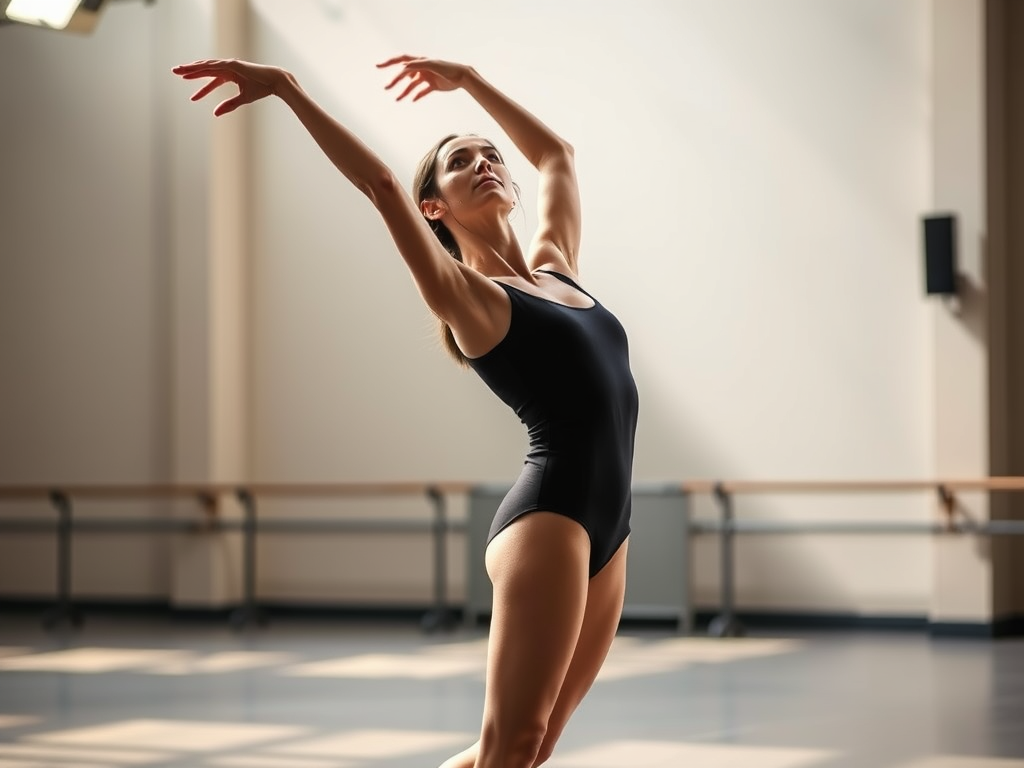

Tiler Peck, a renowned principal dancer with the New York City Ballet, has long captivated audiences with her grace, technical precision, and exceptional musicality. Since joining the company in 2009, she has become one of the most recognizable and celebrated ballerinas of her generation. But what truly sets Peck apart is her ability to blend raw talent with thoughtful introspection, as demonstrated in her latest artistic endeavor: curating and directing the “Ballet Festival: Jerome Robbins,” running August 12–17 and presented by the Joyce Theater Foundation.
The event marks a bold new chapter in how classical ballet is showcased — and experienced. Peck’s vision for the Robbins-focused festival reflects her evolution not only as a dancer but as a leader and artistic curator. Her mission? To give dancers the space to explore themselves artistically, just as Robbins’s choreography once pushed her to find deeper meaning in movement.
A Transformative Encounter with Robbins’s Legacy
Peck’s deep connection to Jerome Robbins’s work began when she was still a teenager. Cast in Robbins’s “Dances at a Gathering,” set to the music of Chopin, she danced the role of the woman in pink — a part that would later become symbolic in her journey as a performer.
Although technically sound, her debut in the piece left her feeling unprepared. “I didn’t understand the simplicity of the ballet,” she later reflected. “So much of Robbins’s work is understated. You really have to dig deeper into who you are as a person and bring that to the role.”
This early experience left a lasting impression, sparking a desire in Peck to revisit Robbins’s legacy from a more mature, reflective place. That passion is now coming to life through this festival — not as a nostalgic tribute, but as a dynamic, evolving exploration of Robbins’s choreographic voice.
Curating with Intention
Peck collaborated closely with the Robbins Rights Trust, particularly Jean-Pierre Frohlich, a longtime associate of Robbins and current repertory director at New York City Ballet. Frohlich praised Peck’s artistic intuition, calling her a dancer with “taste” and someone who “knows what she wants.”
The festival lineup includes top dancers not only from New York City Ballet but also from American Ballet Theatre, the Paris Opera Ballet, and the Royal Ballet. But rather than assembling these elite artists for a traditional gala-style performance, Peck envisioned something more immersive and cohesive — a genuine collaboration that allows performers to grow alongside one another.
“I wanted it to be a growing experience for all of us,” Peck explained in a video interview from London, where she was also performing in the musical Little Dancer. “Not just exciting for audiences, but personally meaningful for the dancers.”
A Groundbreaking Performance in “A Suite of Dances”
Among the most anticipated highlights is Peck’s debut in A Suite of Dances, originally created by Robbins for the legendary Mikhail Baryshnikov in 1994. Until now, the role had exclusively been danced by men — and Peck is the first woman to be granted permission by the Robbins Trust to take it on.
Two years ago, Peck expressed her desire to learn the piece, only to be told “no” — it was reserved for male performers. But times have changed. As gender roles in ballet continue to evolve — seen in the casting of nonbinary and cross-gender roles in major companies — the trust decided to make history by giving Peck the opportunity.
“It’s not necessarily a gendered work,” Frohlich said. “It’s about the relationship between the dancer and the music — like an impromptu dialogue between two artists.”
Peck approached the role with determination. She refused to alter the choreography to suit a female body. “I want to do it as it was choreographed,” she said. “I never want to be offered something just because I’m a woman. I want to be chosen because I’m the right person for the role.”

Her background in jazz dance has proved critical in adapting to the work’s technical demands — from difficult turns to high jumps that challenge traditional expectations. “If I didn’t have my jazz training, I honestly don’t know if I’d be able to do the hops in second the way I can now,” she explained.
Elevating Others Through Thoughtful Casting
Peck’s commitment to supporting rising talent is evident throughout the festival. She hand-selected dancers not based solely on seniority, but on their readiness to take on Robbins’s nuanced choreography.
One of her boldest moves was casting Dominika Afanasenkov, a corps de ballet member at City Ballet, in the lead role of Concertino. “You can’t just give her one opportunity and stop,” Peck said. “You have to build momentum. I wanted her to lead a ballet and keep going in that direction.”
Another standout pairing is Chloe Misseldine of American Ballet Theatre dancing alongside Mira Nadon of City Ballet in Rondo, an elegant, minimalist duet. While Misseldine is new to Robbins’s work, she welcomed the opportunity as a crash course in subtlety and precision.
Also featured is Four Bagatelles, a lesser-known Robbins piece Peck danced earlier in her career. She’s chosen Emma Von Enck and David Gabriel — two emerging talents — for its challenging partner work. “It looks simple, but the partnering is complex,” she said. “It will push them in exactly the right way.”
The iconic Other Dances will also make an appearance, with Cassandra Trenary and Roman Mejia in the lead roles. Trenary, until recently a principal at ABT and now heading to the Vienna State Opera, described the opportunity as a long-awaited dream. “It’s one of those pieces that’s pure dance — if you can capture the freedom and spontaneity, it becomes magical.”

Returning to Where It All Began
Perhaps the most personal inclusion for Peck is a condensed version of Dances at a Gathering, the very ballet that once challenged her understanding of performance. While the original runs nearly an hour, Peck’s festival version will feature four of the five couples, allowing the work to retain its emotional complexity while fitting the Joyce Theater’s more intimate scale.
Initially, there was resistance from the Trust. “They said no at first,” Peck recalled. “But I asked, ‘Why not?’ We’re showcasing these ballets in a small venue — we should embrace that intimacy, not run from it.”
Peck was never interested in curating a glittery gala. “This isn’t about showcasing solos and duets for the sake of it,” she said. “The point of this festival is to bring people together — to experience Robbins’s work together.”
Looking Ahead: Peck as an Artistic Force
Though Robbins passed away in 1998 — when Peck was only 10 — his influence lives on in dancers like her. Peck has not only absorbed his work as a performer but has emerged as a thoughtful interpreter of his legacy. With her second original choreography for New York City Ballet already in the works, her artistic perspective continues to evolve.
This festival is not just a tribute — it’s a manifesto. It calls for ballet that is collaborative, challenging, and inclusive. It celebrates tradition while pushing boundaries. And, perhaps most importantly, it shows that true artistry lies not in perfection, but in vulnerability, curiosity, and connection.
As the curtain rises on the Jerome Robbins Ballet Festival, audiences can expect more than beautiful performances. They’ll witness a movement — one led by Tiler Peck — toward a more thoughtful, expressive, and human form of ballet.




Leave a Reply