

Figma’s Historic IPO: A Journey from Acquisition to Success

Just three years ago, Figma—a promising San Francisco-based tech startup that built a collaborative design platform—seemed destined for a major payout. In 2022, the company announced it had reached a landmark agreement to be acquired by software giant Adobe for an astonishing $20 billion. But what appeared to be a historic moment for Figma turned into a legal and regulatory quagmire. Regulatory agencies in the United States, the United Kingdom, and the European Union scrutinized the deal heavily, expressing antitrust concerns about its potential to hinder competition in the design software market.
Eventually, after more than a year of navigating complex legal reviews, the merger collapsed in December 2023. The fallout left Figma’s dreams—and its valuation—shattered. But instead of fading into the background, the company restructured, regrouped, and launched a comeback.
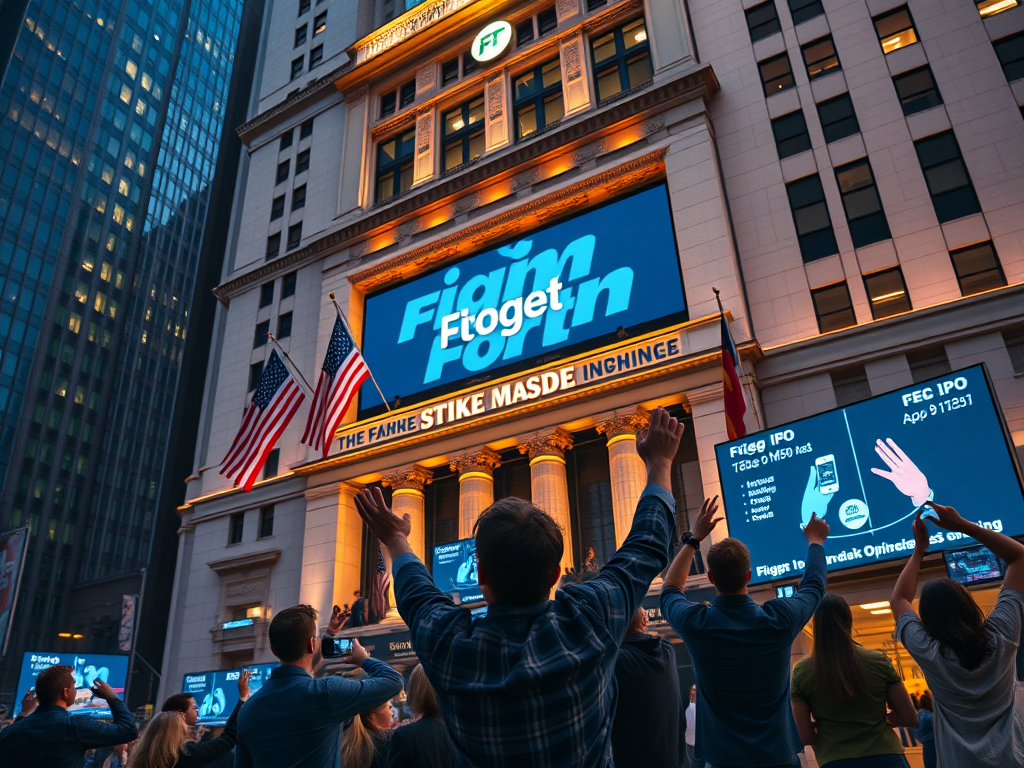
That comeback culminated this week, when Figma made its long-awaited debut on the New York Stock Exchange. On its first day of trading, the company’s shares surged to a closing price of $115.50—soaring more than 250% from its IPO price of $33 per share. The explosive debut valued the company at a staggering $67.7 billion, more than three times what Adobe was once prepared to pay.
Wall Street insiders call such dramatic first-day stock performance a “pop,” and Figma’s 250% jump far exceeded the typical first-day gains companies and underwriters usually aim for, which tend to hover around 15%. This extraordinary outcome not only vindicated Figma’s decision to remain independent but also signaled renewed investor enthusiasm for high-growth tech startups going public.

“This moment brings back all the memories of our journey—the early days, the setbacks, the rebuilding,” said Dylan Field, Figma’s co-founder and CEO, in an interview after ringing the opening bell at the stock exchange. “But it’s also a moment filled with optimism. We still have so much left to build.”
Field, 33, instantly joined the ranks of Silicon Valley’s billionaires. Based on his stake, his net worth now exceeds $6.3 billion.
Figma’s IPO is one of the largest and most significant stock market debuts of 2025, marking a potential turning point after a prolonged lull in public offerings. In recent years, macroeconomic uncertainty, trade tensions, and inflation had cooled enthusiasm for IPOs. Startups like Klarna and Chime had postponed plans to go public amid volatile markets.
However, the IPO market is showing signs of life. Cloud infrastructure firm CoreWeave went public in March, and other major tech companies—including Klarna, Chime, and StubHub—are lining up behind Figma to reenter the public arena.
“This is a very positive signal for the broader tech IPO landscape,” said Nick Einhorn, Director of Research at Renaissance Capital, a firm that tracks initial public offerings. “Figma’s performance will definitely encourage both founders and investors alike.”
Founded in 2012 by Dylan Field and Evan Wallace, who met while studying computer science at Brown University, Figma was built with a vision to transform how teams design digital products. The platform enables real-time collaboration—much like Google Docs—for building and editing user interfaces for websites and mobile apps. Its intuitive interface and cloud-based functionality made it particularly attractive to distributed teams, especially as remote work surged during the pandemic.
Field’s passion for accessible design tools was evident from the start. Venture capitalist Will Griffith from Iconiq Capital recalled first meeting Field when he was a 19-year-old college dropout, working alongside Wallace and a dog in a cramped apartment in Palo Alto. Field had a clear mission: to disrupt the design software market, which was traditionally dominated by expensive, resource-intensive programs.
Figma’s product operates under a freemium model—offering free use for individuals and smaller teams, while charging enterprise clients for premium features. Subscription plans can reach up to $90 per user per month. Major corporations such as Netflix, Uber, and Duolingo use Figma to develop their digital products, showcasing the platform’s scalability and wide adoption.
Over the years, Figma raised approximately $333 million in funding. Its top investors include renowned venture firms like Greylock Partners, Kleiner Perkins, and Index Ventures. Field retains a 9% stake in the company and holds special voting rights, which, combined with proxy control over Wallace’s shares (roughly 5%), gives him about 74% voting power in corporate decisions.
In 2021, Wallace stepped down from his role as Chief Technology Officer, though he remains Figma’s second-largest shareholder.
The company’s attempted sale to Adobe in 2022 marked what many thought was a peak moment. Adobe, famous for software like Photoshop and Illustrator, saw Figma as a strategic acquisition. But regulators feared the merger would give Adobe disproportionate influence in the design software space. Despite extensive lobbying and public statements meant to ease concerns, the deal fell apart in late 2023. Adobe paid Figma a $1 billion termination fee.
Reflecting on the failed deal, Field remarked, “There’s clearly a gap between how we understand our business and how regulators interpret it.”

Danny Rimer, a partner at Index Ventures and a board member at Figma, echoed this sentiment. “It was frustrating,” he said, noting that regulators made consequential decisions without fully grasping the nuances of the tech industry. “To this day, Adobe doesn’t directly compete with Figma.”
After the breakup, Figma recalibrated its internal valuation to $10 billion, slicing its previous market value in half. The sudden drop was a blow to employees—known internally as “Figmates”—who had anticipated a windfall from the Adobe acquisition. However, the company soon organized a secondary share sale, allowing employees to liquidate shares at a $12.5 billion valuation, offering partial relief.
Rather than stagnating, Figma doubled down on innovation. The company focused its attention on artificial intelligence, launching four new AI-powered features in early 2025 aimed at expanding its software capabilities. Figma reported that over two-thirds of its users are now nondesigners—an indication of its growing versatility across various departments like marketing, product management, and engineering.
“It would’ve been easy to take a breather after the Adobe deal collapsed,” Field said. “But instead, we chose to accelerate.”
That drive appears to be paying off. In its IPO prospectus, Figma revealed that it had posted a profit of $44.9 million in Q1 of 2025—more than triple its earnings from the same period the year before. Its revenue reached $228 million, reflecting a 46% year-over-year increase.
In April, Figma officially filed to go public, with Morgan Stanley, Goldman Sachs, JPMorgan Chase, and Allen & Company underwriting the deal. By the time the bell rang on Thursday, the company had fully completed its journey from a nearly-acquired start-up to a publicly traded tech titan.
Looking ahead, Field sees even greater possibilities. With the capital raised from the IPO, Figma plans to explore large-scale acquisitions and deepen its investments in AI technology. “Artificial intelligence represents our biggest opportunity,” he said. “And investors know—we’re not afraid to take bold swings.”




Leave a Reply