
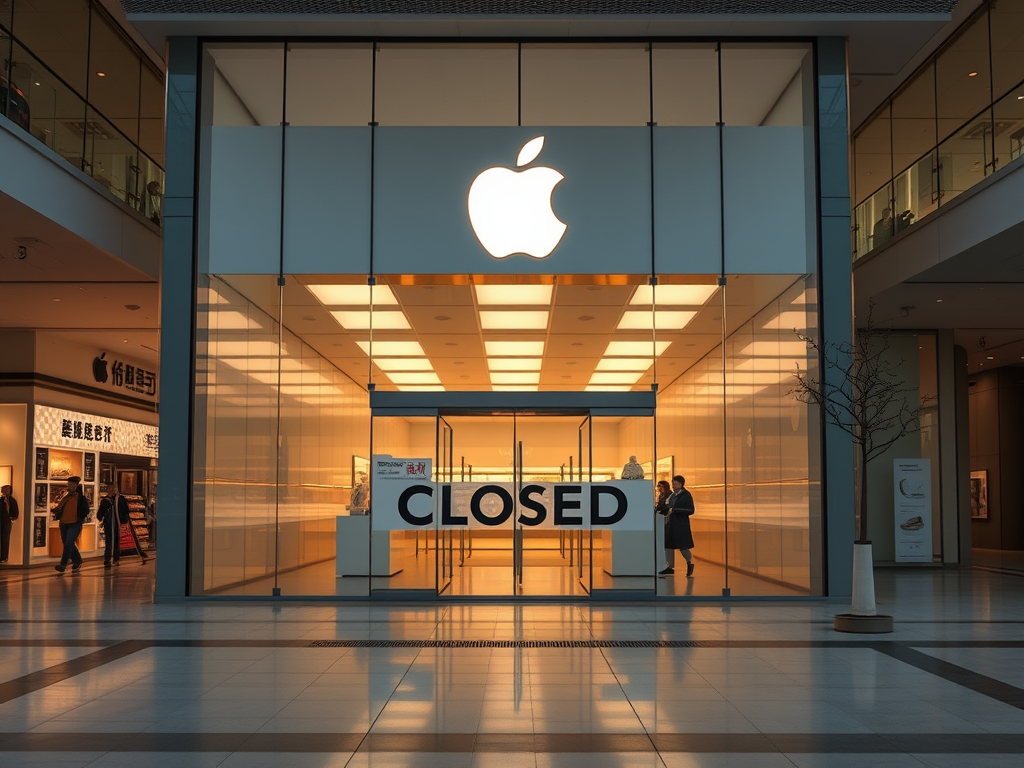

Apple Is Shutting a Store in China, Its First Closure in the Country

Apple Inc. has announced that it will permanently close one of its retail stores in mainland China this August, marking a rare retreat in a country that has played a crucial role in the tech giant’s global expansion over the past 16 years.
The affected store is located in Parkland Mall in Dalian, a coastal city in northeastern China. According to Apple, the store will officially cease operations on August 9, 2025. This will be the first Apple store closure in China since the company launched its retail presence in the nation back in 2008.
While Apple has not disclosed specific financial figures related to the closure, industry observers and local residents say the shutdown is tied to broader issues impacting the retail environment in Dalian. Parkland Mall, once considered a high-end shopping destination, has seen a noticeable decline in foot traffic and tenant occupancy. Luxury brands such as Michael Kors and Armani have already vacated the premises, leading to speculation about the mall’s long-term viability.
Apple Responds to Declining Mall Performance
In a statement, Apple spokesman Brian Bumbery cited the exodus of other brands as a factor in the decision.
“Given the departure of several retailers at the Parkland Mall, we have made the decision to close our store,” Bumbery explained. “We love serving the Dalian community, and all of our valued team members will have the opportunity to continue their roles with Apple.”
The company emphasized that employees impacted by the closure will be offered positions at other Apple locations, ensuring no layoffs occur as a result of the decision.
Broader Economic Signals from China’s Consumer Market

Apple’s closure of the Dalian store is emblematic of larger economic trends in China, where consumer spending has yet to fully recover from years of pandemic-related disruptions. While the Chinese government has invested heavily in stimulus programs—particularly those aimed at encouraging purchases of consumer electronics, home appliances, and electric vehicles—analysts warn that these measures may provide only a short-term boost to domestic consumption.
Despite government-led trade-in programs that offer incentives for upgrading smartphones and other electronics, many consumers remain cautious. Economic uncertainties, including a sluggish real estate market and youth unemployment, have led to a more conservative spending mindset, even among middle- and upper-income consumers.
Apple’s Strategic Challenges in China
China has long been Apple’s second-largest market, trailing only the United States. However, in recent years, the company has faced mounting challenges from both economic headwinds and stiffening competition from domestic smartphone brands. Apple’s total revenue from Greater China declined for six consecutive quarters, with 2024 revenues standing at $66.95 billion—a drop of nearly 10% from the 2022 peak of $74.2 billion.
Tech research firm Counterpoint Research reported that Apple’s share of the Chinese smartphone market fell to 15.5% in 2024, down from 17.9% the year before. This erosion in market share is largely due to aggressive competition from local tech giants like Huawei, Xiaomi, and Vivo, which have capitalized on national pride, innovative design, and competitive pricing to attract consumers away from Apple.
Huawei, in particular, has made a notable comeback, launching its own advanced chipsets and 5G-capable smartphones despite ongoing sanctions from the U.S. government. This resurgence has put pressure on Apple, whose iPhones are often priced significantly higher than many Chinese alternatives.
Apple Still Expanding in Other Chinese Cities

While the closure of the Parkland Mall store may signal a strategic retreat from underperforming locations, it doesn’t indicate an overall slowdown in Apple’s China plans. The company has confirmed that it will continue operating its other retail store in Dalian, located in the Olympia 66 mall—a venue that reportedly enjoys higher foot traffic and a more stable commercial environment.
Additionally, Apple is set to open a brand-new store in Shenzhen, a major tech and innovation hub in southern China. With this new location, Apple will maintain a total of 58 stores across the country by the end of 2025—the same number it had at the start of the year—effectively offsetting the closure in Dalian with fresh expansion elsewhere.
Realignment Rather Than Retreat
Industry experts suggest that Apple’s decision reflects a strategic realignment rather than a full-scale withdrawal from the Chinese market. Instead of closing multiple locations, Apple is consolidating its physical retail presence in regions where consumer demand remains robust and where shopping malls are better positioned to drive customer engagement.
Retail analysts note that this kind of pruning is common among international brands facing a dynamic Chinese market. In recent years, global retailers including H&M, Gap, and even Starbucks have all made location-based adjustments in China, either closing underperforming outlets or opening new stores in fast-growing urban centers.
“Retail in China is no longer a one-size-fits-all game,” said Li Cheng, a consumer market strategist at Shanghai-based consultancy TrendThink. “Global brands need to be more nimble—pivoting quickly toward areas with growth potential and away from locations that no longer offer a competitive advantage.”
Retail Trends in Dalian and Beyond
Dalian, once considered a rising star among China’s tier-two cities, has seen a decline in retail performance in recent years. While the city remains an important port and commercial center, it has lagged behind more dynamic cities like Shenzhen, Chengdu, and Hangzhou in attracting new investments and talent.
Parkland Mall, where Apple’s soon-to-be-closed store is located, is seen as a casualty of this broader trend. Locals on Chinese social media platforms such as Weibo and Xiaohongshu have remarked on the mall’s dwindling store directory, with many high-end and mid-range brands abandoning the space due to poor sales and changing consumer behavior.
What’s Next for Apple in China?
Despite these challenges, Apple is far from giving up on China. The company remains deeply embedded in the Chinese economy—not only as a retailer but also as a major employer through its supplier partnerships with companies like Foxconn and Pegatron. Moreover, China continues to serve as a key manufacturing base for Apple’s global supply chain.
Going forward, Apple is likely to focus on reinforcing its brand appeal among affluent urban consumers while adapting to an increasingly competitive and fragmented market. This includes expanding online sales channels, deepening relationships with local developers for app ecosystem growth, and exploring innovative marketing campaigns that resonate with Chinese values and lifestyles.
The upcoming store opening in Shenzhen could serve as a model for Apple’s future retail strategy in China—focusing on high-tech, experience-driven outlets located in vibrant commercial zones.
Conclusion
Apple’s closure of its Parkland Mall store in Dalian represents a small but significant shift in its retail strategy in China. Rather than signaling a retreat, it underscores the company’s intent to optimize its presence in one of the world’s most complex and fast-changing consumer markets. By reallocating resources from underperforming locations to areas with stronger potential, Apple is adapting to evolving market realities while reaffirming its long-term commitment to Chinese consumers.
As global economic conditions remain uncertain and local competitors continue to innovate, Apple’s next moves in China will be closely watched—not only by investors and analysts, but also by millions of loyal customers who remain central to the company’s global ambitions.




Leave a Reply