
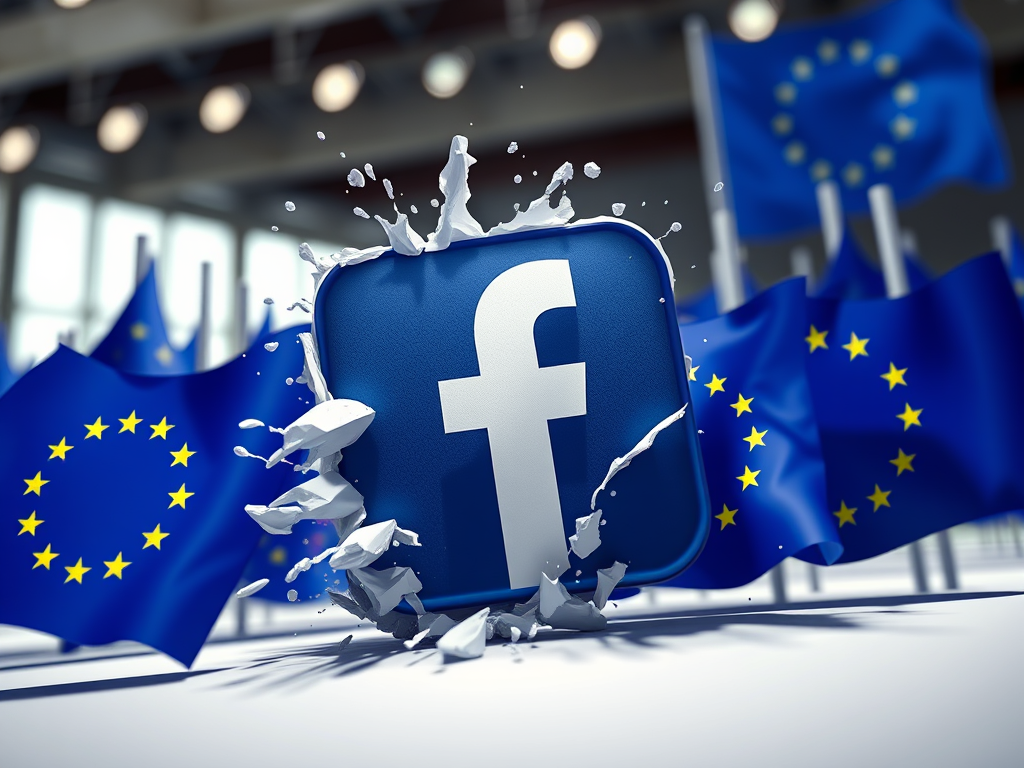

Citing New Rules, Meta Says It Will End Political Ads in E.U.

Meta announced on Friday that it will cease running political advertisements across its platforms in European Union countries, marking a significant move in the ongoing tug-of-war between major tech firms and European regulatory authorities.
Starting in October, Meta will discontinue advertisements that address political campaigns, elections, or social issues within the EU. This decision aligns with a newly introduced European law designed to increase the transparency of political advertising.
In a public statement, Meta explained that the upcoming regulation poses considerable compliance challenges and introduces legal uncertainties. As a result, the company determined that suspending political advertising is the most feasible option.
This development is the latest in a series of conflicts between tech giants like Meta and European lawmakers. The EU has long pushed for tighter control over how digital platforms operate, particularly concerning political messaging and public discourse. Regulators have frequently voiced concerns about the potential influence of digital platforms on democratic processes.
Over the past few years, Meta has faced a growing number of regulatory actions in Europe. Earlier in 2024, the company was fined €210 million (approximately $230 million) for antitrust violations. In 2023, it was penalized €1.2 billion (about $1.3 billion) for mishandling user data — the largest fine ever imposed under the EU’s data privacy law, the General Data Protection Regulation (GDPR).
Political campaigns across Europe have come to rely heavily on platforms like Facebook and Instagram — both owned by Meta — to reach voters. According to industry estimates, political actors have spent tens of millions of euros advertising on these platforms in recent election cycles.
The regulation in question, which will become effective in October, was developed in response to growing fears about foreign meddling in EU elections and the widespread distribution of misinformation. European officials believe that requiring more transparency around political ads will help restore public trust and give voters the necessary information to make well-informed decisions.

The law mandates that online platforms must clearly identify who is paying for political ads and ensure that ads can only be targeted to certain audience groups. Additionally, it prohibits any political advertising sponsored by non-EU entities during the three months leading up to an election or referendum.
Meta argues that these new obligations present overwhelming compliance burdens and could discourage political engagement. The company said that, despite ongoing discussions with EU policymakers, it has reached a point where the demands of the regulation are too onerous to meet effectively.
In its statement, Meta emphasized that it made this decision with reluctance, describing it as “difficult but necessary.” The company warned that such regulations could result in fewer options for both advertisers and the general public, ultimately limiting access to diverse viewpoints.
“This situation has left us with no viable alternatives,” Meta stated. “Once more, we are witnessing how regulatory mandates can unintentionally remove valuable services and tools from the marketplace, ultimately stifling innovation and narrowing consumer choice.”

This move echoes a similar action taken by Google in November 2024. Google also announced that it would halt political advertising in EU countries, citing comparable concerns about the complexity of the new rules and the difficulty of ensuring compliance.
It’s important to note that Meta’s new policy applies exclusively to paid political advertising within the European Union. The company clarified that politicians, advocacy groups, and everyday users will still be allowed to create and share political content organically. What will no longer be permitted is the promotion of such content through paid advertisements.
Meta further stated that it already employs several mechanisms to identify and manage misleading content and that it believes its current policies are sufficient to address the risks of disinformation. However, EU regulators have disagreed, claiming that the platform lacks adequate protections against deceptive political messaging. They argue that the unchecked spread of disinformation, including misleading or manipulative political ads, has had a polarizing effect on public opinion and may have influenced recent elections.
The broader implications of Meta’s decision are still unfolding. Political strategists and campaign organizers across the EU are now assessing how this change will impact their ability to reach voters. Many had grown accustomed to leveraging Meta’s advanced targeting tools, which allow campaigns to focus their messages on specific demographics.
Experts warn that the absence of paid political ads could push campaigns to seek alternative — and potentially less transparent — channels to get their messages out. Others argue that the move may help level the playing field by reducing the advantages that well-funded campaigns have enjoyed in the digital space.
At the same time, critics of the regulation argue that the law may have gone too far, inadvertently stifling legitimate political discourse. They suggest that the requirement to identify and verify sponsors, along with limits on targeting, could deter small organizations or grassroots movements that lack the resources to navigate complex compliance processes.
Supporters of the regulation, however, maintain that such transparency is crucial in protecting democracy. They point to past instances where opaque digital advertising tactics were used to spread misinformation or manipulate voter behavior. By enforcing stricter rules, they hope to make digital campaigning more honest and accountable.
The European Commission has defended the new law, saying it reflects a broader effort to modernize the democratic process and adapt it to the digital age. According to EU officials, greater transparency in political advertising is a necessary step in addressing the erosion of public trust in elections.
In the long run, Meta’s decision may serve as a pivotal moment in how digital political communication is managed in Europe. It could also influence other platforms and advertisers, prompting a wider reconsideration of how political content is regulated online.
Ultimately, the tension between innovation and regulation remains unresolved. As technology continues to evolve, so too will the debate over how best to balance freedom of expression, corporate responsibility, and the need for democratic safeguards.
For now, one thing is clear: the digital landscape for political messaging in the European Union is undergoing a profound transformation — one that will have lasting implications for voters, platforms, and policymakers alike.




Leave a Reply