
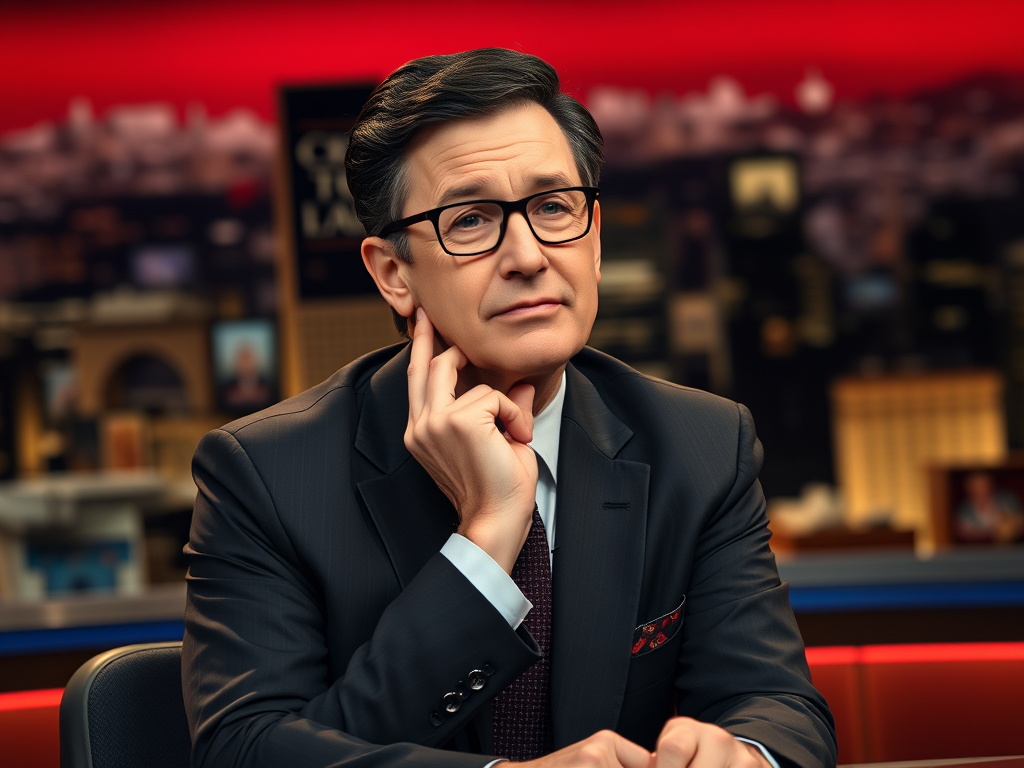

Canceling ‘The Late Show’ Is Bad News for Late-Night TV, Not for Stephen Colbert

Getting canceled might actually turn out to be a turning point — and potentially a career high — for Stephen Colbert. Unfortunately, the same cannot be said for the future of late-night television as a whole.
We’ve seen this pattern before: when Conan O’Brien lost his NBC late-night slot, he was catapulted to cult-hero status, and when David Letterman was overlooked for “The Tonight Show,” his popularity soared. Until very recently, Colbert was sitting at the top of a declining genre, hosting CBS’s “The Late Show” and drawing the highest viewership among late-night network hosts.
That changed abruptly last week when CBS announced that “The Late Show” would end in May next year, citing financial concerns. The announcement coincided with a crucial moment for CBS’s parent company, Paramount Global, which is currently seeking government approval for a merger with Skydance Media. The timing has led many to view Colbert not as just another canceled host, but as a comedic martyr — someone whose willingness to challenge political power may have contributed to the show’s demise. In the months leading up to the final episode, the spotlight will shine more brightly on Colbert than ever before. This rare moment gives him the opportunity to not only continue poking fun at political figures, particularly Donald Trump, but also to craft his next creative chapter.

Colbert’s appeal has long stemmed from the unique combination of sharp, politically-charged comedy and old-school civility. Among his peers, he became widely recognized as the most skillful conversationalist on late-night TV. His opening monologues — often focused on politics — earned him critical acclaim and helped secure his place at the top of the ratings chart. He also clearly held a deep reverence for the traditions of late-night programming, although at times, this respect might have been too limiting.
There were moments when it seemed like the format of “The Late Show” didn’t allow Colbert’s full range of talent to shine. His quick wit, honed through years of improvisational comedy, and his intellectual curiosity often felt compressed by the show’s rigid segment structure. When he would launch into more personal or niche interests — whether discussing religion, J.R.R. Tolkien, or the art of comedy itself — it was hard not to imagine how much better those conversations might flow on a podcast or in a longer-form medium.
Before joining CBS, Colbert had already built a stellar reputation in the comedy world. He began as a performer with Chicago’s renowned Second City troupe, gained visibility as a writer and on-screen talent for “The Daily Show,” and ultimately broke new ground with “The Colbert Report.” That show, a satirical take on right-wing media personalities, remains one of the most innovative pieces of late-night programming in recent memory. Colbert managed to embody a blustering conservative character while simultaneously skewering the ideology it represented. He masterfully guided his guests through layered conversations, where humor and serious commentary coexisted. His performance was so rich with double meaning and subtext that it remains one of the standout comedic achievements of the 21st century.
That show had a level of complexity unmatched by most current network late-night programs. In fact, when Colbert was first announced as the replacement for David Letterman, some critics worried — with good reason — that the move to a more mainstream format might dull his edge. While the transition certainly demanded a change in style, Colbert did manage to make the role his own. He adapted to the expectations of network TV while retaining his integrity and intellect.
In a monologue last week, Colbert criticized Paramount’s decision to settle Donald Trump’s lawsuit regarding the edited “60 Minutes” interview with Kamala Harris. He called the reported $16 million payout a “big, fat bribe.” With that remark, Colbert aligned himself with a long tradition of late-night hosts who dared to lampoon their own networks.

Yet his sudden cancellation just three days later casts doubt on whether that tradition still holds. Once upon a time, network executives could laugh along with the audience as late-night comedians took jabs at them. Rick Ludwin, a former NBC executive in charge of late-night programming, once remarked that jokes from hosts like Letterman — who would regularly refer to network execs as “pinheads” — were good for business. The public loved the rebellious spirit, and as Ludwin noted, executives come and go, but the shows were supposed to carry on.
That no longer seems to be the case. While it would be premature to declare late-night television dead, Colbert’s departure certainly marks the end of an era. The remaining hosts — Jimmy Fallon, Seth Meyers, and Jimmy Kimmel — each bring unique skills to the table, but none had the star power or cultural influence that Colbert brought when he took over “The Late Show.” Unlike their predecessors — Letterman and O’Brien, who helped shape the comedic tastes of generations — today’s late-night personalities are increasingly dependent on digital platforms to connect with their audience.
So what, or who, is responsible for the slow erosion of the late-night television empire? The most obvious suspect is the internet. Streaming platforms, social media, and YouTube have dramatically altered viewer habits. People no longer wait until 11:30 p.m. to watch a talk show. Instead, they consume clips on demand, often the following day. This shift has made the very idea of “late night” somewhat obsolete. In addition, the overt politicization of these shows, starting with Jon Stewart’s era on “The Daily Show,” has splintered the audience and pushed some viewers away.
However, if we are to analyze the decline of late-night television in full, Paramount’s choice to end Colbert’s show at this moment warrants deeper scrutiny. CBS President George Cheeks has publicly stated that the decision was “purely financial.” But the debate over whether the cancellation was motivated by political pressure or financial loss misses the larger picture — it may well be both.
Of course, budget considerations are always important. But the context in which money is spent also reflects corporate priorities. Late-night programming was once viewed as a crown jewel for television networks — a valuable asset not just for ratings and revenue, but for generating media buzz and prestige. Hosts were seen as trusted brand ambassadors, faces that brought identity and character to the network.

Today, it seems that media conglomerates are quicker to shell out millions to avoid political entanglements than to support flagship shows. CBS insiders claimed “The Late Show” had lost $40 million last year. Coincidentally, that’s the same amount Amazon is reported to have spent on a documentary about Melania Trump. It begs the question: where do priorities really lie?
Entertainment, like journalism, thrives on public trust and institutional credibility. Comedians play a vital societal role in critiquing those in power, but they need support from behind the scenes. What rising comedian would now feel confident making political jokes on CBS, knowing what happened to Colbert?
Let’s not forget that Letterman’s barbs toward network executives in the 1980s weren’t just for laughs — they carried a deeper message about the risks of corporate mergers, in that case, General Electric’s acquisition of NBC. Letterman was pointing out the absurdity of appliance manufacturers thinking they could manage entertainment. Decades later, as tech giants take the reins of Hollywood and news outlets alike, this issue is even more pressing.
Whether or not politics played a role in the cancellation, the move seems to reflect a profound misunderstanding of — or indifference to — the value of late-night comedy. Just as the “60 Minutes” settlement raised concerns about press freedom, canceling “The Late Show” signals a disregard for creative expression and cultural impact. These decisions don’t just stifle voices — they accelerate the decline of network television as a whole.
For many viewers, Colbert was more than just a late-night host — he was a daily source of insight and levity in chaotic times. His departure will send that audience searching for alternatives. They may turn to Fallon or Kimmel, but just as likely, they’ll migrate to digital spaces like podcasts and YouTube channels. And when they do, it wouldn’t be surprising at all if they discover Stephen Colbert there, ready for his next evolution.




Leave a Reply