
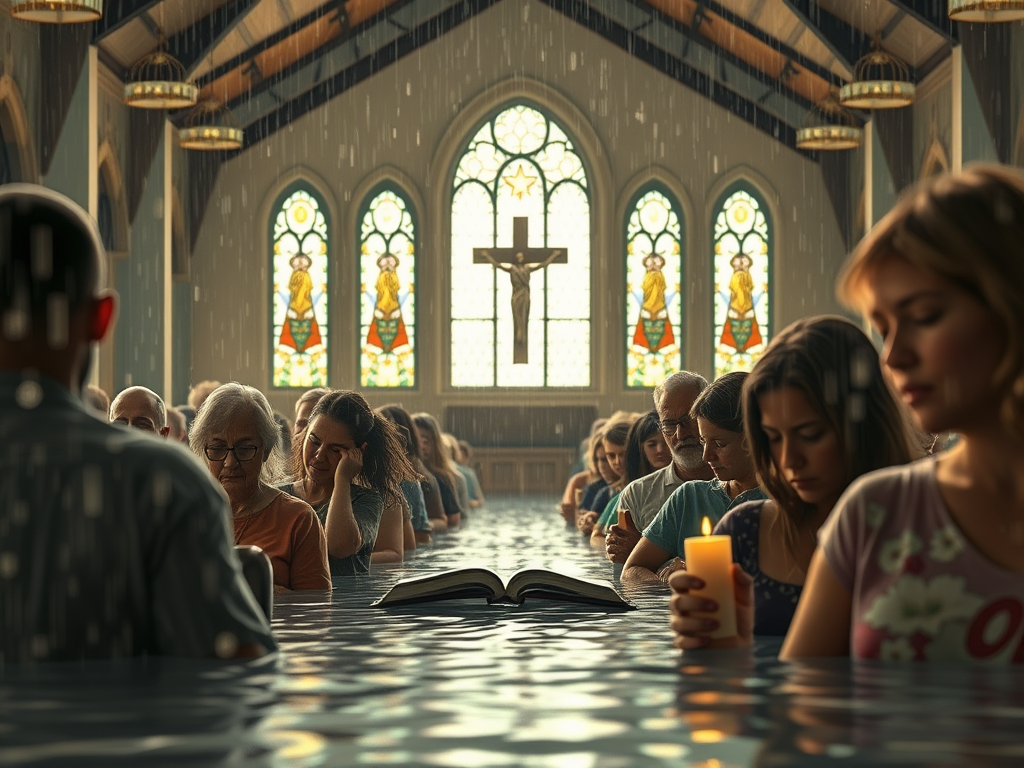

Grief and Prayer at Texas Churches: ‘Lord, Turn Off the Floodgates’

Just before 8 a.m. on Sunday, Scott Warner’s phone buzzed with an urgent alert — a flash flood warning had been issued as storm clouds loomed once again over Texas Hill Country, bringing fresh rainfall to a region already devastated by recent catastrophic flooding.
The message on his phone was unsettling, triggering a wave of anxiety. Words that once brought comfort and happiness — “camp,” “river,” and “rain” — now stirred fear and sadness. “We are not who we were before the Fourth of July,” said Mr. Warner, senior minister at Kerrville Church of Christ, speaking to his congregation of about 50 people on Sunday morning. “We are hurting. We feel defeated. Spiritually, we are shattered. We’re dealing with anxiety, fear, sorrow — we are burdened.”
Across Central Texas, individuals and families entered places of worship on Sunday, searching for comfort after the deadly floods that had consumed their communities over the July 4 holiday weekend. The scale of the disaster is staggering: at least 129 lives lost, including 36 children. As of Sunday, more than 170 individuals remained missing, and the search for survivors or victims continued, though hopes were diminishing.

The city of Kerrville, the county seat of Kerr County, has borne much of the brunt of the devastation. Even as rescue teams combed through flood-damaged areas for a tenth day, the skies once again opened, slowing efforts and threatening to worsen the already tragic situation. The continuous onslaught of rain and destruction has created an overwhelming sense of hopelessness.
Thunder rumbled in the background as Mr. Warner addressed his congregation. Many local roads had already begun to flood again, cutting off access and stranding residents. He acknowledged the fear his congregants were feeling, knowing that even the short journey home from church might be hazardous.

“Our spirits are exhausted,” he said. “We are desperate for relief.” Then, with a solemn voice, he offered a heartfelt prayer: “Lord, close the floodgates of heaven. Let the rain stop.”
In Texas, churches have long played a vital role during times of crisis. They are not only places for spiritual reflection, but also physical shelters, food distribution hubs, and coordination centers for rescue and aid. Above all, they serve as gathering points for mourning and collective healing.
At First Presbyterian Church in Kerrville, the situation was much the same. Rain beat against the church roof while rays of daylight filtered through its stained-glass windows. The Rev. Jasiel Hernandez Garcia acknowledged the emotional toll of the past week. “It’s been terrifying,” he said. “This week, I’m praying we can come together to comfort each other.”
Among the flood’s victims was Jane Ragsdale, a 68-year-old church member and co-owner of Heart O’ the Hills, a beloved summer camp for girls located in the flood-ravaged town of Hunt. Her presence had brought warmth and reassurance to countless children over the years. Rev. Bobby Musengwa described her as someone with a radiant smile and a calming voice, known for her deep and lasting care for the campers she looked after. “Jane made everyone feel cherished. She gave people a sense of belonging.”
Like many in his community, Rev. Musengwa has been grappling with how to process the tragedy. Still, he pointed to acts of resilience and compassion — volunteers preparing meals, first responders working tirelessly through long nights, and neighbors offering comfort to those who had lost homes or loved ones.

In his sermon, he addressed those most affected by the catastrophe. “If you are suffering deeply today, know this: your pain is real, your sorrow is valid, and your questions are important,” he said. “We don’t have all the answers, but what we do know is that God has not abandoned us. He is with us in our pain.”
The waves of grief have reached far beyond Hill Country. Of the 129 victims, 27 were connected to Camp Mystic, a nearly century-old summer camp situated along the Guadalupe River in Hunt. For generations, the camp has been a cherished place for young girls across Texas, offering horseback riding, canoeing, and cherished childhood memories. Now, that legacy is shadowed by profound loss.
In Houston, St. John the Divine Episcopal Church welcomed mourners on Sunday morning. Many congregants were Camp Mystic alumnae or family members of current and former campers. The Rev. Louise Samuelson offered a prayer for all affected. “We lift up those searching for the missing, those waiting for word, and those mourning the loss of loved ones,” she said. “May their spirits be nourished. This has been an incredibly hard week for so many.”
Among the worshipers was Herschel Hamner, the church’s senior warden. His wife and daughter were both former Camp Mystic attendees. He noted that earlier in the week, the church had been filled with people gathering in prayer for the camp. “Everyone has been touched by this in some way,” he said. “There is a deep sense of mourning and heartbreak.”
Tim Crockett, another attendee at the Houston service, recalled how the floodwaters had risen with terrifying speed. “Our family lost family in this flood,” he said. “Some of our friends who were there managed to escape, but they’ll never be the same. It’s hard to even understand what happened — it’s beyond words.”

Back in Hill Country, many remain haunted by the suddenness and intensity of the flood. The events of July 4 have left an indelible mark. Homes have been swept away, entire families torn apart, and once-familiar landscapes permanently changed. For those living through it, the trauma is ongoing.
Yet, amid the heartbreak, communities are doing what they can to heal. Churches have remained open, even in the face of rising water and dangerous roads. Volunteers are showing up daily, offering food, shelter, and emotional support. Emergency personnel are continuing to search, refusing to give up on those still missing.
What ties these communities together is a shared belief in perseverance — and in each other. While questions remain unanswered and wounds remain fresh, there is a collective determination to recover, to rebuild, and to remember those lost.
As Scott Warner concluded his sermon on Sunday, his voice carried both sorrow and hope. The thunder had not yet passed, nor had the rain ceased, but the church remained a sanctuary.
“We are battered,” he said. “But we are not alone.”




Leave a Reply