

Liangzhu: China’s New AI Innovation Hub

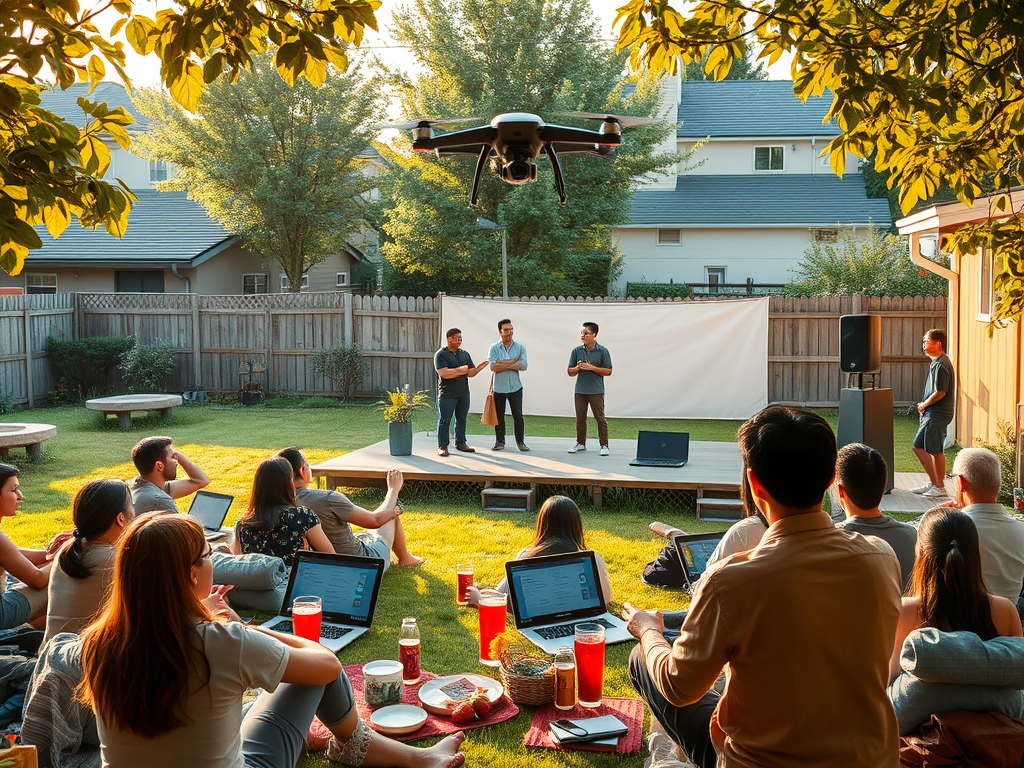
On a warm and sunny Saturday afternoon, the backyard of a suburban home in Liangzhu was alive with energy. A modest stage had been set up on the grass, where aspiring tech entrepreneurs enthusiastically introduced their start-up ideas to a relaxed audience. Attendees lounged comfortably on the lawn, some working on laptops, others sipping strawberry Frappuccinos or puffing on e-cigarettes. Overhead, the soft hum of a drone filled the air. Inside the house, potential investors gathered in the kitchen, listening to pitches and making quiet calculations.

Although the scene bore a striking resemblance to the vibrant start-up culture of Silicon Valley, this wasn’t California. It was Liangzhu, a tranquil suburb in Hangzhou, a major city in southern China that has rapidly gained recognition as a rising hub for technology and innovation. Known for its connection to leading tech giants like Alibaba and DeepSeek, Hangzhou has become a magnet for ambitious young professionals, drawn by affordable living costs and access to cutting-edge resources.
“People come here to discover what they’re capable of,” said Felix Tao, a 36-year-old former employee of both Facebook and Alibaba, who now hosts such informal gatherings in his own backyard.
Tao’s observation highlights a larger trend: nearly every venture being developed in this vibrant local scene revolves around artificial intelligence. As geopolitical tensions between the U.S. and China intensify over technological dominance, Hangzhou is emerging as the epicenter of China’s artificial intelligence boom.

About ten years ago, local and provincial authorities began implementing a range of incentives—such as subsidies and tax breaks—to encourage entrepreneurship in Hangzhou. These policies have since fostered the emergence of hundreds of start-ups. Every weekend, aspiring founders and recruiters fly in from cities like Beijing, Shanghai, and Shenzhen, eager to connect with developers and engineers.
Many of them eventually find themselves in Tao’s backyard. After helping establish an AI research lab at Alibaba, Tao left in 2022 to launch his own company, Mindverse. Since then, his home has become a creative hub for a community of AI developers—most in their twenties and thirties—who now live in Liangzhu. They refer to themselves as “villagers,” working in cafés by day and relaxing with video games at night, all the while nurturing dreams of launching their own innovative tech ventures.
Hangzhou has a proven track record of producing major players in China’s tech scene, including not only Alibaba and DeepSeek but also NetEase and Hikvision. In January, DeepSeek made headlines globally by releasing an advanced AI system it claimed to have developed at a fraction of the cost typically incurred by companies in Silicon Valley. Since then, AI models developed by DeepSeek and Alibaba have ranked among the world’s top open-source systems, offering developers across the globe powerful tools to build upon.
The city’s renowned Zhejiang University, where DeepSeek’s founder studied, is producing graduates who are in high demand within the tech industry. The Chinese media closely followed the story of one of DeepSeek’s key team members being hired by Xiaomi, reflecting how competitive the talent market has become. Many engineers living in Liangzhu openly talk about waiting for non-compete clauses to expire before launching their own start-ups, often after leaving major companies like ByteDance.
DeepSeek is one of what local media call the “six tigers of Hangzhou”—a group of leading AI and robotics firms headquartered in the city. Among them, Game Science gained international acclaim last year by releasing Black Myth: Wukong, a blockbuster video game that became a worldwide success. Another notable company, Unitree, captured public attention when its robots performed on stage during China’s widely watched Lunar New Year TV gala.


This spring, Mingming Zhu, founder of Rokid—a Hangzhou-based start-up known for its AI-powered smart glasses—hosted a private dinner at his home, inviting the founders of the other five “tiger” companies. It was the first time all six had met face-to-face. Like Zhu, many of them were alumni of Zhejiang University or former employees of Alibaba.
“We started off small,” Zhu recalled. “But even in the beginning, the government gave us a helping hand.” He noted that government officials facilitated introductions to Rokid’s earliest investors, including none other than Jack Ma, Alibaba’s iconic founder.
However, not all aspects of government involvement are seen in a positive light. Some entrepreneurs, speaking on condition of anonymity, expressed concern that the prominent role of local authorities in Hangzhou’s tech scene might deter international investors. They described difficulties in securing funding from foreign venture capital firms—an obstacle that has limited their ability to expand globally.
These entrepreneurs point to ByteDance, the Chinese parent company of TikTok, as a cautionary tale. ByteDance has faced intense scrutiny in the U.S., including congressional hearings over its alleged ties to the Chinese government. For start-up founders in Hangzhou, the fear of facing similar obstacles looms large.
This has led to a dilemma for many young companies: either accept government support and tailor their products for the domestic market, or attempt to secure enough private funding to expand abroad—perhaps by opening offices in places like Singapore. For most, the former is the more realistic path.
Another pressing challenge is access to the high-performance computer chips necessary for AI development. The U.S. government has taken steps to block the sale of such chips to Chinese firms. In response, domestic companies like Huawei and Semiconductor Manufacturing International Corporation are working to develop their own alternatives.


So far, these locally made chips are good enough to support certain AI services within China. Meanwhile, firms like ByteDance have stockpiled chips from Nvidia before U.S. restrictions took effect. Still, it remains unclear how long these supplies will last, or whether China’s domestic chip industry can bridge the technological gap in time.
One emerging idea that seems to captivate the AI community in Hangzhou is “agentic AI”—systems designed to act independently, making decisions without direct human input. This concept is already being tested in local applications.
Entrepreneur Qian Roy, for example, created a digital companion app designed to emotionally support users. The app tailors its responses using the Myers-Briggs personality framework, which is especially popular among Chinese youth. His team built the app using open-source AI platforms from companies like DeepSeek, Alibaba, and even the U.S.-based firm Anthropic.
At Mindverse, Tao’s new company, developers are working on a tool that uses AI not just to complete tasks, but to enhance users’ emotional well-being. One feature, for instance, can automatically send encouraging emails to colleagues or nostalgic messages to parents—designed to strengthen human connections in a fast-paced world.
“I want AI to do more than just work for you,” Tao explained. “I want it to give you the space to disconnect and recharge.”
The creative energy in Liangzhu is fueled not just by technology, but by its picturesque environment. Set near a serene lake that has long inspired poets and painters, the area offers a peaceful yet stimulating setting that many say boosts their imagination.


Lin Yuanlin, a founder who started his company Zeabur while studying at Zhejiang University, offers AI-based back-end tools that allow people to build apps and websites without needing advanced coding skills—a concept he calls “vibecoding.” Liangzhu has become his ideal testing ground, with its abundance of like-minded developers and informal networking culture. He eventually moved there permanently.
The “villagers” of Liangzhu, as they call themselves, often host movie nights. One recent favorite was The Matrix. After watching it, the group decided the film’s message—about breaking free from a rigidly controlled system—captured the essence of their mission.
Even those without elite academic backgrounds believe they can build the next global tech phenomenon. Tao summed it up best: “A lot of these young people are incredibly brave for choosing to forge their own path. In China, that’s still a pretty unconventional choice.”e super brave to make a choice to explore their own way, because in China that is not the common way to live your life.”




Leave a Reply