

Rubio Skipping Ukraine Talks as Zelensky Rebuffs U.S. on Crimea

Secretary of State Marco Rubio announced on Tuesday that he will not be participating in the next round of peace negotiations aimed at ending the ongoing conflict between Ukraine and Russia. The decision coincided with Ukraine’s rejection of a central component of former President Donald Trump’s proposed peace plan, which suggested Ukraine recognize Russia’s control over Crimea.
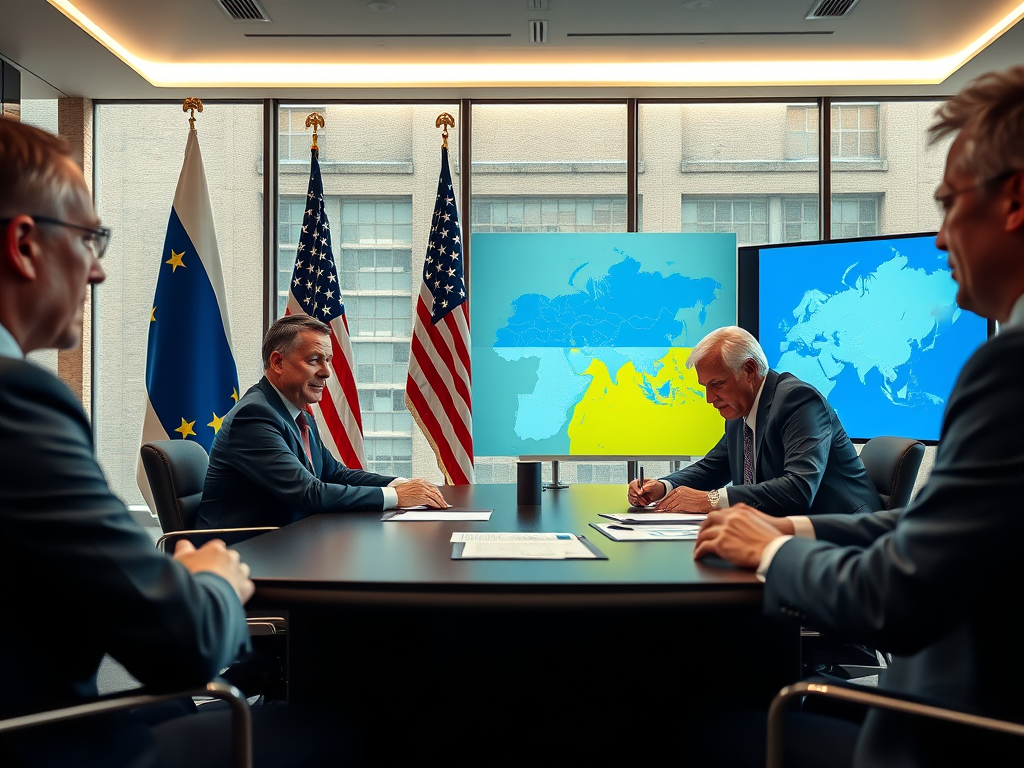
Despite Rubio’s absence, representatives from the United States, the European Union, and Ukraine are still expected to gather in London on Wednesday to continue discussions on a potential cease-fire. However, the twin developments have cast a shadow over the process, raising doubts about whether meaningful progress is being made toward ending the three-year-long war.
Rubio had previously attended a round of negotiations held in Paris last week. After the meeting, he cautioned that Trump was growing weary of the lack of tangible progress in the talks and might soon redirect his focus toward other global priorities. “President Trump’s patience is not limitless,” Rubio warned reporters after the Paris summit. “We can’t afford to chase a resolution endlessly if there’s no willingness from the other side.”
During the Paris session, according to two European diplomats present, negotiators were presented with the Trump administration’s cease-fire blueprint. The plan reportedly required Ukraine to acknowledge Russia’s annexation of Crimea and to formally abandon its ambitions of joining NATO. Both provisions have long been considered non-starters by Kyiv.

Ukrainian President Volodymyr Zelensky made Ukraine’s position clear at a press briefing held on Tuesday. While reiterating his openness to talks with Russia once active fighting ceases, he firmly rejected the idea of legitimizing Russia’s annexation of the Crimean Peninsula. “Ukraine will never accept the illegal occupation of our territory,” Zelensky said. “This is not negotiable. It violates our Constitution and international law.”
Trump has frequently claimed he could end the war swiftly, at times boasting that a resolution could be achieved within 24 hours of taking office. But his messaging has wavered between optimism and resignation. Over the weekend, he posted on social media that a breakthrough between Ukraine and Russia could happen as early as this week. Yet just days earlier, he told reporters that if the two sides remained unwilling to compromise, he might “step aside and let others handle it.”
Following the Paris meetings, Rubio struck a more pessimistic tone. “We won’t be stuck in this process indefinitely,” he said. “The United States has to evaluate where our resources and diplomatic leverage are best used.”
Although Rubio won’t be present in London, the U.S. State Department confirmed that Gen. Keith Kellogg, Trump’s special envoy for Ukraine, will still be attending the meeting. However, there is uncertainty around the participation of Steve Witkoff, Trump’s envoy to Russia. Witkoff has held three meetings with Russian President Vladimir Putin since February and is scheduled to travel to Moscow again later this week.
Mounting pressure from Trump appears to have pushed both Ukraine and Russia to reconsider diplomatic engagement for the first time since the collapse of peace efforts in the early months of Russia’s full-scale invasion in 2022. While Trump continues to frame himself as the central figure driving peace efforts, the renewed dialogue is being cautiously welcomed by international observers.
President Zelensky, speaking on Monday, emphasized his willingness to discuss a cease-fire that would halt Russian attacks on civilian infrastructure. “We are prepared to sit down and talk if it means stopping the destruction of our cities and the killing of innocent people,” he said.

Putin, for his part, indicated that more discussions were needed to define what constitutes a “civilian target” in a way that both parties can agree upon. He also hinted at the possibility of bilateral talks, something that could shift the diplomatic dynamic away from U.S.-dominated negotiations.
Dmitri Peskov, the Kremlin’s official spokesman, clarified Putin’s remarks, stating that the Russian president was referring to direct discussions with Ukraine. On Tuesday, Peskov acknowledged that Ukraine’s latest cease-fire proposal included certain “details worth examining,” though he did not elaborate on which parts were under consideration.
Over the Easter weekend, Putin declared a 24-hour truce as a gesture of goodwill, likely aimed at appealing to Trump and encouraging Ukraine to reciprocate. Although both sides accused the other of violating the truce, Ukrainian officials acknowledged that Russian shelling had notably decreased in intensity during the cease-fire period.
In Washington, the State Department sought to downplay the implications of Rubio’s absence from the London meeting. Spokeswoman Tammy Bruce told reporters that the decision was based purely on scheduling conflicts, not a reflection of the U.S. stance on the peace efforts. “This should not be interpreted as a lack of interest,” Bruce said. “Secretary Rubio’s schedule simply didn’t align.”

Earlier that same day, Bruce had indicated in a TV interview that Rubio would be attending, calling the London round “a promising opportunity” and “a welcome step forward.”
Rubio’s absence, however, is still being seen by many as a symbolic blow to the European nations that have worked to build momentum around the peace talks. In Paris, Rubio acknowledged that Britain, France, and Germany had all contributed meaningfully to crafting viable proposals. Representatives from those countries are expected in London, although Zelensky himself will not be attending in person.
Zelensky did, however, speak with British Prime Minister Keir Starmer on Monday, as part of a broader effort to maintain momentum behind the peace initiative. Starmer has been advocating for what he calls a “coalition of the willing”—a group of European and allied nations prepared to offer support for any agreement that might be reached.
According to an official statement from Downing Street, Starmer reaffirmed his country’s unwavering commitment to Ukraine’s sovereignty. “The Prime Minister emphasized that the U.K. remains firmly behind Ukraine,” the statement read. “He supports Ukraine’s call for a complete Russian cease-fire, and made it clear that now is the time for President Putin to demonstrate he is serious about peace.”
As diplomatic efforts continue, the absence of key U.S. figures from the upcoming talks is certain to raise further questions about Washington’s long-term commitment to resolving the conflict. With both Ukraine and Russia expressing conditional openness to negotiations and Europe trying to broker common ground, the next round of talks may prove crucial in determining whether the momentum for peace is truly building—or simply another fleeting opportunity in a long and bloody conflict.





Leave a Reply