

Navigating Allergies at The Masters: Essential Tips

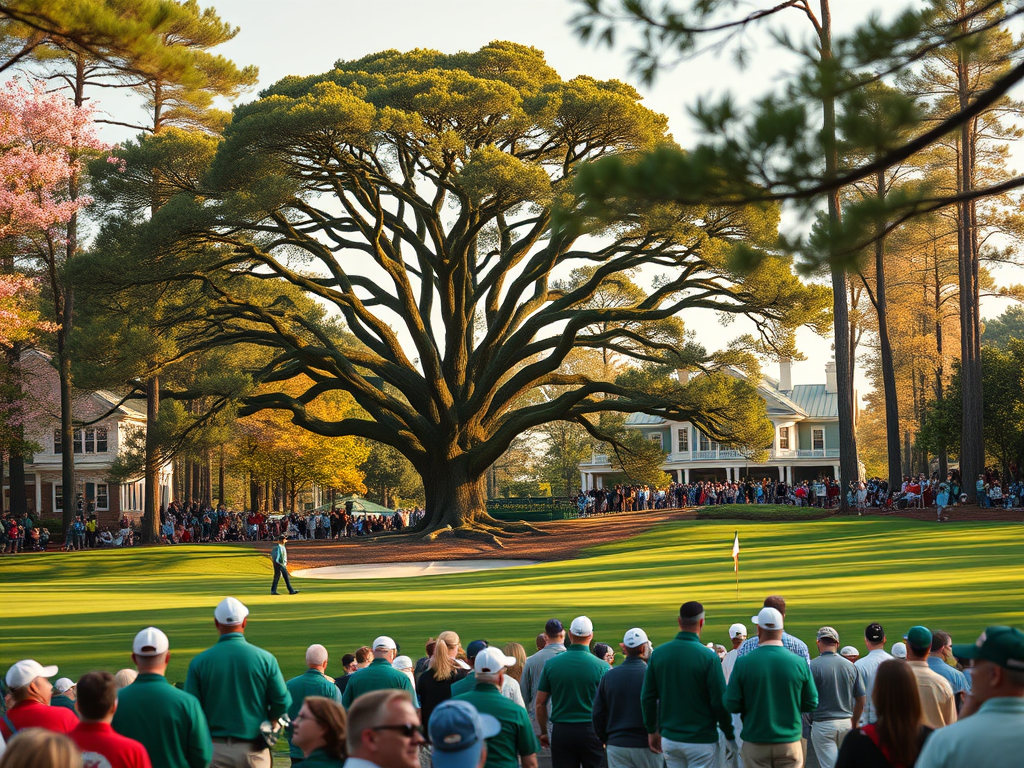
Each April, the prestigious Masters Tournament at Augusta National Golf Club becomes a hub for the world’s golfing elite, a magnet for influential businesspeople, agents, and fans wearing the iconic green jackets. Beneath the sprawling branches of a stately oak tree near the clubhouse, deals are quietly made, friendships rekindled, and futures shaped — all while past champions and rising stars stroll by, basking in the Southern spring.
But alongside the grandeur and tradition comes a less glamorous — and far more irritating — reality: the relentless barrage of pollen.
If you’re planning to attend, a business card is a must. Even better, don’t forget to pack an antihistamine.
Augusta National is renowned for its lush landscapes and flawless greens. It’s a visual masterpiece, but for those sensitive to seasonal allergens, it’s also a battleground. At this time of year, the club’s picturesque beauty conceals a pollen-packed storm, and that grand oak by the clubhouse is only the beginning of the problem.
Years ago, Tiger Woods made headlines for wearing sunglasses during the tournament — not for style, but for survival. “The pollen is just killing my eyes,” he explained. “I’ve been sneezing and coughing all week, just trying to keep it out of my eyes.”

Pollen, it seems, respects no status. Whether you’re a seasoned pro or a devoted spectator — or, in Augusta National’s preferred terms, a “patron” — the allergy-inducing elements are indiscriminate. With expansive fields of carefully groomed Bermuda grass and towering pine, oak, and magnolia trees blanketing the course, the environment offers an aesthetic wonder but can also be a respiratory nightmare.
As this year’s tournament kicks off on Thursday, local weather patterns will heavily influence pollen levels. A brief rainstorm earlier in the week provided temporary relief, but as quickly as the downpour came, it vanished — and so did the comfort it brought.
Scottie Scheffler, who has claimed the Masters title twice (in 2022 and 2024), commented on the conditions just days ago. “The moment I step out of the car, my eyes start watering,” he said. “It’s a bit worse than usual this year.”

Georgia as a whole hasn’t been faring well. On March 29, an allergy clinic in Atlanta reported a staggering pollen count of 14,801 — the highest figure it had recorded in 35 years. Across the state, thick yellow-green dust coats everything from cars to playground swings. Homeowners find their driveways speckled with layers of pollen that cling like cake frosting. For those with dark-colored vehicles, a daily trip to the carwash might be the only option.
Part of Augusta’s pollen problem lies in its geography. Although Hurricane Helene once took a toll on the local tree canopy and the Savannah River defines part of the city’s border, the surrounding area still has vast stretches of farmland and grassland. Winds can easily carry pollen particles across great distances, making the problem practically inescapable.
According to the Allergy and Asthma Foundation of America, Augusta ranks 12th among the nation’s worst cities for allergy sufferers — an unenviable position it’s held for years. (Wichita, Kansas, currently tops the list.)
“People everywhere think their hometown has the worst pollen,” noted Dr. Kathleen May, who leads the Division of Allergy, Immunology, and Pediatric Rheumatology at the Medical College of Georgia. “But Augusta really is in a league of its own.”
The Masters, of course, has always been a spring event, ever since its debut in 1934. And spring, unfortunately, is peak allergy season. Add to that Augusta National’s deep roots as a former plant nursery, and you have a perfect storm. The club famously named each hole after a plant — like Juniper for No. 6 or Firethorn for No. 15 — and beginning in 1932, club leaders committed to planting flora that matched each hole’s name.


Today, Augusta National is rightfully proud of its botanical richness, which attracts millions of viewers to the tournament broadcast each year. Despite a dip in TV ratings, the Masters’ final round in 2023 still drew over nine million viewers. Club officials estimate that more than 80,000 plants have been added to the grounds over the decades.
The stars of the floral show are the azaleas — more than 30 varieties can be found throughout the course — but the landscape also features honeysuckle, roses, and both pink and white dogwoods.
Ironically, these stunning blooms are not the main culprits behind allergy flare-ups.
“The pollen from showy flowers like azaleas is heavy and sticky,” explained Victoria Wojcik, director of science and research at the nonprofit Pollinator Partnership. “It doesn’t become airborne easily. When people blame their garden flowers for allergies, it’s usually a case of mistaken identity.”

The real offenders? Grass and trees — particularly those like pine and oak that dominate the Augusta landscape.
According to the late Earl Woods, father of Tiger Woods, his son has long suffered from severe allergies, despite undergoing years of immunotherapy as a child. “He’s resistant to most things now,” he said in a 2003 interview. “But when he gets to Georgia in the spring, that pollen still gets to him.” Earl went on to describe how Tiger’s rented accommodations in Augusta were always outfitted with high-end air purifiers, as he preferred to avoid medications during tournament play.
Though Tiger has triumphed at Augusta five times, he’s not in this year’s field, recovering from a torn Achilles tendon. Yet scientists caution that when he — and the rest of the field — returns in future years, the conditions may be even more difficult. Rising global temperatures and increased carbon dioxide levels are expected to worsen pollen seasons in many regions, including Georgia.
For those who battle seasonal allergies, relief can be elusive. Dr. May emphasizes the importance of proactive treatment: “Some medications are most effective when taken before symptoms begin, due to their priming effect.” She recommends antihistamine sprays and saline rinses for managing symptoms once they appear.


Golf fans on Reddit have taken to sharing their own survival strategies. One thread was filled with cautionary tales — “Whatever you think the pollen count is, multiply it by five,” one user warned — along with creative coping tips. “Try eating a tablespoon of local honey every day,” another suggested, referencing an age-old (though scientifically debated) method for building resistance to local allergens.
Many professional golfers have learned to incorporate allergy treatments into their routines in the lead-up to the Masters. Greg Norman, who spent over 330 weeks as the world’s No. 1 player, recalled how he had to medicate heavily just to get through the tournament. “You don’t feel great when you’re on those meds,” he admitted. “But you don’t really have a choice.”
Others have taken a different approach. When Justin Rose appeared noticeably slimmer at the 2015 Masters, he revealed that he’d adopted a low-histamine diet to help curb his allergies. That year, he finished tied for second.
Despite all efforts, even the most carefully laid plans can fail. One year, Paul McGinley was hit so hard by allergy symptoms that he had to abandon a practice round and rush to the nearest pharmacy.
“All it takes is sensitivity to one species,” Dr. May noted. “And if that species is in abundance, you’re going to suffer.”
So while the Masters remains a celebration of golf’s finest traditions, it’s also, quietly, a testament to endurance. Beneath the Southern charm and flawless fairways lies an invisible adversary — one that unites players and patrons alike in a shared struggle against nature’s tiniest, sneeziest warriors.




Leave a Reply