

Tech C.E.O.s Spent Millions Courting Trump. It Has Yet to Pay Off.

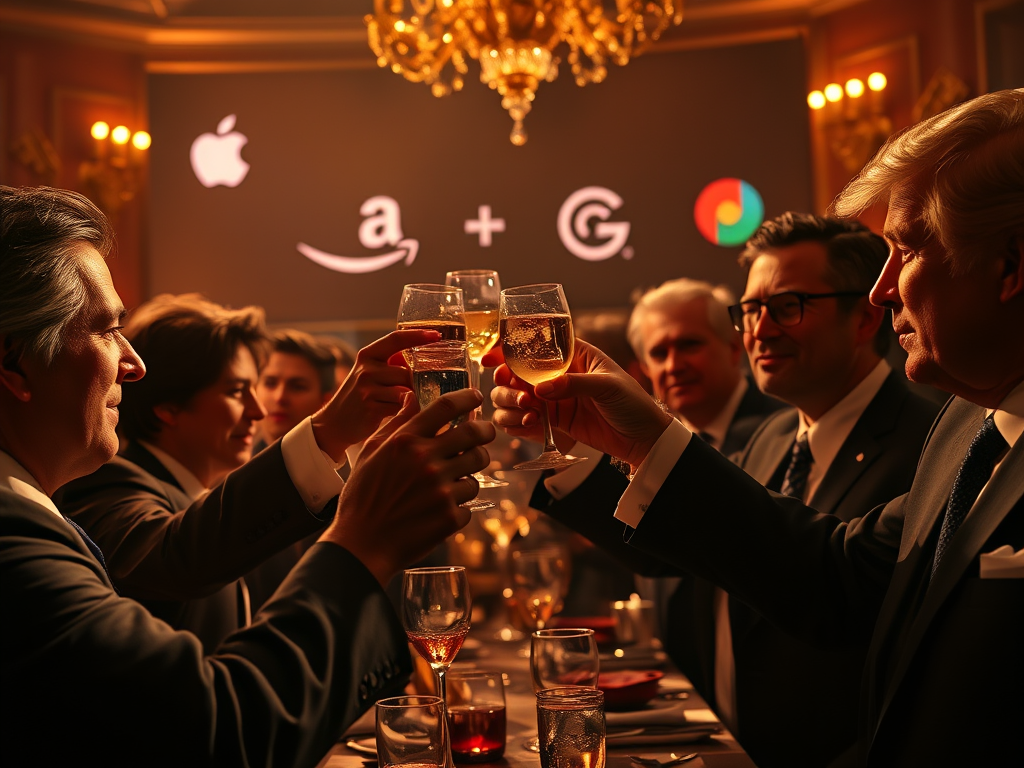
In a show of goodwill and strategic calculation, some of the world’s most influential technology companies and their top executives made generous contributions to President Trump’s second inauguration. Lavish donations flowed in, exclusive parties were held in his honor, and the tech elite publicly praised and aligned themselves with the administration. Companies also granted Mr. Trump high-profile opportunities to tout billion-dollar domestic manufacturing plans, hoping to curry favor.
Yet, just a few months into his second term, those investments have failed to produce the expected dividends.
The president’s recent move to impose sweeping new tariffs is set to significantly disrupt the global supply chains that companies like Apple rely on—particularly for iPhone production. At the same time, firms such as Amazon, Google, Meta, and Microsoft now face rising costs for the equipment needed to power their AI-driven operations, including supercomputers and advanced semiconductor systems.
Adding to the industry’s concerns, the Trump administration has cut federal funding for cutting-edge research in areas like artificial intelligence and quantum computing—fields considered vital to the future competitiveness of the U.S. tech sector. Meanwhile, the White House’s tough stance on immigration has sparked fears that the flow of international talent into Silicon Valley may be severely restricted.

Regulatory pressures are also mounting. Next week, the Justice Department will kick off a major antitrust trial aimed at dismantling Meta’s dominance in social networking, specifically targeting its acquisitions of Instagram and WhatsApp. The administration’s signals make it clear: it intends to continue taking a hard line on Big Tech, despite the industry’s attempts to ingratiate itself with the president.
Market reactions have reflected this uneasy environment. Since Mr. Trump’s second inauguration, the combined valuation of the five tech giants—Apple, Amazon, Google, Meta, and Microsoft—has plummeted by 22%, shrinking to $10 trillion. The tech-centric Nasdaq has mirrored this trend, dropping 21%.
These outcomes stand in stark contrast to the strategic shift many tech leaders adopted as Trump returned to the White House. During his first term, Silicon Valley largely opposed the president, criticizing his immigration bans and expressing skepticism about his pandemic response. But this time around, many in the industry took a different tack. Executives tried to win the administration’s favor through public support and behind-the-scenes collaboration, in hopes of shaping policy and being spared from aggressive oversight.
So far, that approach has produced underwhelming results.
According to Gigi Sohn, a former senior adviser at the Federal Communications Commission during the Biden era, the dynamic between tech leaders and Trump has been largely one-sided. “They’ve given him everything, and he’s given them virtually nothing in return,” she said. “Which, frankly, might be for the best.”
Nevertheless, efforts to sway the administration persist. Just last week, Meta’s CEO Mark Zuckerberg visited the White House to push for a resolution in the Federal Trade Commission’s antitrust suit against his company. Google’s Sundar Pichai and other major tech leaders have also made appearances in Washington in recent weeks, looking to influence policy direction.

Publicly, the companies maintain that their goal is to engage the administration constructively on long-term policy issues. But when approached for comment, Apple, Meta, Amazon, and Google all declined to speak. The White House also offered no response.
The strained relationship between Trump and the tech world isn’t new. During the 2016 election, many Silicon Valley executives backed Hillary Clinton and contributed to her campaign. Following Trump’s victory, they criticized his policies—especially the travel ban targeting Muslim-majority countries and his doubts about COVID-19 vaccines.
In retaliation, Trump’s first administration ramped up regulatory scrutiny of the industry. The Justice Department and FTC filed landmark antitrust cases against Google and Meta, accusing the companies of abusing market dominance. Trump regularly denounced tech companies for “censoring” his content and accused platforms of bias, blaming them in part for his loss in the 2020 election.
However, a dramatic shift occurred last year after Trump narrowly survived an assassination attempt. In the aftermath, many tech leaders publicly expressed admiration for the president. Zuckerberg called him a “badass.” Jeff Bezos applauded Trump’s “grace under fire.” Elon Musk offered his endorsement and later donated $300 million to Trump’s re-election efforts.
After the election, Apple’s Tim Cook, along with leaders at Amazon, Google, and Meta, each contributed $1 million to the president’s inauguration. Top executives made visits to Mar-a-Lago, and many were seen onstage alongside cabinet members during the ceremony.
“Incredible, right? Look at that inauguration stage—just a few years ago, these people were all against me,” Trump remarked during an interview with Clay Travis of OutKick.
There have been some advantages for tech allies. Elon Musk now serves as an informal adviser to the president, and some suggest that his companies—Tesla, SpaceX, and X (formerly Twitter)—stand to benefit from the closeness. Trump also issued executive orders delaying the mandated divestment or ban of TikTok, granting ByteDance, the Chinese parent company, temporary relief from a law passed over national security concerns.
Despite slashing research budgets, Trump has indicated a hands-off approach to AI regulation. He’s positioned AI as America’s top technological priority to counter China’s global ambitions. In response, tech companies like Microsoft, Google, and Meta have submitted recommendations urging the administration to avoid heavy-handed regulation and instead support innovation through private sector leadership.
Meanwhile, another tech frontier—cryptocurrency—has seen enforcement efforts nearly vanish. U.S. regulators have stepped back from years of aggressive oversight, easing the burden on the industry. This has proven especially favorable for investors such as Andreessen Horowitz, a prominent venture capital firm deeply embedded in the crypto ecosystem.
Still, major challenges remain.
Trump’s appointments to key regulatory posts reflect his continued desire to rein in Big Tech. Gail Slater, a well-known tech skeptic, now heads the Justice Department’s antitrust division. Announcing her role, Trump made clear his expectations: “For far too long, Big Tech has been unchecked—stifling innovation, silencing voices, and crushing small businesses. That ends now.”

Andrew Ferguson, another critic of Silicon Valley’s influence, was tapped to lead the FTC. Next week, he will oversee the government’s antitrust case against Meta, in which the administration alleges that Facebook’s purchases of Instagram and WhatsApp were strategic moves to eliminate competition.
When asked at a recent Y Combinator conference whether he would consider dropping the case if directed by the president, Ferguson was cautious but clear. “The president is the head of the executive branch,” he said. “I follow lawful orders.” However, he quickly added, “I don’t think such a request will come. The president understands the importance of enforcing the law.”
The greatest blow to the industry may have come from last week’s tariff hikes. Apple is particularly vulnerable, as nearly 90% of iPhones are manufactured in China. With tariffs set to jump from 20% to 34%, the company—and consumers—face major cost increases.
“These tariffs will raise prices for consumers and trigger retaliatory trade measures,” warned Gary Shapiro, CEO of the Consumer Technology Association. “The result? Americans will be worse off economically.”
As the tech industry navigates this challenging terrain, it’s becoming increasingly clear that proximity to power does not guarantee protection. Despite grand gestures and political realignment, Silicon Valley may have misread how influence is earned in Trump’s Washington—and could be left paying the price for its miscalculation.



Leave a Reply