
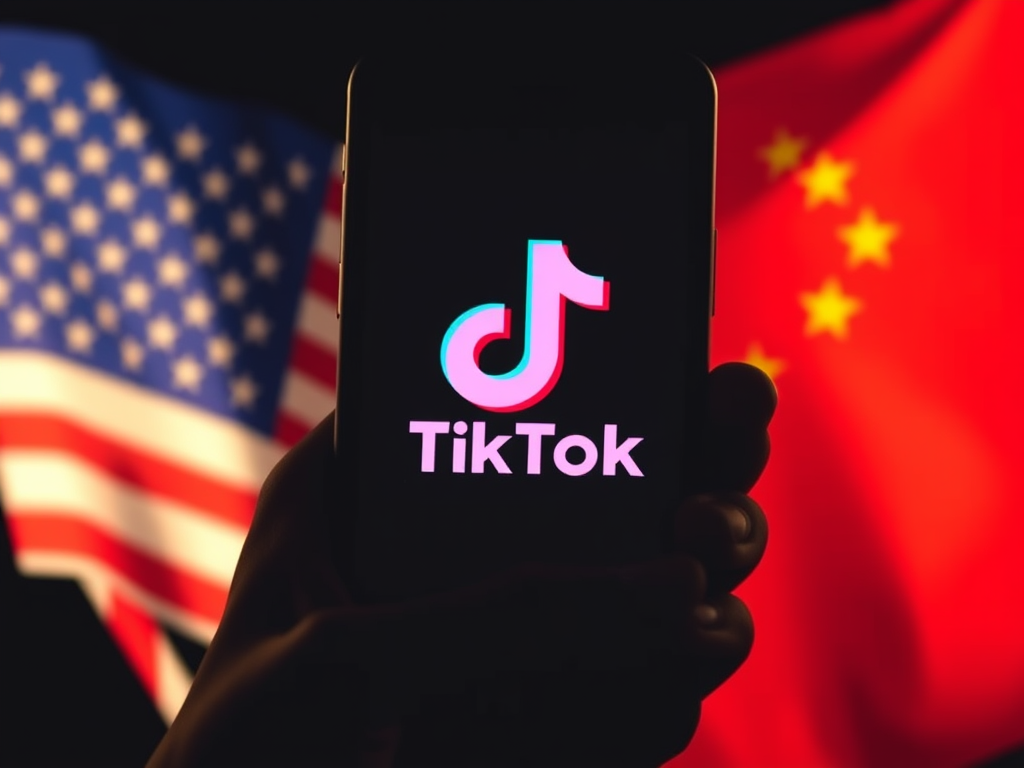

How Trump’s TikTok Negotiations Were Upended by China and Tariffs

Last week, the Trump administration appeared to be on the brink of finalizing a resolution for the TikTok saga. Officials in Washington, representatives from ByteDance (TikTok’s Chinese parent company), and several American investors had nearly settled on a new ownership arrangement that aimed to address the national security concerns raised by the U.S. government.
According to four individuals familiar with the matter, the proposed deal was designed to bring TikTok into compliance with a federal mandate that required the app to either restructure its ownership or face an outright ban in the United States. The restructuring plan aimed to limit Chinese control and bring in American stakeholders to placate lawmakers and regulators.
Under this proposed arrangement, a newly created American entity would take control of TikTok’s U.S. operations. The new ownership distribution would give American investors a controlling 50% share, while ByteDance and its Chinese affiliates would hold less than 20%, staying within the limit set by U.S. legal requirements. Two sources indicated that ByteDance had even communicated to the White House that the Chinese government was amenable to this setup—at least at that point.

By Thursday morning, a preliminary draft of an executive order reflecting the outlines of this proposed deal was circulating within the administration, as reported by The New York Times.
However, the fragile agreement unraveled almost immediately. According to two individuals close to the situation, ByteDance contacted the White House later that day with troubling news: the Chinese government, now incensed by President Trump’s recent escalation of tariffs on Chinese goods, had withdrawn its support for the TikTok agreement. Without Beijing’s cooperation, the deal could not move forward.
In response to this sudden obstacle, President Trump decided to extend the timeline for enforcement. On Friday, he postponed implementation of the federal law in question, effectively buying TikTok more time by pushing the deadline for a resolution into mid-June.
“We were nearly there—very close to reaching an agreement,” Mr. Trump told reporters aboard Air Force One on Sunday. “Then China shifted its stance because of the tariffs.”
The abrupt breakdown underscores how TikTok has become a pawn in a broader geopolitical conflict between two global superpowers. The app, once simply a platform for viral dance trends and comedy clips, now finds itself at the heart of a battle over economic dominance and technological influence between Washington and Beijing.

“This situation highlights the difficulty of negotiating in an environment where both sides are entrenched,” said Anupam Chander, a law and technology professor at Georgetown University. Chander, who has publicly criticized the legislation targeting TikTok, added, “The app is like a mouse caught between two dueling elephants.”
Neither ByteDance, TikTok, nor the Chinese Embassy in Washington offered any comment when asked about the stalled negotiations. The White House pointed reporters to President Trump’s announcement on his Truth Social account, where he confirmed the extension of TikTok’s compliance deadline.
For weeks leading up to last week’s events, talks had been ongoing between ByteDance and key players in the Trump administration. The goal was to devise a structure that would reduce Chinese ownership in TikTok while preserving the investments of major American backers, such as General Atlantic and Susquehanna International Group.
According to two individuals with knowledge of the proposed deal, the arrangement would involve American investors owning 50% of the restructured company, while current investors would retain 30%, and Chinese ownership would drop below 20%. Private equity giants like Blackstone and Silver Lake, as well as venture capital firm Andreessen Horowitz, had expressed interest in participating in the new entity.
This proposed structure was not just an idea but had been formalized into a detailed document intended for investor review, according to three people who saw the materials.

Despite the apparent progress, the deal was far from finalized. Two individuals involved in the discussions noted that several potential investors were still conducting due diligence. These stakeholders viewed the agreement as contingent upon further investigation and negotiations, typical of large-scale transactions.
Beijing’s role remained a persistent wildcard throughout the talks. Rather than direct communication between U.S. negotiators and Chinese officials, the Trump administration relied on ByteDance’s interpretation of the Chinese government’s stance. Prior to Trump’s new round of tariffs, ByteDance had believed that Beijing would allow the restructured deal to move forward. However, this assumption turned out to be premature. Even before the tariffs, there was never a formal commitment or guarantee of approval from China’s regulators.
As the U.S.-China trade conflict escalates, any pathway to a deal for TikTok may become even more convoluted. China has since retaliated with tariffs of its own, prompting Trump to threaten further duties—up to 50%—if China continues to respond in kind.
Trump has also floated the idea of using the TikTok negotiations as leverage in the ongoing trade dispute, suggesting he might consider easing some tariffs in exchange for China’s approval of the TikTok agreement.
Chander called this tactic “an extraordinary attempt to force the sale of a foreign company using trade policy as a bargaining chip.” Still, he warned that by June, the conflict could remain unresolved. “We may find ourselves in a kind of geopolitical Groundhog Day,” he said, “where nothing has changed and the same issues resurface.”
For almost a year, TikTok has insisted it is not for sale. Nonetheless, on Friday, ByteDance made a rare public admission that it had been involved in discussions with the U.S. government about TikTok’s fate. However, the company stressed that the ultimate decision was out of its hands.
“There are several key issues that must still be addressed,” a ByteDance spokesperson said in an emailed statement to reporters. “Any potential deal would need to pass through the appropriate legal channels in China.”
In essence, TikTok’s fate is being shaped not solely by commercial interests or regulatory scrutiny, but by the intense geopolitical rivalry between the United States and China. Even with a near-final agreement in hand, the entanglement of trade tensions, national security concerns, and foreign policy makes it increasingly uncertain whether TikTok can remain operational in the U.S. under its current—or even revised—ownership structure.
As the situation stands, TikTok’s future in the U.S. remains suspended in diplomatic limbo. What initially appeared to be a viable compromise has become another casualty of the increasingly strained relationship between two global powers, with millions of users and billions of dollars hanging in the balance.


Leave a Reply