
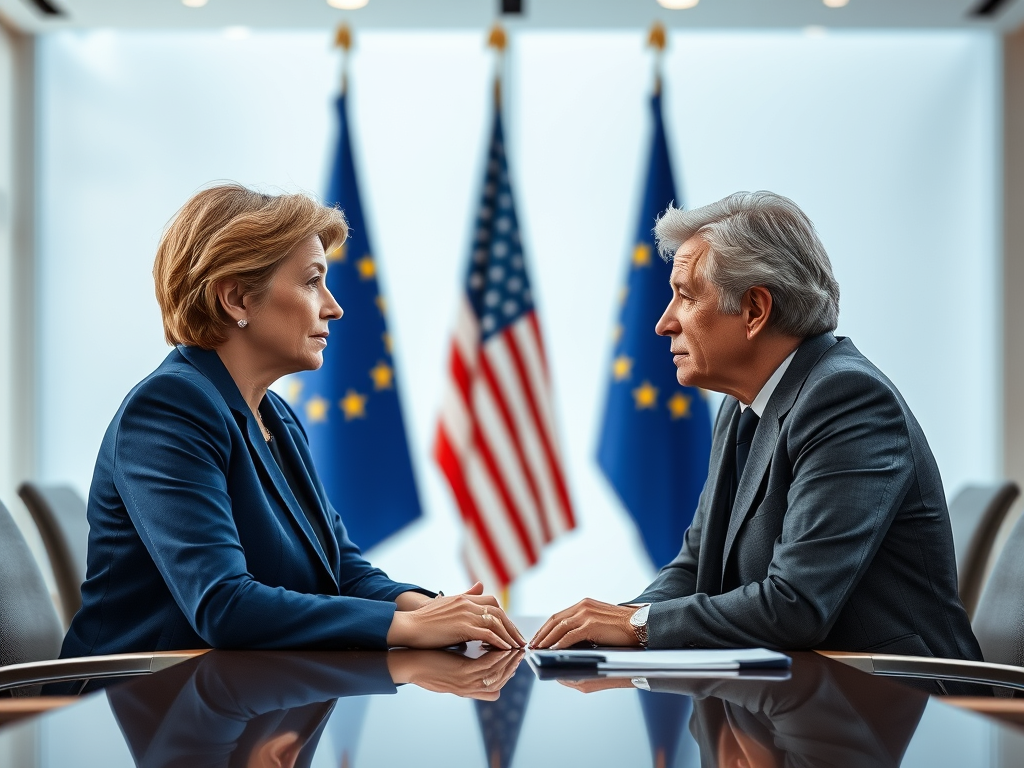

Europe Gears Up to Make Its First Countermove to Trump Tariffs

As tensions mount in the ongoing transatlantic trade conflict, the European Union has adopted a dual-track strategy in its response to President Trump’s recent tariff escalation. While European leaders are extending an olive branch by offering to eliminate duties on U.S. industrial goods—including vehicles—they are simultaneously preparing a firm retaliatory response should negotiations collapse.
Ursula von der Leyen, the President of the European Commission, announced that the EU is ready to implement a “zero-for-zero” tariff arrangement. This proposal would remove duties on industrial goods such as automobiles, contingent on the U.S. doing the same. Currently, the EU levies a 10% tariff on cars imported from the United States, but this could be scrapped under a mutual agreement.
However, while emphasizing openness to dialogue, von der Leyen and EU Trade Commissioner Maroš Šefčovič made clear that the bloc is not leaving itself vulnerable. They signaled that if progress toward a deal stalls, Europe is fully prepared to impose its own set of retaliatory tariffs targeting a range of U.S. goods. These measures could be implemented in a matter of days.
According to Olof Gill, the European Commission’s trade spokesperson, a preliminary list of targeted American imports was circulated on Monday evening in Brussels. Member states are expected to cast votes on the proposed tariffs on Wednesday. If the plan is approved, the countermeasures will be enacted in two stages: the first wave would begin on April 15, with a second round set for mid-May.

The contents of the list have not yet been publicly disclosed, but it’s expected to focus on emblematic American exports that hold both economic and symbolic value. The proposed tariffs are in direct response to the Trump administration’s recent imposition of duties on European steel and aluminum, which came into force in mid-March. European officials view these moves as the latest provocations in a deepening trade dispute.
The EU’s response, while forceful, is expected to be more restrained than previously indicated. Earlier drafts of the retaliatory list included approximately $28.4 billion worth of U.S. exports—products such as bourbon whiskey, recreational boats, textiles, and agricultural goods. However, a senior EU official hinted this week that bourbon might be removed from the final list. This reconsideration follows President Trump’s threat to impose 200% tariffs on European wines and other alcohol in retaliation. Responding to member state feedback, Commissioner Šefčovič confirmed that the final set of measures will likely target a reduced list of goods.
Europe’s broader strategy reflects an effort to walk a fine line: showing a willingness to negotiate while demonstrating the capacity to retaliate if necessary. The outcome of this high-stakes standoff could have global ramifications. If negotiations succeed, they might usher in a more liberalized trading environment between two of the world’s largest economies. If talks break down, the resulting tit-for-tat actions could unleash a full-blown trade war, disrupting global supply chains and raising prices for consumers.
Šefčovič emphasized on Monday that the EU remains committed to finding a diplomatic resolution. Speaking from Luxembourg, he said the EU was “ready to sit down at the negotiating table anytime our American partners are willing to join.” He added that while the bloc prefers diplomacy, it is fully prepared to leverage all available trade defense tools if necessary.

Behind the scenes, European policymakers are fully aware of the dangers a prolonged trade conflict could pose. According to Jörn Fleck, a senior director at the Atlantic Council’s Europe Center, the EU has acted with measured restraint so far, resisting the temptation to escalate prematurely. “Part of the strategy is to wait until the U.S. starts to feel the economic sting of its own policies,” Fleck said. “But Europe also wants to show it’s not afraid to respond when pushed.”
The EU delayed the implementation of its initial tariff list, which was originally scheduled to take effect on March 31. This pause allowed policymakers to revise the list after Trump announced his intention to impose severe tariffs on European alcohol—measures that would devastate exporters in countries like France and Italy. Responding to these threats, EU officials began reevaluating the inclusion of whiskey on their target list. Stéphane Séjourné, a Vice President of the European Commission, said during a radio appearance on Monday that he remained hopeful whiskey would be excluded, calling such a move “good news.”

This episode highlighted the difficulties Europe faces in presenting a unified response. With 27 member states, each with distinct economic interests, forming a cohesive strategy can be a challenge. For instance, while several Northern European countries advocate for a more aggressive stance—including potential barriers on U.S.-based digital services—other members like Italy are urging caution. Italian Prime Minister Giorgia Meloni has downplayed the notion of choosing between loyalty to the EU and maintaining good relations with the U.S., calling it a “childish” narrative. She has urged a more balanced, less confrontational approach.
Still, there is agreement across the bloc on one key point: the desire to negotiate. Yet many EU leaders are growing increasingly frustrated by the lack of clear objectives from the U.S. side. According to Šefčovič, American officials appear to view tariffs less as a tactical bargaining chip and more as a permanent correction to what they consider unfair trade practices. This stance complicates the EU’s ability to engage in meaningful dialogue.
The situation is further muddled by mixed signals from influential American figures. Elon Musk, a close adviser to Trump and a prominent tech entrepreneur, expressed support over the weekend for a “zero-tariff” transatlantic trade area that would effectively create a new free trade zone. Speaking via videoconference to Italy’s far-right League party, Musk emphasized the benefits of removing trade barriers entirely between the two powers.

However, White House trade adviser Peter Navarro took a much more combative tone. On Monday, he called on the EU to eliminate its value-added tax system and drop longstanding restrictions on American meat products treated with hormones and chemical additives. “You steal from the American people in every way imaginable,” Navarro stated bluntly. “Don’t just talk about reducing tariffs—take real action.”
Ultimately, the coming weeks will be pivotal. If both sides can find common ground, it could mark the beginning of a more balanced and mutually beneficial trade relationship. If not, the risk of escalation remains high, and the economic fallout could be significant—not just for Europe and the United States, but for global markets as a whole.
For now, the EU’s strategy remains rooted in pragmatism: hold out hope for a deal, but don’t hesitate to retaliate if diplomacy fails. Whether this approach will lead to resolution or confrontation remains to be seen.




Leave a Reply