
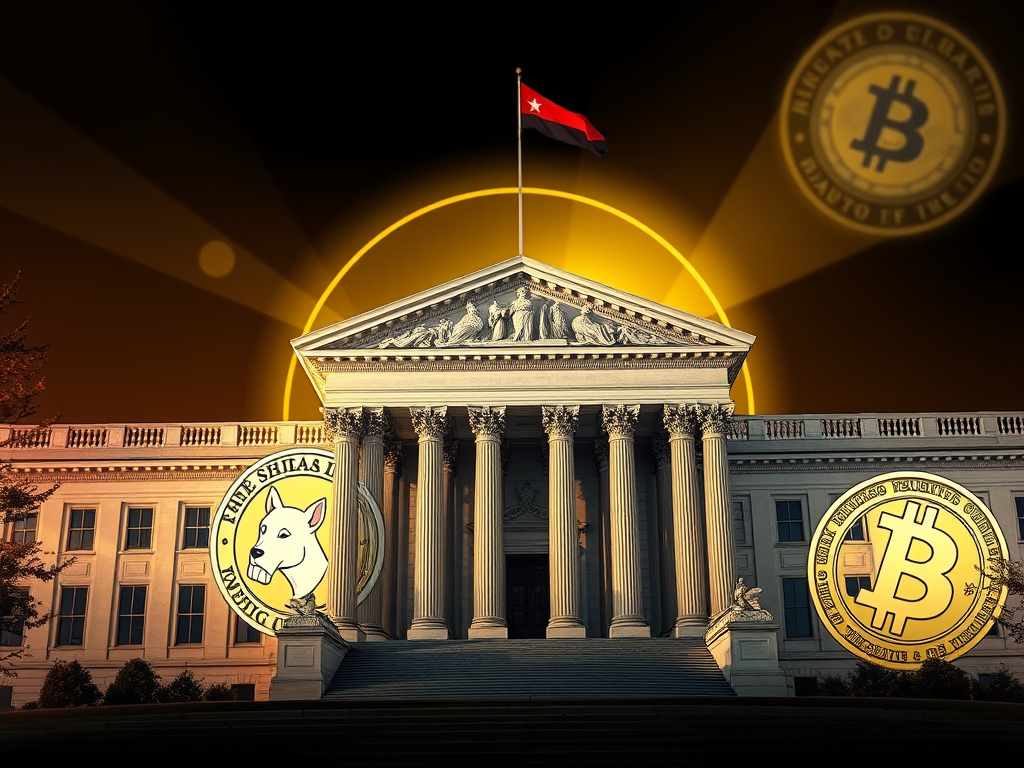

Under Trump, U.S. Increasingly Pulls Back From Crypto Crackdown

Federal authorities announced that memecoins would not be subjected to strict regulatory scrutiny.
Investigations into major cryptocurrency firms were put on hold, and the Securities and Exchange Commission (SEC) agreed to suspend a fraud case against a prominent crypto entrepreneur.
Just over a month into President Trump’s administration, U.S. regulators have largely unraveled a yearslong crackdown on the crypto industry, a sector notorious for fraud, scams, and theft.
Regulators are following through on campaign promises Trump made last year while courting wealthy crypto investors and promoting his own digital currency. However, even within the crypto industry, few expected such swift and sweeping victories.
Last week, the SEC dropped its lawsuit against Coinbase, the largest U.S.-based cryptocurrency exchange. Shortly after, executives from crypto firms Gemini, OpenSea, and Uniswap Labs revealed that the agency had halted its investigations into their businesses. Additionally, an executive from Consensys, another major crypto company, announced on Thursday that the SEC had withdrawn a lawsuit targeting one of its popular products.
“This marks another milestone in the end of the war on crypto,” Cameron Winklevoss, co-founder of Gemini, posted on X on Wednesday. “I’m glad we’re turning the page.”
The series of legal reversals represents a stunning shift for an agency that typically operates with caution and is reluctant to abandon ongoing litigation. Case by case, the SEC is retreating from an ambitious legal campaign spearheaded by the Biden administration, which sought to classify nearly all digital assets as securities, thereby subjecting them to the same stringent regulations that govern Wall Street stocks and bonds.
The SEC’s abrupt policy shift has drawn criticism. “This destroys the agency’s credibility, integrity, and reputation, making it clear that it operates based on political calculations rather than regulatory principles,” said Dennis Kelleher, president of Better Markets, a nonprofit advocating for stricter financial regulations.
Some of the SEC’s recent decisions stand to benefit Trump or his business associates, raising ethical concerns with few precedents in American history, according to government ethics experts.
That was evident on Thursday when the SEC announced it would not regulate memecoins—highly speculative cryptocurrencies often linked to celebrities or internet jokes. Just days before his inauguration, Trump had launched his own memecoin, $Trump, which generated tens of millions of dollars for his family and business partners.
This week, the SEC also asked a federal judge to pause a major fraud case against crypto entrepreneur Justin Sun, who has invested tens of millions into one of the Trump family’s crypto ventures, World Liberty Financial. The judge approved the request.
A spokesperson for Mr. Sun declined to comment. On Thursday, SEC Acting Chairman Mark Uyeda stated that the agency needed to “reassess its approach and establish crypto regulations in a more transparent manner.”
Under Biden, the SEC’s enforcement push was led by Chairman Gary Gensler, who became a fierce adversary of the crypto industry. He initiated lawsuits against top firms, including Coinbase, Binance, and Kraken.
Trump vowed to put an end to that crackdown. To replace Gensler, he nominated securities lawyer Paul Atkins, known for his close ties to the crypto sector, and appointed venture investor and crypto advocate David Sacks as the “White House A.I. and Crypto Czar.”
Within his first week in office, Trump signed an executive order setting the stage for an overhaul of federal crypto regulations. The SEC swiftly followed suit.
Last week, the agency dismissed its lawsuit against Coinbase, which accused the exchange of selling unregistered securities. The case was dropped without any financial penalty, marking a total victory for Coinbase.
In its lawsuit against Binance, the SEC requested a 60-day pause, citing ongoing discussions about a “potential resolution.” The agency also ended investigations into several high-profile crypto companies, including Gemini, the exchange founded by Cameron and Tyler Winklevoss.
Perhaps the most significant development this week involves Justin Sun.
Sun, the founder of the Tron blockchain platform and a prominent figure in the crypto world, is known for his extravagant lifestyle. Last year, he paid $6.2 million for an avant-garde art piece—a banana duct-taped to a wall—only to eat the banana himself.
In 2023, the SEC accused Sun of fraudulently manipulating cryptocurrency prices. At the time, an agency official stated that Sun had used “a well-worn playbook to deceive and exploit investors.” Sun denied the allegations.
Over the past year, Sun has grown closer to Trump’s inner circle. He spent $30 million to purchase cryptocurrency issued by World Liberty Financial, a venture heavily promoted by Trump and his sons.
Now, it appears that Sun is nearing a resolution to his legal troubles in the U.S. In a court filing on Wednesday, the SEC requested a pause in his case as both parties explore a possible settlement.


Leave a Reply