
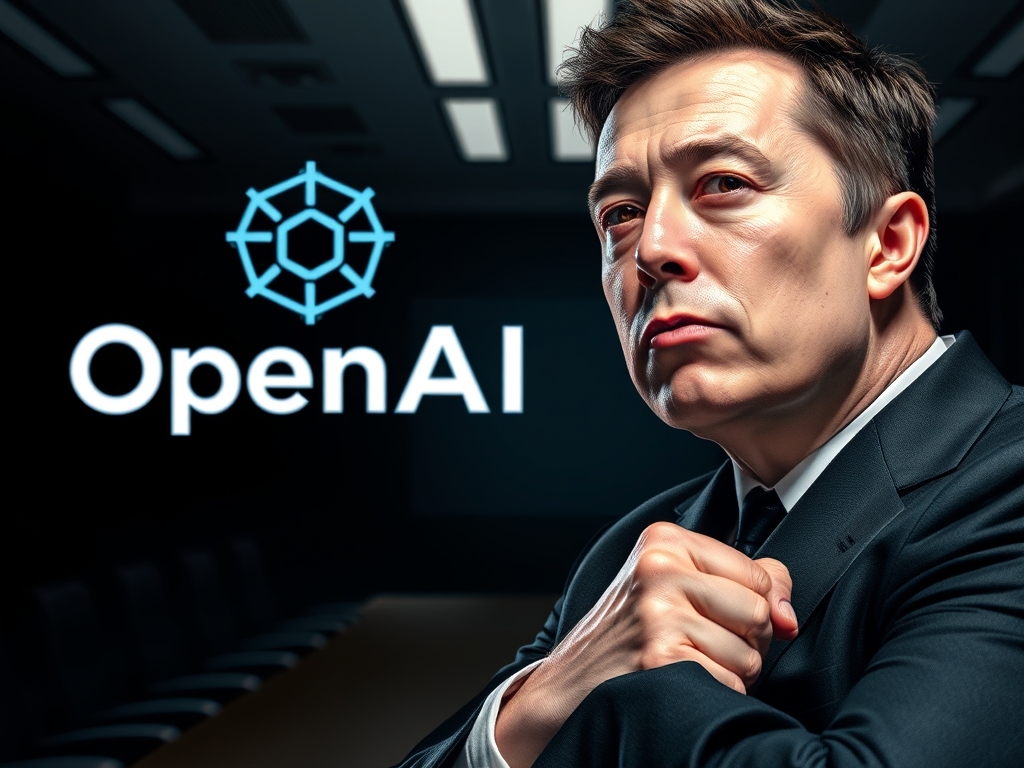

OpenAI Questions Rationale of Elon Musk’s Bid to Control the Company

On Wednesday, OpenAI’s board expressed concerns about the reasoning behind a $97.4 billion acquisition offer made by Elon Musk and other investors to take control of the high-profile AI company.
The offer, made on Monday by a group of investors led by Musk, aims to purchase the assets of the nonprofit organization that governs OpenAI, intensifying a long-standing conflict between Musk and OpenAI’s CEO, Sam Altman.https://svtoday.org/
In a court filing on Wednesday, OpenAI pointed out that Musk’s offer appeared to contradict claims he made in a lawsuit filed against the company last year. In that lawsuit, Musk had argued that OpenAI’s assets should remain with the nonprofit and should not be transferred to another entity for private gain.
OpenAI is accusing Musk of hypocrisy, noting that in his previous lawsuit, he had insisted that OpenAI must operate under the nonprofit’s governance. Now, the company argues, Musk is advocating for the opposite.
As of now, the OpenAI board has not formally rejected Musk’s bid.
Marc Toberoff, a Los Angeles attorney representing Musk in the lawsuit against OpenAI, told The New York Times on Wednesday, “The lawsuit is not about who controls OpenAI, but about Sam Altman and OpenAI’s misconduct.”
Toberoff further stated that if OpenAI’s board agrees to remove the “For Sale” sign on the nonprofit’s assets as part of OpenAI’s “conversion” process, Musk would retract his bid. “But, of course, OpenAI will never do that,” he added, referencing the company’s efforts to detach itself from the nonprofit’s oversight.
Musk’s bid still has the potential to disrupt Altman’s plans to separate OpenAI from its nonprofit roots and secure the funding necessary to advance the company’s technology.
Altman and his team have been working for over a year on a plan to shift control of OpenAI from the nonprofit to investors, including Microsoft and Thrive Capital.
The company is currently negotiating a $40 billion fundraising deal, led by the Japanese conglomerate SoftBank, which would value OpenAI at $300 billion, according to sources familiar with the negotiations, who spoke on the condition of anonymity.
OpenAI’s unique corporate structure has provided an opening for Musk to challenge the company’s restructuring efforts, potentially increasing the costs involved in making OpenAI independent from the nonprofit.
To achieve this separation, Altman and his colleagues will need to provide compensation. This could include paying a one-time fee to the nonprofit or offering it a minority stake in the company.
However, the nonprofit’s assets have not been valued yet, and Musk’s bid seeks to set that value. If his offer is accepted, OpenAI may need to spend more to break free from its nonprofit ties.
OpenAI is racing against the clock to finalize its separation from the nonprofit. Under the terms of its most recent investment deal, the company must shift control from the nonprofit within two years or face its funding converting into debt, according to documents reviewed by The New York Times.
(The Times has filed a lawsuit against OpenAI and Microsoft, accusing them of copyright infringement concerning news content used by AI systems. The companies have denied the allegations.)
Musk’s aggressive move is the latest chapter in a personal feud with Altman, which began a decade ago when the two were part of the group that founded OpenAI as a nonprofit in 2015, with the goal of freely sharing AI technologies with the world.
After Musk left the organization three years later following a power struggle, Altman transitioned OpenAI into a for-profit model to attract the funding required for ambitious AI projects.
In late 2023, the nonprofit board unexpectedly ousted Altman, citing a loss of trust in his ability to prioritize the development of AI for the public good — one of OpenAI’s founding principles.
Altman was reinstated within five days and quickly reorganized the board with his supporters while exploring ways to sever the nonprofit’s control. Altman and his allies believed that if they could break free from the nonprofit’s governance, OpenAI would become more appealing to investors.
Before the public bid on Monday, Musk had already sought to challenge changes to OpenAI’s leadership structure through a lawsuit filed in federal court last year.



Leave a Reply