
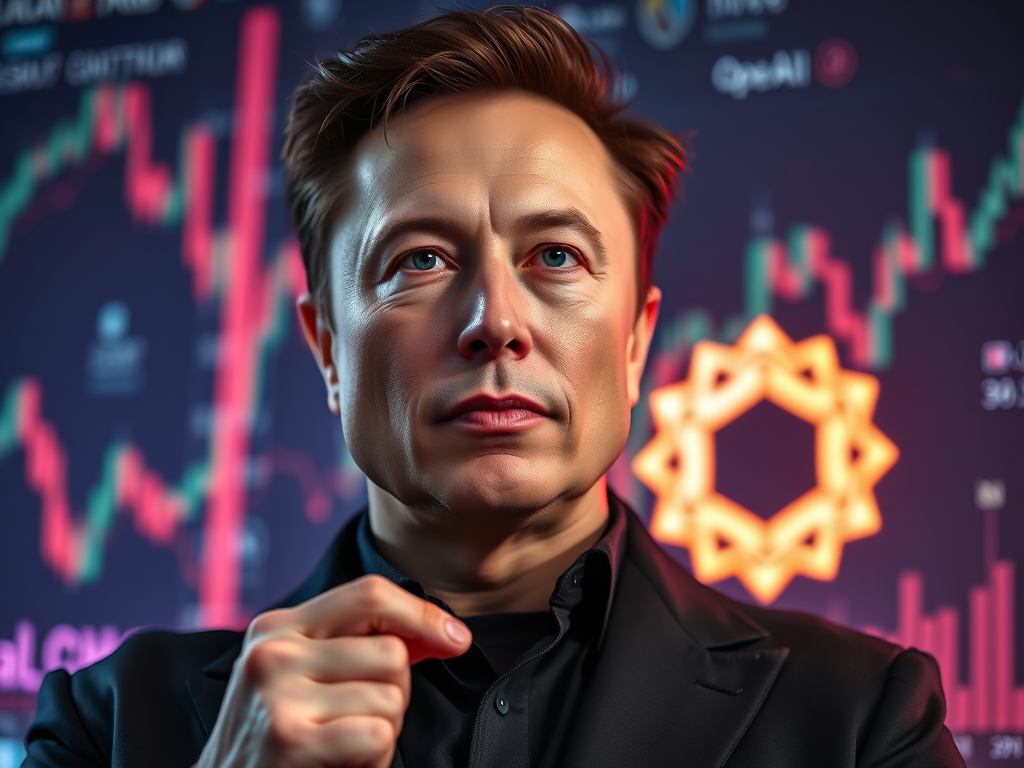

Elon Musk Leads $97.4 Billion Bid to Control OpenAI

A group of investors led by Elon Musk has proposed a $97.4 billion bid to acquire the assets of the nonprofit organization that oversees OpenAI, escalating a long-running and intensely personal rivalry between Musk and OpenAI’s CEO, Sam Altman. The offer, which has been confirmed by two individuals familiar with the matter, includes entities such as Vy Capital and Xai, Musk’s AI company, as well as Hollywood mogul Ari Emanuel and other investors. The individuals chose to remain anonymous due to the ongoing nature of the discussions.https://svtoday.org/
The Wall Street Journal initially reported on the bid.
This latest offer from Musk represents his boldest move yet against OpenAI, an organization he helped establish nearly a decade ago. However, the proposal faces significant hurdles: OpenAI’s board is closely aligned with Altman, who swiftly dismissed Musk’s offer in a post on X (formerly Twitter), sarcastically suggesting, “No thank you, but we’ll buy Twitter for $9.74 billion if you want.”

Musk, not one to hold back, responded with a pointed comment: “Swindler.”
OpenAI has yet to review the bid, according to someone familiar with its potential response. Musk’s unsolicited offer could disrupt OpenAI’s ongoing efforts to close a $40 billion fundraising round that would significantly boost the company’s valuation, which has already doubled in the past few months.
Led by the Japanese conglomerate SoftBank, this funding round could push OpenAI’s value to $300 billion, according to sources close to the deal. This would place OpenAI among the most valuable private companies globally, alongside Musk’s SpaceX and ByteDance, the parent company of TikTok.
The deal, which could see SoftBank invest up to $40 billion in OpenAI, with additional funds coming from other investors, would also complicate the company’s plans for the future. Meanwhile, the New York Times is suing OpenAI and its partner, Microsoft, over claims of copyright infringement related to news content used by their AI systems—accusations that both companies have denied.
Musk’s bid adds another layer of complexity to the transition that Altman and other executives have been pursuing for over a year. OpenAI was originally founded as a nonprofit by Musk, Altman, and others in 2015, with the goal of making AI technology widely accessible. However, after Musk’s departure in 2018 following a dispute over control, Altman pivoted to establish a for-profit arm of the organization in order to secure the funds necessary for AI development.
Despite this shift, the nonprofit board has retained legal control over OpenAI. In late 2023, the board controversially ousted Altman, citing concerns over his approach to AI development. However, Altman’s dismissal was short-lived, lasting only five days before he was reinstated. Since then, Altman has been working to detach OpenAI from the nonprofit’s control and stack the board with his supporters to safeguard his leadership.
OpenAI’s corporate structure is notably complex, and Musk’s bid highlights the vulnerabilities of this arrangement. If Altman and his team want to sever ties with the nonprofit, they would need to provide compensation in some form—either by paying a one-time fee or granting the nonprofit a minority stake in the company.
While OpenAI employs more than 2,000 people, the nonprofit that controls it has just two employees and assets worth $22 million. Musk and his investors are willing to pay billions for the nonprofit’s assets because they hold legal authority over OpenAI.

However, the nonprofit’s assets haven’t been formally valued yet, and Musk’s offer aims to establish a price. If accepted, this could force OpenAI’s for-profit arm to pay more to achieve independence from the nonprofit.
“If Sam Altman and the current OpenAI Inc. board are determined to turn the organization into a fully for-profit entity, it’s crucial that the nonprofit is fairly compensated for relinquishing control of one of the most transformative technologies of our time,” said Marc Toberoff, a Los Angeles attorney who filed a lawsuit against OpenAI on Musk’s behalf last year.
Legal experts, such as Ellen P. Aprill from UCLA, emphasize that the nonprofit board has a legal obligation to sell its assets at fair market value. Musk’s bid sets a high benchmark for this value, and if the nonprofit accepts a lower offer, it may have to justify its decision to state regulators.
“This adds significant complexity to the ongoing process,” Aprill remarked.
In addition to Musk’s bid, the proposed shift of OpenAI’s assets from the nonprofit to the for-profit entity is under review by charity regulators in Delaware and California, where OpenAI is incorporated and headquartered, respectively.
Musk, who launched his own AI company, Xai, in 2023, now competes directly with OpenAI. Although Xai has been struggling to catch up with both established AI firms and startups, Altman has managed to maintain his political influence, particularly in Washington. In 2021, after the inauguration of President Trump, Altman, SoftBank, and Oracle announced a $100 billion plan for AI infrastructure, which Trump described as “the largest AI infrastructure project in history.”
As Musk’s offer letter was being sent, Altman was attending an AI conference in Paris, alongside political and tech leaders, including French President Emmanuel Macron and Vice President JD Vance.



Leave a Reply