
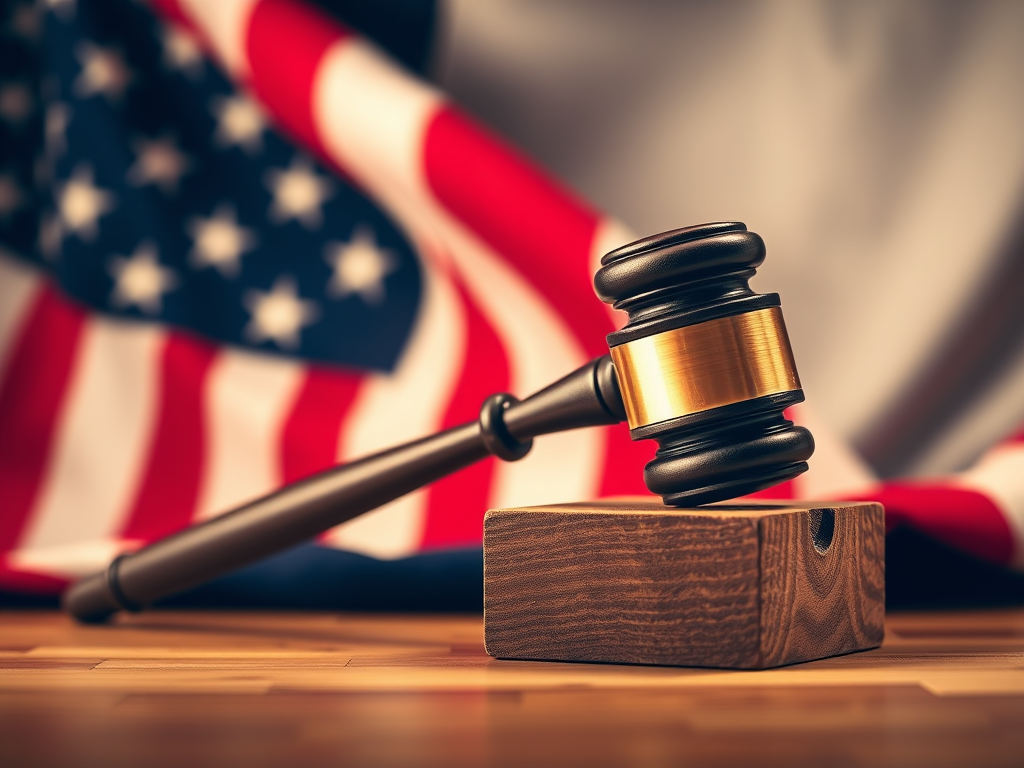

For the second time this week, a federal judge has issued a nationwide preliminary injunction preventing President Trump from terminating automatic citizenship for babies born in the United States to undocumented immigrants.
Federal Judge Deals Another Blow to Trump’s Birthright Citizenship Order

The latest ruling, delivered Thursday morning in Seattle, followed a similar decision made just a day earlier by a judge in Maryland, who also blocked the executive order aimed at ending birthright citizenship.https://svtoday.org/
President Trump’s order has sparked multiple legal challenges, and Thursday’s injunction, issued by Judge John C. Coughenour of the Western District of Washington, was in response to a lawsuit brought by four state attorneys general.
“The Constitution is not a tool for political maneuvering,” Judge Coughenour stated. “If the government intends to revoke the unique American right of birthright citizenship, it must amend the Constitution itself.”
The Justice Department has not yet provided a response regarding the ruling.
On January 23, Judge Coughenour had issued a temporary restraining order, set to expire after 14 days. The Thursday hearing was convened to determine whether a preliminary injunction should replace it. Typically, a preliminary injunction remains in effect until the case is either resolved or overturned by a higher court.
Meanwhile, another lawsuit challenging the executive order is scheduled for a hearing on Friday in Massachusetts.
The president’s directive—one of several issued within hours of his inauguration to tighten immigration policies—stated that children born in the U.S. to undocumented immigrants after February 19 would no longer be granted citizenship.
The order would also apply to babies born to mothers who are in the country legally but on a temporary basis, such as tourists or short-term workers, if the father is not a U.S. citizen.
Birthright citizenship is enshrined in the 14th Amendment, and legal scholars agree that eliminating it would require a constitutional amendment. However, Mr. Trump has long campaigned on stricter immigration policies and pledged to take action against birthright citizenship.
“The court has already determined that the executive order is blatantly unconstitutional,” said Lane Polozola of the Washington State Attorney General’s Office during the hearing. “There is no ambiguity—the text and historical context of the 14th Amendment are clear.”
In defense of the order, Deputy Assistant Attorney General Drew C. Ensign cited an 1884 Supreme Court ruling that denied Native Americans constitutional entitlement to U.S. citizenship, pointing out that their birthright citizenship was instead granted by Congress. He argued that a similar principle could apply to children of immigrants.
However, this argument has been repeatedly refuted by legal scholars, who emphasize that the Native American case involves issues of sovereignty, making the comparison inapplicable.
“There is a well-established legal precedent supporting birthright citizenship,” said Professor Adam Winkler, a constitutional law expert at UCLA. “For decades, mainstream legal thought has upheld this interpretation.”
Judge Coughenour dismissed Mr. Ensign’s argument outright. “It is becoming increasingly evident,” he remarked, “that for our president, the rule of law is merely an obstacle to his policy agenda.”
Since the Maryland injunction also applies nationwide, the Washington ruling does not immediately change the legal landscape. However, Professor Winkler noted that the two rulings reinforce each other. If one injunction is challenged on appeal, the other could still remain in effect.
The Seattle decision “may also influence appellate courts by signaling that more judges across the country view this as the correct legal outcome,” Professor Winkler added.

Several lawsuits have been filed against Mr. Trump’s executive order, including the Seattle case—brought by the attorneys general of Washington, Arizona, Illinois, and Oregon—and the Maryland case, which was initiated by two nonprofit organizations.
The relevant portion of the 14th Amendment states: “All persons born or naturalized in the United States, and subject to the jurisdiction thereof, are citizens of the United States.” This provision has consistently been interpreted to grant citizenship to all children born on U.S. soil, with limited exceptions, such as children of accredited foreign diplomats.
Federal courts have never recognized any further restrictions on birthright citizenship.
In the case before Judge Coughenour, who was appointed to the bench by President Ronald Reagan, the four state attorneys general argued that Mr. Trump’s order would strip more than 150,000 children born each year of their rights and benefits, potentially leaving some of them stateless.



Leave a Reply