
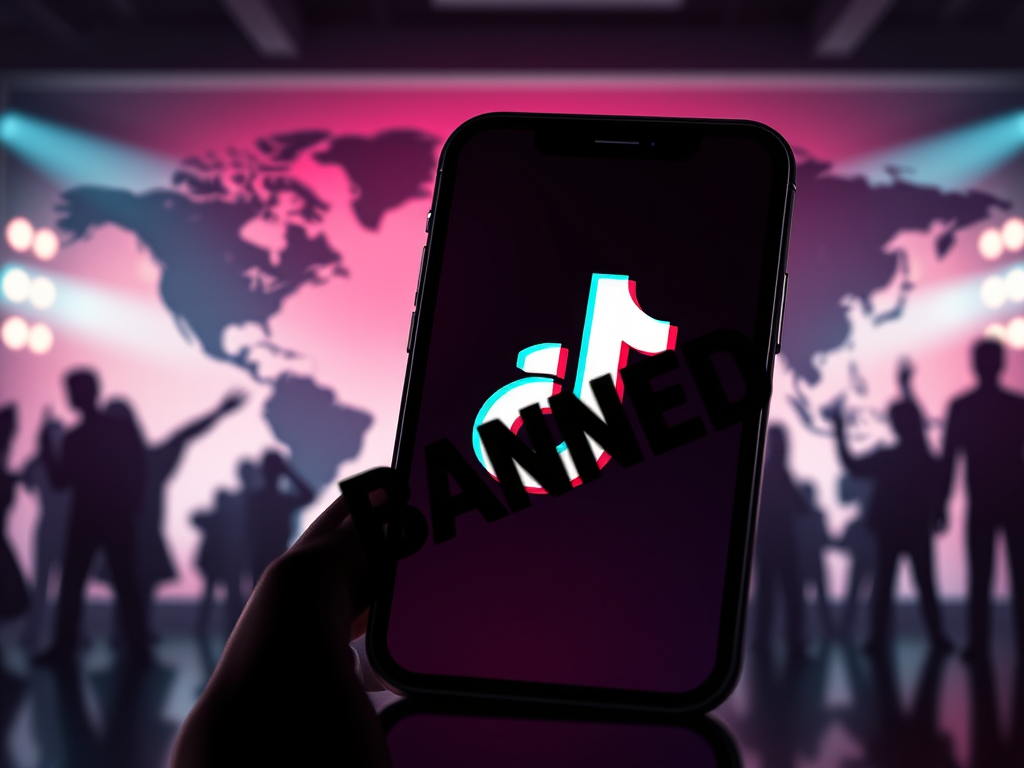

U.S. Ban of TikTok Is Set to Deal a Major Blow to ByteDance, Its Chinese Owner

The potential ban of TikTok in the United States is poised to leave a significant gap in the social media landscape. For ByteDance, the Chinese parent company behind TikTok, it could have a major impact on its business operations as well.https://svtoday.org/
The ban, which was signed into federal law last year and upheld by the U.S. Supreme Court on Friday, represents a serious blow to ByteDance, the world’s second-most valuable private tech company, valued at $300 billion. A substantial portion of the company’s worth is tied to its performance in the U.S., where TikTok boasts an estimated 170 million monthly users.
Although TikTok’s global audience is even larger — ranging from 1.2 billion to 1.8 billion monthly users, with major markets in Indonesia and Brazil — American users are particularly valuable, according to analysts. The app generates revenue not only through advertising but also by selling products via TikTok Shop, where influencers earn commissions by promoting items like beauty products, gadgets, and clothing. The U.S. is known for having the highest “revenue per user” for social networks.
“The U.S. market is by far the most profitable for social media companies,” noted Mark Zgutowicz, an analyst at Benchmark Company. He estimated that TikTok earned around $10 billion in the U.S. last year alone, out of a total global revenue of $20 billion to $26 billion.
For ByteDance, the repercussions of a potential ban are substantial. While other social media platforms like Facebook and Twitter were blocked in China nearly 15 years ago, they had not yet gained widespread user bases at that time. The closest parallel to the U.S. ban might be TikTok’s experience in India in 2020, when the Indian government banned the app, forcing TikTok to lose 200 million users in that market, although it has since expanded its user base in other regions.
It remains uncertain whether TikTok can avoid the U.S. ban. President-elect Donald J. Trump has hinted at issuing an executive order that could allow TikTok to continue operating until new owners are found, or he could instruct the Justice Department to delay enforcement of the law.
TikTok declined to comment on the situation. However, in legal filings, the company warned that a ban would harm its U.S. business. “Many current and potential users, both in the U.S. and abroad, would migrate to competing platforms and many may never return, even if the ban is lifted,” the company argued.
Even if the ban on TikTok takes effect on Sunday, ByteDance’s overall business will likely remain strong. The company earns the bulk of its revenue from another product, Douyin, a similar social media app in China. With TikTok included, ByteDance’s revenue reached an estimated $73 billion in the first half of 2024, according to a source familiar with the company’s financials. The Information had previously reported on ByteDance’s earnings.
Founded in 2012 by Zhang Yiming and others, ByteDance has attracted significant U.S. investment. Notable investors include Susquehanna Capital, which owns around 15% of the company, as well as General Atlantic, Coatue Management, BlackRock, and HongShan (formerly Sequoia Capital China).
If TikTok is banned in the U.S., it could provide an opportunity for its American competitors. Analysts predict that up to 85% of TikTok’s U.S. revenue could quickly be redirected to Instagram (owned by Meta) and YouTube (owned by Google), both of which offer video features and share e-commerce or ad commissions with popular creators. In 2020, after India banned TikTok, Instagram and YouTube rapidly filled the gap left by the app.
“It’s easy to shift spending from TikTok to Meta and Google,” said Zgutowicz. Smaller platforms like Snap and Pinterest might also benefit, although to a lesser extent.

TikTok’s users and influencers may also migrate to other platforms, although these alternatives don’t offer the same algorithmic customization that TikTok became famous for. For instance, Instagram’s Reels typically favors creators with large followings, whereas TikTok’s algorithm helps lesser-known creators gain visibility. Similarly, YouTube’s Shorts is more focused on established creators.
Kristin Patrick, Chief Marketing Officer of Marc Jacobs, expressed that her company was considering other platforms in response to the potential ban. She mentioned Instagram Reels, YouTube Shorts, and Pinterest as alternatives, adding that the brand was “preparing for the worst” with TikTok.
A survey conducted late last year by TD Cowen found that, if TikTok were banned, over half of users would shift their time to YouTube or Instagram. “People who spend hours a day on TikTok aren’t just going to stop using social media; they will find another platform,” said John Blackledge, an analyst at TD Cowen.
As the ban looms, TikTok has seen a significant increase in employee turnover, with a 38% rise in departures during the second half of the year compared to 2023. Senior executives, including the head of North American ad sales and the U.S. agency business manager, have recently left the company. TikTok’s head of U.S. e-commerce, Sandie Hawkins, also exited in late 2023, citing the pressure of the company’s fast-paced environment and the constant threat of a ban.
There is speculation that investors may attempt a last-minute buyout of TikTok to prevent the ban. However, the company has denied reports of ongoing negotiations and stated that the Chinese government would prevent a sale.
These developments mirror events from 2020, when the Trump administration tried to force a sale of TikTok’s U.S. operations to American companies like Walmart and Oracle. That deal ultimately failed, and TikTok remained under ByteDance’s control.

Leave a Reply