
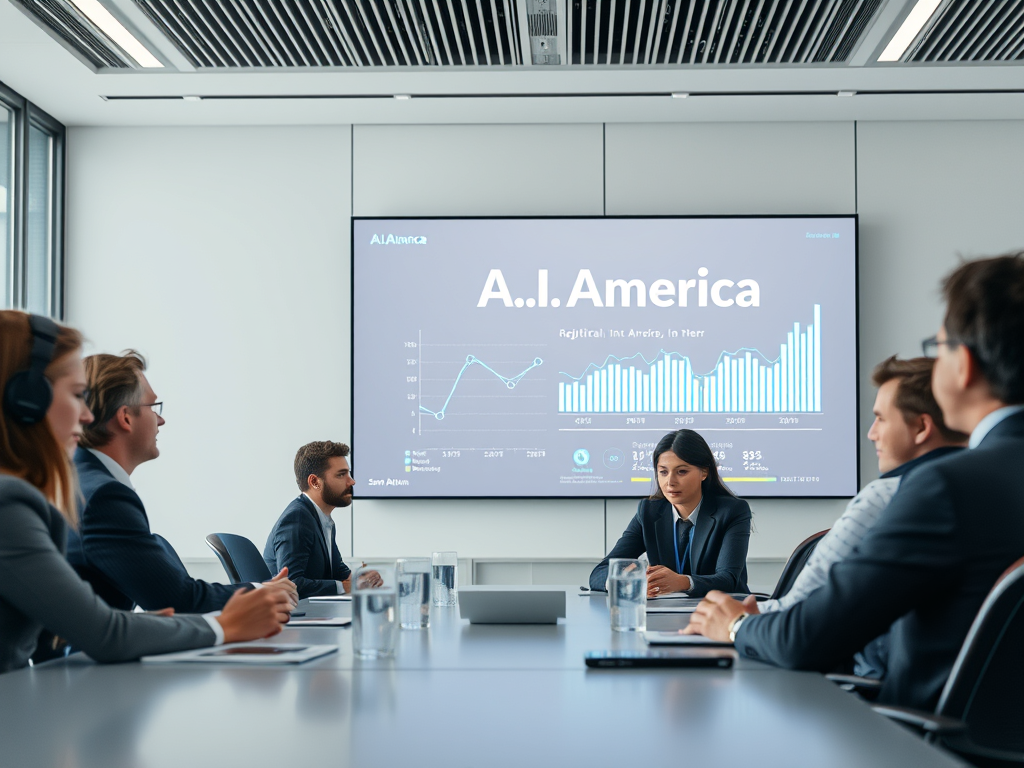

OpenAI Courts Trump With Vision for ‘A.I. in America’

In December, Sam Altman, CEO of OpenAI, contributed $1 million to President-elect Donald J. Trump’s inaugural fund. He joined other tech leaders aiming to strengthen their ties with Mr. Trump.
Currently, Altman and OpenAI are outlining their vision for artificial intelligence development in the U.S., aiming to influence how the incoming administration addresses this critical technology.
On Monday, OpenAI introduced its economic proposal titled “A.I. in America,” which offers suggestions for advancing U.S. A.I. development, mitigating associated risks, and maintaining an edge over China.https://wordpress.com/
“We believe it’s crucial for America to act now to harness A.I.’s potential while addressing its challenges,” wrote Chris Lehane, OpenAI’s global policy chief, in the 15-page report. “Our goal is to collaborate with policymakers to ensure A.I. benefits are distributed responsibly and fairly.”
OpenAI set off the A.I. revolution in late 2022 with the launch of its ChatGPT chatbot. Despite being a frontrunner in the field, it faces stiff competition. One major rival is xAI, led by Elon Musk, who has cultivated a close relationship with Mr. Trump.
Many in the A.I. industry and independent researchers believe technologies like ChatGPT can drive economic growth by accelerating progress in fields such as software development, medicine, education, and finance. However, advancing these technologies requires vast computational resources and significant electricity consumption.
OpenAI and its competitors are competing to expand the vast data centers needed to develop and operate A.I. systems, a pursuit requiring investments amounting to hundreds of billions of dollars. Through its new blueprint, OpenAI aims to promote government policies that support this necessary infrastructure growth.
Notably, OpenAI has urged policymakers to permit substantial investments in U.S. A.I. initiatives by Middle Eastern investors. While the Biden administration has expressed caution, OpenAI warns that without U.S. opportunities, funds from nations like the UAE and Saudi Arabia could flow to China instead.
“Will these nations invest in U.S. systems, or will they turn to Chinese Communist Party infrastructure?” Lehane questioned in an interview, referring to China’s government. He described nations like Saudi Arabia and the UAE as “swing states” that will decide between aligning their A.I. investments with the U.S. or China.
Additionally, OpenAI has requested minimal government interference in regulating A.I. systems created by OpenAI and other American companies, advocating for safety and security oversight without stifling innovation.
(The New York Times has filed a lawsuit against OpenAI and its partner, Microsoft, alleging copyright infringement regarding news content used in A.I. systems. Both OpenAI and Microsoft have denied the accusations.)
Last year, California lawmakers attempted—but failed—to pass legislation imposing restrictions on companies developing A.I. systems. OpenAI argued that A.I. safety and security regulations should be managed at the federal level to avoid fragmented approaches that could harm national security and economic competitiveness.
“That kind of inconsistency would create major problems for both national security and economic performance,” Lehane emphasized.
To bolster its position, Mr. Altman plans to host an event on Jan. 30 in Washington. There, he will discuss A.I.’s future with policymakers, economists, and Trump administration representatives while showcasing new OpenAI technologies that highlight A.I.’s economic potential.



Leave a Reply