
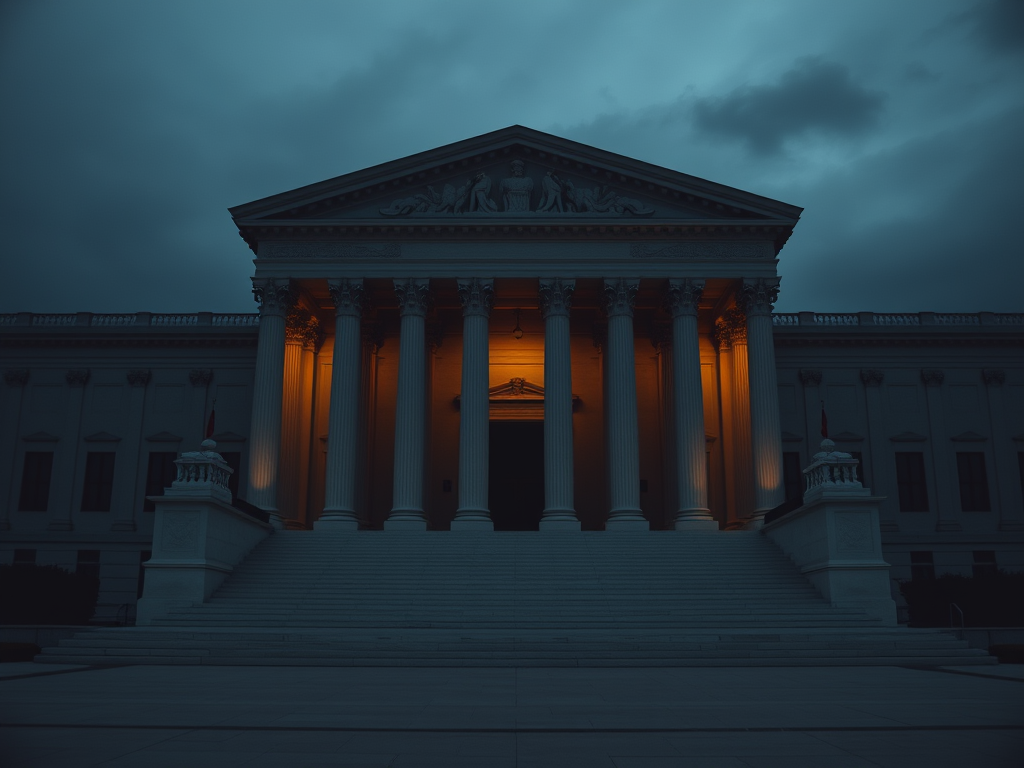

Supreme Court Turns Down Cases on Admissions, Gender Identity and Guns

On Monday, the Supreme Court declined to hear cases involving admissions policies, gender identity, and gun control, prompting criticism from conservative justices. These objections hinted at internal divisions regarding when and how the court should tackle major unresolved questions stemming from recent rulings.
The cases in question addressed challenges to admission policies at three prestigious Boston public schools, a Wisconsin school district’s gender transition notification policy, and a gun law in Hawaii.
Four conservative justices, through dissents and statements, argued that the court should move more swiftly to resolve issues raised by recent decisions on race-conscious admissions and the Second Amendment. They also anticipated future cases, such as one being argued this Wednesday regarding gender transition care for minors, which could generate new questions for the court.
In line with its usual practice, the court did not provide explanations for its decision to decline review of all three cases.
The Boston case was similar to a Virginia case the court declined in February. In both cases, parents challenged changes to public school admissions criteria that did not directly consider race but aimed to diversify enrollment. The constitutionality of such indirect efforts was left unresolved by the court’s ruling last year that struck down the admissions plans at Harvard and the University of North Carolina in Students for Fair Admissions v. Harvard College.
In Boston, school officials altered admissions criteria, replacing academic factors like grades and test scores with a system that allocated seats based on grades within ZIP codes. As a result, the percentage of Black students increased from 14% to 23%, while the percentage of white students decreased from 40% to 31%.
Justice Samuel A. Alito Jr., joined by Justice Clarence Thomas, dissented, stating that the plan was “racial balancing by another name” and was “undoubtedly unconstitutional.” He further argued that the court had twice failed to address this constitutional error, which he believed would perpetuate race-based affirmative action in violation of Students for Fair Admissions.https://wordpress.com/
Justice Neil M. Gorsuch, in a separate statement, expressed agreement with Alito’s concerns but noted that subsequent changes to the admission criteria, which were not part of the current lawsuit, diminished the need for the court’s review.
In another dissent, Justice Alito, again joined by Justice Thomas, criticized the court’s decision not to hear a challenge to a gender identity support policy in the Eau Claire Area School District. This policy, according to Alito, encouraged students to transition to a new gender without parental knowledge or consent. Lower courts had ruled that the parents lacked standing, as they could not prove that their children were transitioning. Alito argued that the court should have granted review, emphasizing parents’ constitutional right to make decisions regarding their children’s upbringing.
Regarding a case involving gender transition care for minors, the court announced that it would not decide whether parents have a constitutional right to guide their children’s medical care.
Justice Brett M. Kavanaugh expressed that he would have granted review in the Wisconsin case but did not join Alito’s dissent or provide his own reasons.
The Hawaii case involved Christopher Wilson, who was charged with carrying a gun without a license. He argued that the Supreme Court’s 2022 ruling in New York State Rifle & Pistol Association v. Bruen — which struck down New York’s strict firearms licensing law — should apply to Hawaii’s similar law. The Hawaii Supreme Court ruled against Wilson, finding he lacked standing since he had never applied for a license.
Justice Thomas, in a statement, disagreed with the Hawaii court’s ruling, asserting that Americans should not have to go through unnecessary formalities before invoking their constitutional rights. However, he supported the Supreme Court’s decision not to review the case at this early stage, while also suggesting that in an appropriate case, the Court should clarify that Americans can use the Second Amendment as a defense against unconstitutional firearms-licensing laws.
Justice Alito joined Thomas’s statement, while Justice Gorsuch issued his own statement, expressing concern about the possibility that Wilson might be convicted and imprisoned under an unconstitutional law.



Leave a Reply