
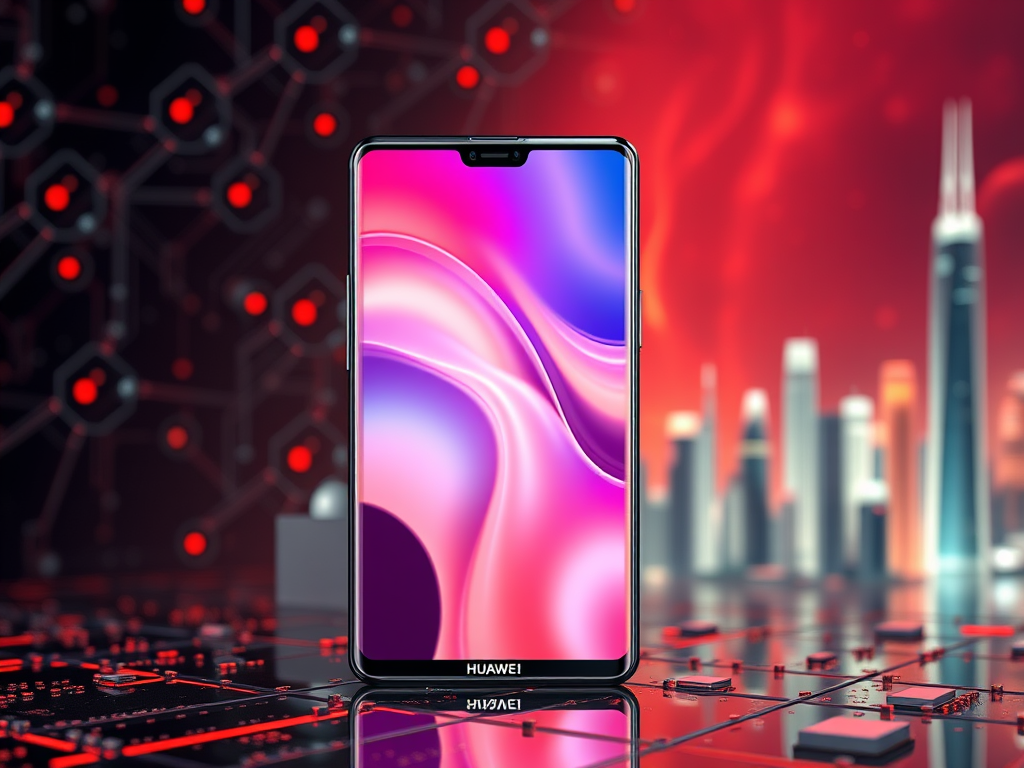

Last year, Huawei made headlines by becoming the top smartphone brand in China, thanks to the release of its Mate 60 Pro. This device featured an advanced microchip, surpassing anything previously produced by a Chinese company.
The chips powering Huawei’s smartphones have come to symbolize the broader technological rivalry between China and the United States. Over the years, U.S. policymakers have taken steps to block Chinese firms from developing such advanced chips. Despite these restrictions, Huawei forged ahead, cementing its reputation as a national tech leader and a symbol of resilience against U.S. limitations.
Chinese consumers eagerly embraced the Mate 60 Pro, drawn to its cutting-edge, domestically produced components. Huawei managed to win over customers who might have otherwise purchased iPhones, significantly impacting Apple’s key market outside the U.S.
On Tuesday, Huawei introduced the next evolution in its smartphone lineup, the Mate 70 series, from its headquarters in Shenzhen, China. Richard Yu, the head of Huawei’s consumer division, described the new flagship as the “smartest” Mate device yet.
The Mate 70 series, powered by Huawei’s HarmonyOS Next—officially launched last month—boasts A.I.-enabled features such as enhanced photography and live transcription and translation of phone calls. While Apple has yet to roll out similar A.I. features in China, Huawei has positioned itself to compete directly with the iPhone, offering the Mate 70 at a starting price of $760. HarmonyOS Next also enables seamless integration with other Huawei products, including electric vehicles, smart speakers, and wearables.

However, the Mate 70’s commercial success may hinge on Huawei’s ability to maintain a reliable chip supply. The Mate 60 Pro’s chips were produced by SMIC (Semiconductor Manufacturing International Corporation), China’s only advanced chip manufacturer, which is partly state-owned. Analysts believe SMIC is also supplying the Mate 70’s chips, although Huawei has not disclosed specifics.
A critical aspect of these chips is their sophistication, as this determines their capability to perform advanced tasks, such as A.I. computations at higher speeds. U.S. officials argue that such technologies are crucial not only for consumer applications but also for military advancements. To curb China’s progress, the U.S. has restricted access to advanced chips and manufacturing tools, leaving SMIC reliant on older equipment.
Industry experts note that SMIC has struggled to meet Huawei’s chip demands. Although production for some components of the Mate 70 began in July, supply challenges delayed its launch. Lori Chang, a senior analyst at Isaiah Research, confirmed that sourcing enough chips has been a significant hurdle for Huawei.
By Tuesday, more than three million people had registered on Huawei’s website to reserve the new Mate 70, which does not require a deposit. The premium version is set to hit the Chinese market this week.
Huawei has long sought to position itself as a leader in China’s tech industry, much like Apple’s association with Silicon Valley. Overcoming U.S. trade restrictions has been key to this image.

The company gained significant attention in 2021 when Meng Wanzhou, a top executive, returned to China after nearly three years of detention in Canada on U.S. fraud charges. Trade sanctions imposed during the Trump administration had severely impacted Huawei’s profits by 2022. Since Meng’s return, the company has expanded its product offerings and developed some of China’s most advanced A.I. technologies.
In recent years, Huawei has steadily reclaimed its position in China’s smartphone market. While iPhones accounted for 75% of high-end smartphone sales in China in 2022, that figure dropped to about 50% this year as Huawei’s market share more than doubled, according to data from market research firm Canalys.
Huawei’s primary goal has been to regain market share from the iPhone, said Lori Chang. However, the company faces fierce competition from domestic brands like Xiaomi and Oppo, which cater to the midrange market with more affordable devices. To stay competitive, Huawei will need to expand its offerings in this segment, noted Toby Zhu, a senior analyst at Canalys.
This expansion will require even more chips. With major foreign suppliers like Taiwan Semiconductor Manufacturing Company (TSMC) halting shipments to Chinese clients, Huawei and other Chinese firms are increasingly reliant on SMIC. This growing dependency could exacerbate supply constraints in the coming years, warned Linda Sui, a senior director at TechInsights.
“Not just Huawei, but all Chinese A.I. companies are now facing the same supply challenges,” Sui explained. “If everyone depends on SMIC, these constraints will only worsen next year.”



Leave a Reply