
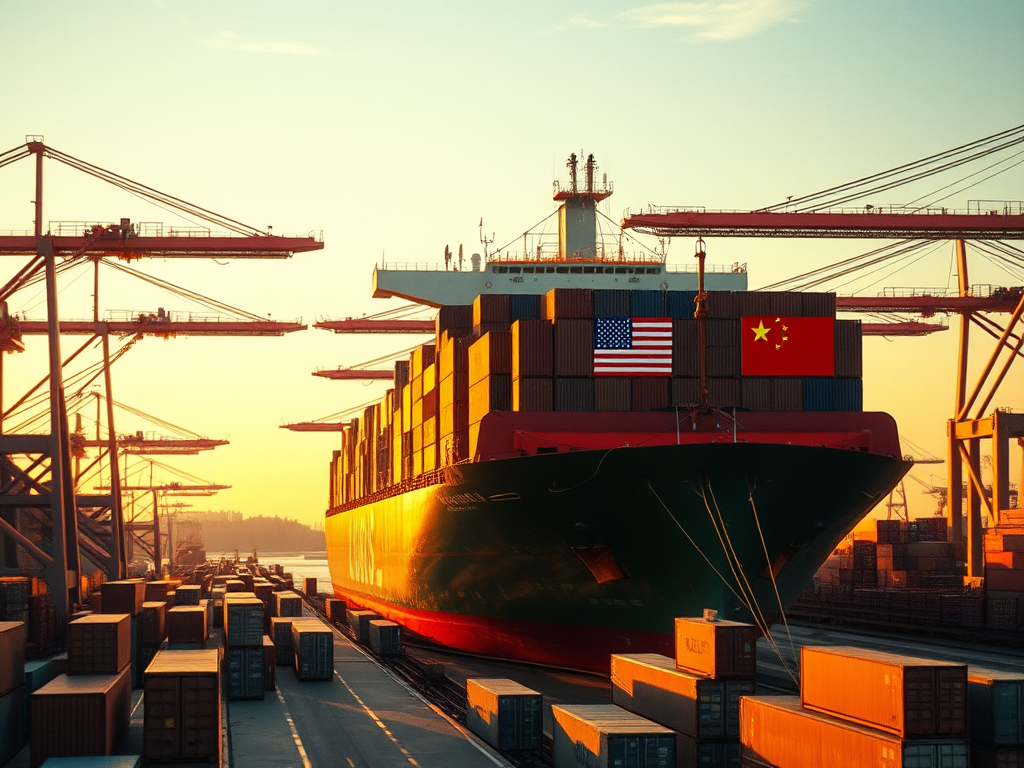

Eight years ago, when Donald J. Trump, newly elected, vowed to use his presidential powers to launch a trade war with China, the country was widely seen as an unstoppable economic force. China had become the essential manufacturing hub of the world and a fast-growing market for global goods and services.
Now, as Mr. Trump readies himself for a potential second term, he promises to intensify trade tensions with China, proposing new tariffs of 60 percent or more on all Chinese imports. This time, he’s confronting a China already strained by a perfect storm of internal challenges: a major real estate downturn, significant banking losses, a local government debt crisis, sluggish economic growth, and persistently low prices—indicators that may signal long-term stagnation.
China’s economic struggles at home have turned its companies’ focus more sharply towards exports, making the country vulnerable to any threats against its international trade. This susceptibility could amplify the pressure from a new Trump administration, potentially paving the way for negotiations to boost China’s imports of American goods.
“The balance of power has definitely tilted in favor of the United States,” commented Eswar Prasad, a trade policy professor at Cornell University and former head of the IMF’s China division. “While China’s economy isn’t completely down, it’s been on a challenging path for some time.”
However, various factors could still help China withstand the Trump administration’s anticipated actions.
To stimulate the domestic economy, the Chinese government has substantial resources. After holding back on credit to avoid reigniting real estate investments, China’s central bank recently cut borrowing rates for both individuals and businesses. On Friday, the government unveiled a $1.4 trillion relief plan that allows local governments to refinance their debts at lower rates.

Additionally, China has strategically positioned itself as a global leader in sectors like electric vehicles and other green technologies, providing a foothold in rapidly growing markets essential to global carbon reduction efforts. Even with tariffs in place, many countries might still rely on Chinese-made products to meet climate goals.
Since Trump’s first round of tariffs in 2018, China has also reduced its dependency on U.S. markets. American tariffs now cover approximately $400 billion in Chinese imports, prompting China to pivot its trade toward Southeast Asia and Latin America. As a result, the Chinese share of U.S. imports dropped from 20 percent to 13 percent, according to TS Lombard, though some goods ultimately reach the U.S. after being routed through countries like Mexico and Vietnam.
The European Union has also imposed tariffs on Chinese electric vehicles, driving China to seek alternative export markets in the Global South. “Beijing is using the Global South to compensate for its market share loss in the West,” said Jie Yu, a senior research fellow at Chatham House.

China has similarly diversified its agricultural imports, buying soybeans from Brazil and Argentina instead of the United States. Such strategies give Beijing confidence that it could counter escalating tariffs by limiting imports from the U.S., especially in agriculture, or restricting exports of essential minerals.
“China has more leverage than it did the first time around,” said Scott Kennedy, a China expert at the Center for Strategic and International Studies. “It has a range of tools to push back and inflict pain on the U.S. economy if Trump’s policies become too aggressive.”
Nevertheless, Trump may reconsider the tariffs, recognizing their potential impact on the U.S. economy. Broad tariffs could raise consumer prices and hinder American manufacturers reliant on imported parts.
If Trump does proceed, however, the repercussions for Chinese industry could be severe. Exports might drop by 8 percent within a year, shaving 2 percent off China’s annual economic growth, according to Larry Hu, chief China economist at Macquarie Group. Should Trump also restrict imports of Chinese goods produced in other countries, the damage could be even more pronounced.

China’s vulnerability to trade disruption is evident in its increased global export share, which rose to 17 percent from 12 percent since Trump’s first term, as per TS Lombard. While often viewed as dominated by cumbersome, state-owned enterprises, China’s private sector, which now accounts for around half of exports, has emerged as a flexible and adaptable economic force.
This shift underscores a fundamental transformation in China’s export capabilities, with private firms now making up a significant part of global trade.
Beijing has also shown a willingness to stimulate the domestic economy. Although recent economic stimulus measures have been moderate, they signal a government attuned to the population’s concerns about stagnating standards of living.
China’s political system, dominated by the Chinese Communist Party (CCP), provides it with unique tools to respond to economic crises swiftly. While lacking democratic processes, the CCP can mobilize resources quickly, demonstrating effectiveness in crisis response, according to Rory Green, chief China economist at TS Lombard. “When needed, the CCP can act with remarkable speed and control,” he observed.

Since Trump first took office in 2017, Chinese President Xi Jinping has consolidated his power. Initially limited to two five-year terms, Xi has since removed term limits and prioritized initiatives like Made in China 2025, which focused on increasing China’s technological capabilities. This initiative has succeeded in several areas, establishing China as a key player in green technologies. However, China still faces challenges in advanced semiconductor technology, where it remains dependent on technology from Taiwan, the U.S., Europe, and Japan.
The Biden administration has continued restrictions on advanced chip exports to China, indirectly encouraging China’s pursuit of technological self-sufficiency.
“Trump’s tariffs might reinforce China’s resolve to prioritize domestic capabilities,” said Nicholas Lardy of the Peterson Institute. “China’s response has been to speed up its shift toward economic independence.”
China’s leaders may ultimately view Trump’s proposed tariffs as a wake-up call, underscoring the need to rely on domestic resources rather than foreign markets.
“Trump’s second term could very well push China further toward self-reliance,” noted Lynette Ong, a professor of Chinese politics at the University of Toronto.



Leave a Reply